Brands and creators. Your product. Your next chapter.

PixelForce helps brands and creators build, migrate and rescue owned web and mobile products. We connect membership, content, community and the operations behind them, so your next step starts with the experience your audience needs and the business you want to run.

  • SWEAT · $400M acquisition
  • NKO Club · 10,000+ members in 24 hours
  • 100% in-house development
  • IP transfers on full payment
Black-and-white broadcast microphone against a grainy pink, peach and lavender background
NKO Club10,000+members in 24 hoursInfrastructure held without degrading

What should you own next?

An owned product gives you a way to shape the experience and roadmap. It also brings operating responsibilities. The right decision depends on what members need, the limits of your current platform and the team available to run the product.

Keep what already works

An existing or white-label platform can be a good fit when its member experience, publishing tools and commercial model meet your needs. Identify the limitation before deciding to replace the whole product. Configuration or a small integration may solve it.

  • What can members do today?
  • What does the team do manually?
  • Which limitation affects the business?
  • Can the current platform address it?
Build an owned product

A custom product is useful when the experience, integrations or membership rules need to work differently. Scope the reason to return, the administration behind it and the first release together. Project IP and code transfer on full payment under the Services Agreement.

  • A defined member need
  • Your product experience and roadmap
  • Connected membership and operations
  • A team ready to operate it

Plan the move carefully

A migration starts with content, accounts, subscriptions and supplier constraints. Confirm what can transfer, how members keep access and what the team will check at cut-over. Read the Pilates By Bryony Vimeo OTT migration case for the relevant project account.

  • Content and customer-data exports
  • Subscription and access continuity
  • App-store and account arrangements
  • Reconciliation and member communications

SWEAT. Built and scaled to a $400M acquisition.

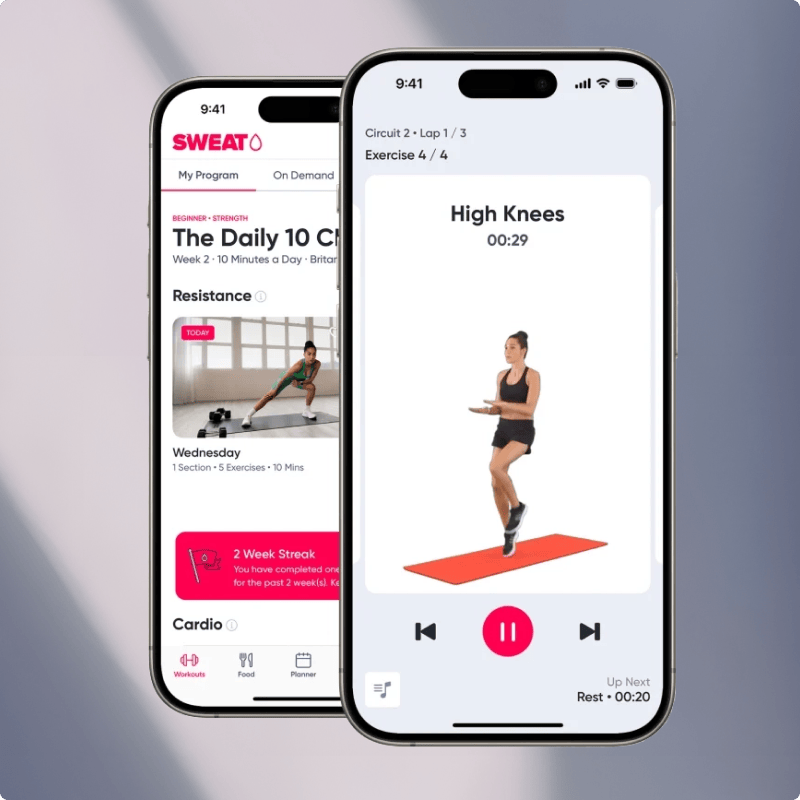
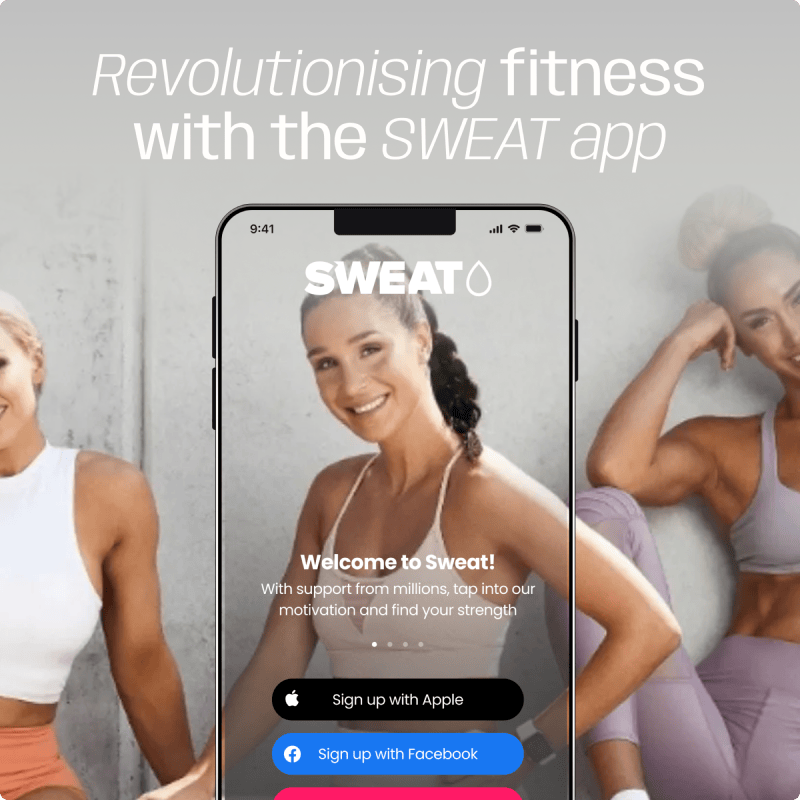
We built and scaled SWEAT (Kayla Itsines and Tobi Pearce) from launch to a $400M acquisition by iFIT - 30 million users across 155 countries, and the platform passed Big 4 due diligence at exit.

That is the account of one product and the work behind it. For your business, the useful questions are what the first release must do, who will operate it and how the product can change as members use it.

SWEAT workout programme screen SWEAT progress and community screen

Launch, rescue or improve.

The starting point changes the work. A launch needs a complete first experience. A rescue needs a diagnosis and continuity for existing users. An established brand may need a connected operating workflow. These are the recorded outcomes for each named engagement.

NKO Club

NKO Club drew more than 10,000 members within 24 hours of launch, on auto-scaling infrastructure that held without degrading.

Pilates Obsession

For Pilates Obsession we built and launched a full-featured Pilates platform - structured programmes, professional video and reliable infrastructure - live within 12 weeks and on budget, with users taking their first class within 30 seconds and videos loading in under two seconds.

Move With Us

We rescued the Move With Us platform (200,000+ users): crash rates reduced 50 percent, app performance improved 40 percent, user satisfaction up 30 percent, and zero business interruption during the fix.

Train With Cass

We rescued the Train With Cass fitness app, taking the crash rate down 90 percent, achieving 99 percent uptime and cutting maintenance costs 50 percent, through a seamless handover from the previous developer.

Crop Shop Boutique

For CSB (Crop Shop Boutique) we connected ShipBob, Klaviyo and Shopify in a 2-week development cycle: 100 percent of pre-shipment customer notifications automated and the manual CSV export workflow eliminated.

Revia

Revia reached number 3 in Apple's Health and Fitness category within 48 hours of launch, after a 4-month build.

Start with the experience people need.

The product shape follows the job. Use the specialist pages for feature decisions and delivery detail. This hub brings them together around the ownership, membership and operating decisions a brand or creator needs to make.

Community and exchange

A community needs participation, moderation and support. A marketplace also needs the transaction and the operating model on both sides. Scope those responsibilities before adding social or payment features.

A first release or a new team

A new product starts with the smallest complete member experience. An existing product starts with its current condition and the people already relying on it. Both need a clear scope before development.

One conversation.
Three phases.
Built to grow.

Start with a free discovery call: one problem, three options with honest trade-offs, one recommendation. If we work together, these are the three phases that follow.

  1. 0
    Free

    Discovery call

    A free, no-obligation conversation to find the right path for your owned product before you commit a dollar.

  2. 1
    Fixed cost

    Scoping & Design

    Requirements, design and a fixed-cost Statement of Work, agreed before development begins.

  3. 2
    MVP: 3-4 months

    Development, QA and Release

    A focused MVP build takes 3 to 4 months after Scoping & Design. Your owned product scope sets the milestones.

  4. 3
    Ongoing

    Post Launch Support

    Choose support for your owned product: warranty, monitoring and technical support, or ongoing product development.

Before you commit to the next chapter.

Ownership, migration and ongoing operation deserve clear answers before the build. Bring your current platform, business model or open questions to the conversation.

An owned product makes sense when the audience needs a repeatable experience that your current tools cannot adequately provide, and the business is ready to operate it. Start with the member need, the reason to return and the work your team will do each week. A large following alone does not establish a paid product. Scoping & Design compares a custom product with an existing platform or a smaller first release before development is committed.

Stay when the platform supports the experience and operating model you need, and its constraints are acceptable. Consider a custom product when the roadmap, integrations, membership rules or ownership requirements justify the move. Compare the ongoing publishing and support workload as well as features. Review content export, customer records, subscriptions, app-store accounts and supplier terms before assuming everything can transfer.

We scope a migration after confirming the source platform, export access, billing arrangements and the accounts involved. The plan covers content, member records, access continuity, reconciliation, communications and cut-over. The Pilates By Bryony Vimeo OTT migration case is relevant to this decision, but its result does not establish what a different supplier will permit. Those constraints must be checked for your platform.

Yes. We assess the code, infrastructure, data and dependencies first, then recommend repair, phased modernisation or rebuilding based on what the assessment finds. PixelForce rescued Move With Us, reducing crash rates 50 percent with zero business interruption during the fix. We also rescued Train With Cass, taking the crash rate down 90 percent. Those are completed project results, not a standard improvement promised before an assessment.

Membership defines who can access what and on which terms. Content gives members something useful to do, while community may give them a reason to participate with other people. Scope the relationship between those parts, including trials, cancellations, moderation, publishing and support. A community feature needs an operating owner; a content library needs a publishing plan. They are not automatic sources of retention.

You own the project IP and code once payment is complete, under the Services Agreement. Your data and infrastructure stay on your own accounts. Third-party tools, services and content retain their own licences and terms. Confirm the repository, cloud, billing and app-store access arrangements as part of the handover, together with documentation and the ability to export your data.

Scope and feature count, platforms, backend complexity, integrations, migration, verification requirements and scale drive the work. For a membership product, subscription rules, content operations and continuity for existing members also matter. The figure and schedule come out of Scoping & Design. Third-party hosting, billing, content licensing and other service costs are separate. A completed project timeline is evidence of that engagement, not a standard promise for another build.

We discuss the audience, the problem, your current product or platform and the result you want. You can bring an idea, an existing app or a workflow that needs improvement; a finished brief is not required. The free discovery conversation uses one problem, three options with trade-offs and one recommendation. If the next step is a build, Scoping & Design establishes the requirements and Statement of Work before development.

Your audience. Your ambition. A clear next step.

Tell us what you are building, what you have outgrown or what needs fixing. We will help you identify the next useful decision and the work it takes to make it.

  • Free discovery call
  • 100% in-house development
  • Scoping & Design first
  • IP transfers on full payment