





Enterprise app development proven at $400M scale.

PixelForce is an enterprise app development company in Adelaide, building enterprise mobile and web platforms for organisations that cannot afford downtime. We are an AWS Advanced Tier Partner with 15+ AWS-accredited engineers, holding a 99.99 percent uptime rate across 100+ shipped products.

  • AWS Advanced Tier Partner · 15+ AWS-accredited engineers
  • 99.99% uptime · 98% first-time app store approval
  • SWEAT passed Big 4 due diligence at a $400M exit
  • 100% in-house development · Adelaide HQ
$1.5B+Combined client revenue
50M+Users served
99.99%Uptime across the portfolio
15+AWS-accredited engineers

Enterprise app development proven at global scale.

Enterprise app development is judged on the worst day rather than the average one, so the only useful evidence is a platform that has already had its worst day and survived. SWEAT went from a first build to a $400M acquisition by iFIT, reaching 30 million users across 155 countries, and the platform passed Big 4 due diligence at exit. EzLicence processes $100M+ in annual bookings with 250,000+ lesson hours booked each year, 1,000 verified instructors and 8,000+ five-star Google reviews, on a platform we built and still operate today. SuspectED, built for Flinders University, gives frontline responders forensic-grade chain-of-custody for biological threat detection, works fully offline, and has been deployed in developing countries including India, Pakistan and Indonesia. Three very different organisations - a global consumer platform, a national two-sided marketplace, and a research institution shipping into the field - and one shared requirement: the software has to keep working when nobody is watching it. As an enterprise software development company we are measured on that, not on the launch. Across 100+ shipped products PixelForce holds a 99.99 percent uptime rate, a 98 percent first-time app store approval rate, and 50M+ users served, and clients on our platforms have generated $1.5B+ in combined revenue.

The platform that passed Big 4 due diligence.

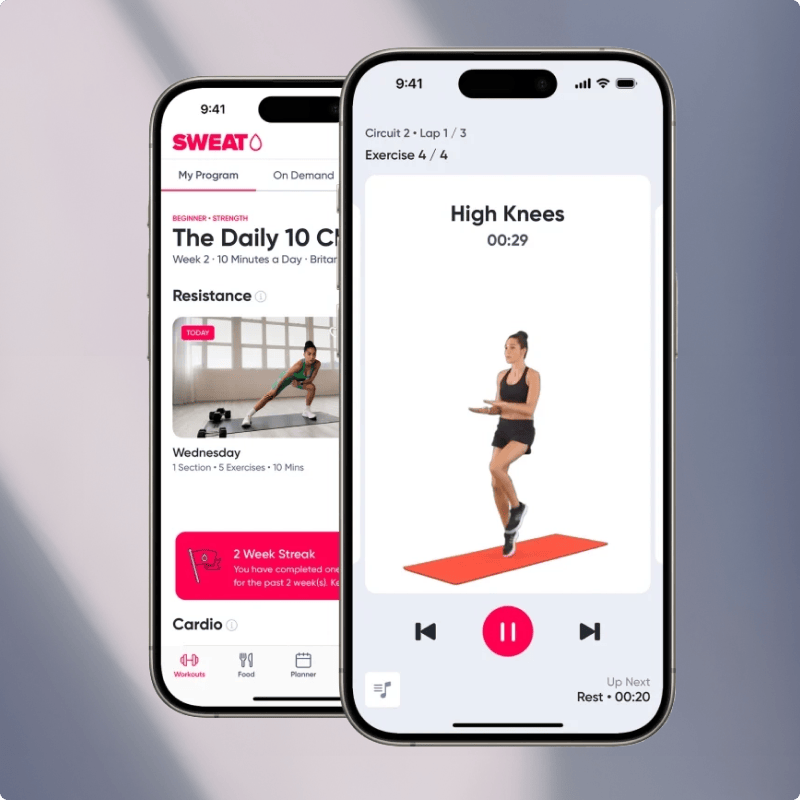
We built and scaled SWEAT from launch to a $400M acquisition by iFIT, with 30 million users across 155 countries. The number every founder quotes is the exit. The number that should interest an enterprise buyer is what happened in the weeks before it: the platform passed Big 4 due diligence, which is an adversarial technical read of the codebase, the infrastructure and the documentation, conducted by people paid to find reasons to lower the price. Test coverage was checked against the actual reports. Auto-scaling was checked as configured and tested, not as described. Third-party licences were audited. Disaster recovery had to have been rehearsed rather than written. Nothing in that review can be retrofitted in a quarter, which is the whole argument for building an enterprise platform to that standard from the first sprint rather than treating it as an upgrade. Tobi Pearce, SWEAT co-founder, is now a strategic investor and advisor to PixelForce. When you are comparing an enterprise mobile app development company, ask each one whether anything they built has been through third-party technical due diligence, and what the finding was.

SWEAT app workout screen built by PixelForce SWEAT app progress tracking screen
Built by PixelForce $400M acquisition by iFIT · Big 4 due diligence passed

Enterprise technology partnerships and independent recognition.

PixelForce is an AWS Advanced Tier Partner with 15+ AWS-accredited engineers. Advanced Tier is validated by Amazon against certification depth across the whole team and a record of successful customer deployments, and it has to be maintained rather than won once - which is why we describe the firm as fully AWS certified rather than pointing at one or two individuals with a badge. Alongside that sits independent recognition for the work itself: Apple Best of Developers, Apple Watch and TV App of the Year, and Top Clutch App Development Company, Software Developers, Android and iPhone App Development Company in Australia for 2026. For enterprise buyers, the credential that usually matters most is the least glamorous one - a 98 percent first-time app store approval rate across 100+ shipped products, because a rejected submission in a regulated release window is not an inconvenience, it is a missed board commitment.

Apple Watch App of the Year
Clutch Top User Experience Company
Apple TV App of the Year
Apple Best of Developers
Clutch Top App Development Company
Clutch Top Software Developers
Australian Technology Services Achiever
Web Excellence Awards (Website)
Web Excellence Awards (App)
ACS Digital Disruptor Gold Award
Clutch Top Android App Development
Clutch Top iPhone App Development

Why enterprises choose our enterprise app development company.

Choosing an enterprise app development company is mostly a risk decision rather than a capability one. Almost any firm can build the screens. Far fewer can hand you a platform that a due-diligence team, a security review or your own successor will be comfortable with in three years. Four things decide that outcome, and they are the four reasons enterprise clients, institutions and scale-ups pick PixelForce over a generalist agency or an offshore build shop: genuine firm-level cloud credentials rather than an individual certificate, an engineering standard set by what audit looks for, an in-house Adelaide team with no subcontracting chain between the conversation and the code, and honest advisory that will tell you to modernise rather than rebuild when that is the right answer. Enterprise application development also carries obligations a consumer build does not - data residency, access control, retention, disaster recovery and the ability to prove all of it. Those are architecture decisions made in Phase 1, not features added in Phase 2.

Fully AWS certified as a firm

PixelForce is an AWS Advanced Tier Partner with 15+ AWS-accredited engineers. The distinction that matters for enterprise work is that the credential sits at the level of the firm rather than one specialist, so the architecture review, the build and the on-call rotation are all staffed by people who hold it. That brings a direct AWS support channel for complex technical issues and AWS architecture reviews validating designs before they are built. Your infrastructure runs on your own AWS account, and your data and intellectual property stay on your own infrastructure, so changing partners never means changing platforms. Across 100+ shipped products we hold a 99.99 percent uptime rate.

  • AWS Advanced Tier Partner, 15+ AWS-accredited engineers
  • Credential held at firm level, not by one specialist
  • AWS architecture reviews before the build starts
  • Your own AWS account, your data, your IP
  • 99.99% uptime across 100+ shipped products

Built to survive due diligence

When SWEAT was acquired for $400M, the platform passed Big 4 due diligence at exit. That review is the most honest audit an enterprise codebase ever gets, because the people conducting it are paid to find reasons to reduce the price. We build to that standard by default: test coverage that matches its reports, security posture that is implemented rather than described, load-tested and configured auto-scaling, architecture and data-flow documentation with every integration point named, rehearsed disaster recovery, a third-party licence audit, and documentation good enough that a new developer can onboard without the original team. It reads as acquisition preparation. It is really just institutional-grade engineering.

  • SWEAT passed Big 4 due diligence at a $400M exit
  • Test coverage verified against the actual reports
  • Architecture, data-flow and integration documentation
  • Disaster recovery rehearsed, not just written
  • Third-party licence and dependency audit

100% in-house Adelaide team

The people who scope your enterprise platform are the people who design it, build it and operate it. PixelForce runs 100% in-house development from an Adelaide headquarters, so there is no subcontracting chain between the conversation and the code and no timezone gap turning a two-minute clarification into a two-day round trip. On enterprise work that matters more than it does anywhere else, because the questions that arrive mid-build are usually about someone else's system, someone else's data model, or someone else's compliance obligation, and they need an answer from a person who understands the whole platform. Cadence is fixed and visible: squad sessions every 2 weeks and planning every 4 weeks, with sprint demonstrations you attend.

  • 100% in-house development, Adelaide headquarters
  • No subcontracting chain, no timezone gap
  • Squad every 2 weeks, planning every 4 weeks
  • Sprint demonstrations you attend
  • The build team stays on through Phase 3

Honest advice before an invoice

We never scope something a client cannot afford to build, and budget alignment happens at the first consultation rather than after a proposal lands. Every recommendation uses the 1-3-1 method: one problem, three options with their trade-offs stated plainly, one recommendation across budget, timeline and scope. On enterprise engagements the recommendation is frequently to modernise rather than rebuild, because a rebuild discards years of encoded business rules along with the technical debt. We have rescued 15+ platforms in the past 3 years, with crash rates typically cut 50 to 70 percent within 2 weeks and feature development 60 to 80 percent faster after modernisation. Declining a project is a valid outcome here.

  • Budget aligned at the first consultation
  • 1-3-1: one problem, three options, one recommendation
  • Modernise rather than rebuild where that is right
  • 15+ platforms rescued in the past 3 years
  • No development quote without a completed Phase 1

Enterprise mobile app development services we deliver.

Six enterprise app development services we have shipped repeatedly for organisations running business-critical workload. Most engagements combine three or four of them, sequenced rather than bought at once, and the combination is settled in Phase 1 against your existing estate. The technical building blocks repeat across projects: identity and access, an integration layer, an operational admin surface, a data and reporting model, cloud infrastructure and a release pipeline. What changes between one enterprise application development project and the next is which existing systems have to be respected, which regulator or auditor is watching, and how much of the platform is inherited rather than new. Custom enterprise software development is the general case; the six services below are how it is actually delivered.

Enterprise mobile app development

Native iOS and Android, or a single cross-platform codebase where the product does not need platform-specific depth. Enterprise mobile app development carries constraints consumer work does not: managed distribution alongside public store releases, device and OS version floors set by your own fleet, offline-first behaviour where field staff lose signal, and background sync that reconciles correctly rather than last-write-wins. SuspectED, built for Flinders University, works fully offline with forensic-grade chain-of-custody and has been deployed in developing countries including India, Pakistan and Indonesia. Our iOS and Android pages cover the platform-specific detail.

  • Native iOS and Android, or cross-platform
  • Offline-first behaviour and conflict-safe sync
  • Managed distribution alongside public store releases
  • 98% first-time app store approval across 100+ submissions

Enterprise web platforms and admin portals

The half of an enterprise platform nobody demonstrates and everybody lives in. Operations staff, support teams, finance and administrators each need their own view, their own permissions and their own audit trail, and on most enterprise projects the internal surface is as large as the customer-facing one. For EzLicence we built the marketplace operations platform that handles 1,000 verified instructors and 250,000+ lesson hours booked each year. Building this properly is what stops a business from filing developer tickets every week to change a value in a database, which is slow, expensive and an unnecessary dependency.

  • Role-based access for every internal user type
  • Operations, support and finance tooling
  • Configuration changes without a code release
  • Audit trails on every privileged action

Enterprise systems integration and APIs

An enterprise platform is rarely alone. It has to speak to identity providers, finance systems, logistics, messaging, marketing automation and whatever internal service predates all of them. We design the integration layer so a failure in someone else's system degrades gracefully rather than taking yours down, with queued retries, idempotent processing and reconciliation you can audit. For Crop Shop Boutique we connected ShipBob, Klaviyo and Shopify in a 2-week development cycle, automating 100 percent of pre-shipment customer notifications and eliminating the manual CSV export workflow entirely.

  • API design, versioning and documentation
  • Queued retries and idempotent processing
  • Graceful degradation when a dependency fails
  • Auditable reconciliation between systems

AWS cloud architecture and DevOps

Infrastructure designed by an AWS Advanced Tier Partner with 15+ AWS-accredited engineers, running on your own AWS account. Auto-scaling compute so capacity follows demand, load balancing, read replicas and caching, queues for background work, CI/CD pipelines, secrets management, staging environments that resemble production, and monitoring wired to alerts rather than dashboards nobody reads. iAppraise had chronic slowdowns and 500 errors at peak despite robust server specifications; after we moved it to an AWS Auto-Scaling Group with CI/CD pipelines and Secrets Manager it rides traffic spikes with zero degradation and pays only for the capacity it uses. Detail on our cloud infrastructure and DevOps page.

  • Auto-scaling, load balancing and caching
  • CI/CD pipelines and secrets management
  • Cost reduced by over 50% for one client, saving $10,000+ monthly
  • Hosted on your own AWS account

Legacy system modernisation

Where the platform already exists and the question is whether to fix it or replace it. We start with a Tech Audit at $5,000 per platform, reading the codebase, infrastructure, dependencies and data model, and return the honest state of the asset. Project Takeover and Tech Stabilisation runs $20,000 to $50,000 where a platform must be brought under control first. We have rescued 15+ platforms in the past 3 years: app ratings recovered from 3.8 to 4.6 stars and crash rates typically cut 50 to 70 percent within 2 weeks. On Move With Us, with 200,000+ users, crash rates came down 50 percent with zero business interruption during the fix.

  • Tech Audit at $5,000 per platform
  • Takeover and stabilisation, $20,000 to $50,000
  • Ratings recovered from 3.8 to 4.6 stars
  • Zero business interruption on the Move With Us fix

Enterprise data, analytics and reporting

A live enterprise platform produces data every day, and the question is who structures it and who owns it. We build ingestion, warehousing, transformation and a reporting layer, either as a Data-as-a-Service subscription or as a custom build you own outright as an asset. Data modelling is also where enterprise reliability is usually won or lost. On EzLicence, financial reports would not balance because they were reconstructed at report time across a dozen unrelated tables; we replaced that with a canonical double-entry credit ledger covering 18 event types, and finance discrepancy complaints stopped. Detail on our data analytics and insights page.

  • Ingestion, warehouse, transformation and reporting
  • Subscription service or an asset you own outright
  • Data stays on your own infrastructure as your IP
  • Canonical ledgers rather than report-time reconstruction

A platform carrying $100M+ a year in bookings.

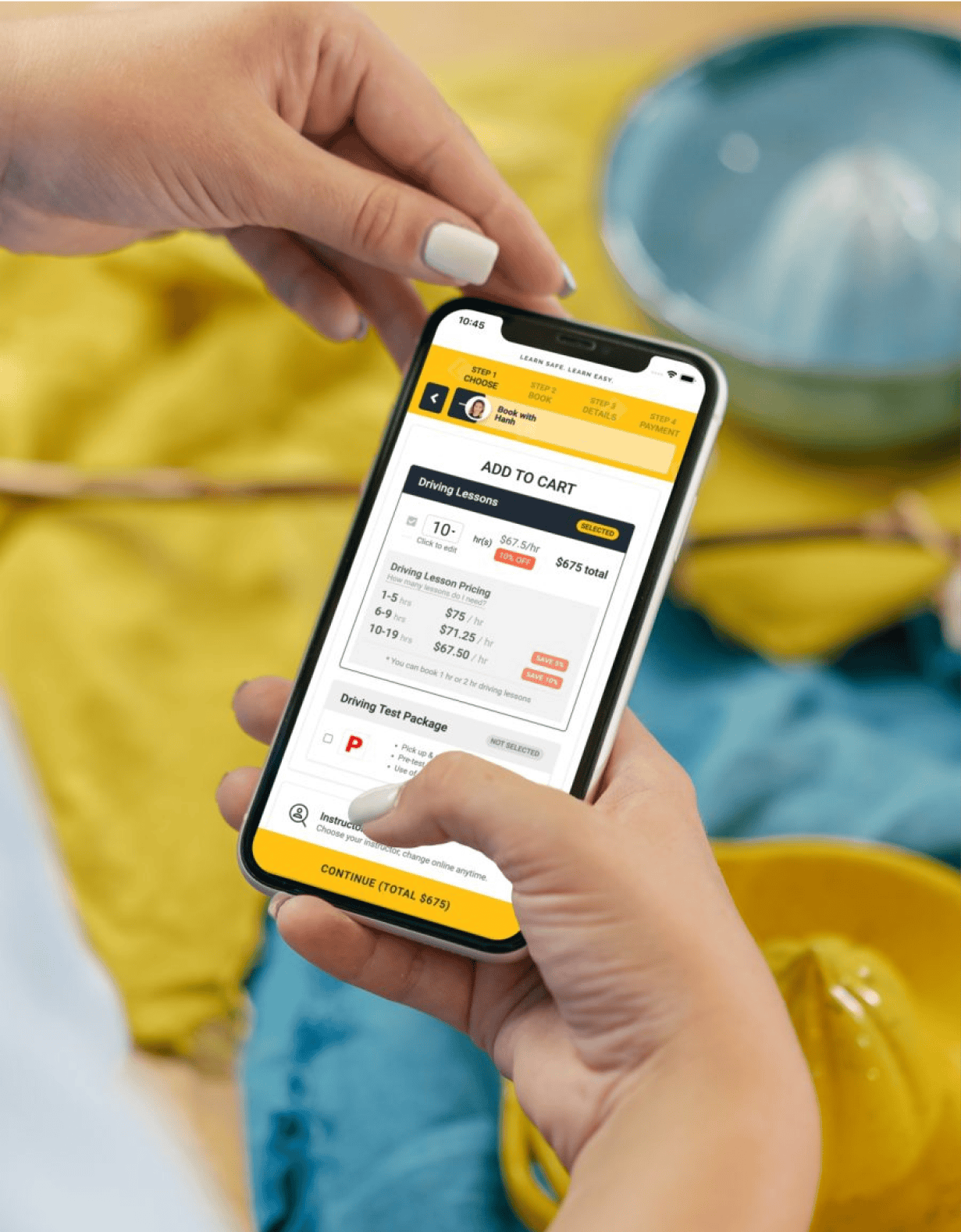
EzLicence processes $100M+ in annual bookings, with 250,000+ lesson hours booked each year, 1,000 verified instructors and 8,000+ five-star Google reviews, on a platform we built and still operate. Volume like that changes what the engineering has to be. The interesting failure was not a traffic spike, it was accounting: financial reports would not balance, because they were being reconstructed at report time across a dozen unrelated tables, and no two runs agreed. We replaced that with a canonical double-entry credit ledger covering 18 event types, with real-time capture and idempotent reprocessing. Every liability report now draws from one reconcilable source, finance discrepancy complaints stopped, and outstanding credit is aged into time buckets and categorised by source so the business can make cash-flow decisions on it. We also shipped The Handbook, an AI knowledge system, in 4 weeks: it consolidated seven years of product evolution, delivers a 50 percent efficiency gain across workflows, and automates 90 percent of documentation updates with 10 percent human oversight. That is what enterprise app development looks like after year one - less about launching, more about the systems the business runs on.

EzLicence booking platform screen built by PixelForce EzLicence instructor management screen
Built and operated by PixelForce $100M+ annual bookings · 250,000+ lesson hours a year

How enterprise app development is scoped and priced.

Three engagement models, in the order they normally run. Every figure below is an envelope shaped by scope rather than a fixed quote off a rate card, which is exactly why Scoping & Design comes first and why no development quote is issued without it. Enterprise app development cost is driven less by the feature list than by the surroundings: how many existing systems have to be integrated, how much data has to be migrated, what the security and audit obligations are, and how many approval cycles sit between a decision and a signature. Read the two build numbers together, because a real enterprise platform needs both phases, and treat Phase 3 as part of the cost of ownership rather than an optional extra. Enterprise buyers should note that Phase 1 is a genuinely standalone commitment: you can complete it, take the Business Requirements Document, Product Requirements Document, full UX/UI design and fixed-cost Statement of Work to your board, and decide not to proceed.

Phase 1 · Scoping & Design

$35,000 to $65,000

The mandatory first phase of every enterprise build, and a standalone commitment. Preliminaries and two strategic workshops produce the Business Requirements Document, a complete enterprise-grade UX/UI design covering every consumer screen and the key administrative screens, a Product Requirements Document capturing feature logic, integrations and technology choices, and a fixed-cost Statement of Work for the build. This is also where the decisions that are expensive to reverse get made: the integration map, the identity and access model, data residency, and what version one deliberately excludes. Best for any organisation with a mandate and no development-ready blueprint. You can stop here, and some do. No Blueprint, no Build.

  • Two strategic workshops, priorities locked
  • BRD, PRD and full enterprise-grade UX/UI design
  • Integration map and access model settled here
  • Fixed-cost SoW for development
  • Standalone - take it to your board and decide

Phase 3 · Post Launch Support

From $10,000 per 4 weeks

Two options, and enterprise clients choose one at launch. Option 1, Warranty, Monitoring & Support, is $4,000 per month and covers the critical-bug warranty, 24/7 infrastructure monitoring with proactive alerts, business-hours incident response, advance notice of required third-party updates with the cost implications stated upfront, and a monthly Platform Health Report, with technical support capped at seven hours per month over a three-month warranty term. Option 2, the Product Retainer, includes everything in Option 1 and adds a product roadmap workshop in month one, continuous sprints shipping designed features into production, structured sprint planning and quarterly business reviews. It is priced per four-week cycle against a committed story-point capacity: Steady $10,000, Growth $20,000, Scale $30,000, Velocity $40,000, Momentum $50,000, Enterprise on application.

  • Option 1 - Warranty, Monitoring & Support, $4,000 per month
  • Option 2 - Product Retainer, from $10,000 per four-week cycle
  • Option 2 includes everything in Option 1
  • Roadmap workshop, then continuous sprints
  • Quarterly business reviews

What sits underneath an enterprise-grade platform.

Six layers that appear in nearly every enterprise platform we build, whatever the sector. This is the part worth interrogating when you are comparing an enterprise software development company, because the feature list is the easy half. Whether the platform survives its third year is decided by the identity model, the integration layer, the operational surface, the audit trail, the release pipeline and the data model - none of which demonstrate well and all of which are extremely expensive to retrofit. Each layer below is built to be extended, because an enterprise application is never finished, only inherited.

Identity, SSO and access control

Enterprise Single Sign-On, multi-factor authentication and a role model designed alongside the platform rather than bolted on after it. We integrate with the identity providers organisations actually run.

  • SSO with Microsoft Entra ID, Google Workspace, Okta
  • Any SAML 2.0 or OpenID Connect provider
  • Multi-factor: push, one-time code, authenticator, biometric
  • Role-based access control across every user type
  • Provisioning and de-provisioning as staff change
  • Audit logging on privileged actions

Integration and API layer

The layer that decides whether someone else's outage becomes your outage. Designed for partial failure from the start, with retries, idempotency and reconciliation you can audit rather than infer.

  • Versioned, documented public and internal APIs
  • Queued asynchronous processing with retries
  • Idempotent handlers so replays are safe
  • Graceful degradation when a dependency fails
  • Webhook ingestion with signature verification
  • Reconciliation reporting between systems

Administrative and operations portal

The screens your own people live in every day. On most enterprise projects this surface is as large as the customer-facing one, and building it properly removes a permanent dependency on developer tickets.

  • User, content and catalogue administration
  • Support tooling with safe impersonation
  • Configuration changes without a code release
  • Bulk operations and data import or export
  • Operational reporting for each internal team
  • Feature flags for controlled rollout

Access control, audit trails and data residency

Who can see what, what gets recorded, and where the data physically lives. These are architecture decisions taken in Phase 1, because retrofitting any of them into a live enterprise platform is a project rather than a task.

  • Encryption at rest and in transit
  • Data residency, so Australian data stays in Australia
  • Immutable audit trails on sensitive actions
  • Retention and deletion policies enforced in code
  • Independent third-party penetration testing coordinated on request
  • Documented, rehearsed incident response

Cloud infrastructure and release pipeline

Infrastructure on your own AWS account, designed by an AWS Advanced Tier Partner with 15+ AWS-accredited engineers, so shipping a fix takes hours rather than a fortnight and a traffic spike is a good day.

  • Auto-scaling compute and load balancing
  • CI/CD pipelines and staging environments
  • Secrets management and least-privilege IAM
  • Backups and rehearsed disaster recovery
  • Monitoring, alerting and crash reporting
  • Infrastructure defined as code, not clicked together

Data model, analytics and reporting

Where enterprise scale is usually won or lost. On Move With Us the core workout table shrank from 42GB to 0.9GB after a modelling refactor, and database CPU peaks fell from 40 percent to under 5 percent.

  • A data model designed for the read patterns you have
  • Canonical ledgers rather than report-time reconstruction
  • Warehouse, transformation and reporting layer
  • Executive dashboards and operational reporting
  • Event instrumentation across the core journeys
  • Your data on your infrastructure, as your IP

One conversation.
Three phases.
Built to grow.

The same canonical PixelForce engagement model behind 100+ shipped products and $1.5B+ in combined client revenue, applied to your enterprise app. The 1-3-1 method runs through every conversation - one problem, three options with honest trade-offs across budget, timeline and scope, one recommendation. No Blueprint, no Build.

  1. 0
    Free

    Discovery call

    A free, no-obligation conversation to find the right path for your enterprise app before you commit a dollar.

    • Mutual NDA signed up front
    • 1-3-1 method: one problem, three options, one recommendation
    • Honest trade-offs across budget, timeline and scope
    • A straight answer on what a credible build looks like
  2. 1
    4-8 weeks

    Scoping & Design

    Everything you need to build with total confidence - a fully costed, designed plan with no scope surprises.

    • Strategic workshops and BRD
    • Full UX/UI design system, every screen built
    • PRD and a fixed-cost Statement of Work
    • No Blueprint, no Build - Phase 1 before any Phase 2 quote
  3. 2
    3-6 months

    Development, QA and Release

    From approved designs to your live enterprise app, built and tested at a steady sprint cadence.

    • Sprint cadence with regular demos
    • QA across iOS, Android and the edge cases
    • End-to-end App Store and Google Play submission
    • Built to scale from 1,000 to 1,000,000 users
  4. 3
    Ongoing

    Post Launch Support

    We do not disappear at launch - monitoring, warranty, and an optional retainer keep your enterprise app growing.

    • 24/7 monitoring and a critical-defect warranty
    • Ongoing technical support
    • Optional Product Retainer: four-week sprints and quarterly reviews
    • The model that grew SWEAT to a $400M platform

Enterprise app development projects.

Selected enterprise app development work, built by a 100% in-house Adelaide team you would actually work with on your platform. Read these for the engineering decisions rather than the screenshots - which existing systems had to be integrated, what the data model had to survive, and what changed in the year after launch. Between them they cover the organisation types we see most often on enterprise engagements: national marketplaces carrying transaction volume, e-commerce operations automating cross-continental fulfilment, and institutions shipping software into the field.

Enterprise app development questions.

The questions enterprise buyers ask before committing to a build - what enterprise app development costs in Australia, how long it takes, what our AWS Advanced Tier Partner status actually means, whether the platform will scale to millions of users, what medical-grade and Big 4 audit-ready mean in practice, how enterprise SSO and payments are handled, what ongoing monitoring and support cover, how to choose an enterprise mobile app development company, and whether modernising an existing system beats rebuilding it. If your question is not answered here, bring it to a discovery call - that call exists precisely for the questions a web page cannot answer responsibly.

Enterprise app development at PixelForce is priced in phases, and every figure is an envelope shaped by scope rather than a fixed quote off a rate card. Phase 1, Scoping & Design, is typically $35,000 to $65,000 and is mandatory before any build. No development quote is issued without it - no Blueprint, no Build.

Phase 2, Development, QA and Release, typically runs $100,000 to $350,000 depending on what is actually being built: web or mobile, single-sided or multi-sided, how many enterprise systems it has to integrate with, and how much regulated or financial logic sits underneath. The $350,000 figure is a recommendation rather than a ceiling. Even where the budget is larger we advise capping version one near it and channelling the remainder into evidence-led iteration after launch, because a bigger budget should buy a longer runway rather than a bigger version one.

Phase 3, Post Launch Support, has two options. Option 1, Warranty, Monitoring & Support, is $4,000 per month and covers the critical-bug warranty, 24/7 infrastructure monitoring, business-hours incident response and a monthly Platform Health Report, with technical support capped at seven hours per month. Option 2, the Product Retainer, includes everything in Option 1 and adds a product roadmap workshop, continuous product sprints and quarterly business reviews. It is priced per four-week cycle against a committed story-point capacity: Steady $10,000, Growth $20,000, Scale $30,000, Velocity $40,000, Momentum $50,000, and Enterprise on application.

Third-party running costs sit outside those figures and stay on your own accounts - cloud hosting, identity, payments, messaging and analytics. Those providers change their pricing regularly, so check each provider's current pricing page rather than a number quoted on ours.

Enterprise app development timelines are set in Phase 1 Scoping and Design rather than before it, because integration count, data migration, security review and your own approval cycles drive the schedule more than the feature list.

The timeline is set in Phase 1 rather than before it, because an enterprise platform's schedule is driven by integration count, data migration, security review and your own approval cycles far more than by the feature list. What we can describe upfront is the shape of the work.

Phase 1, Scoping & Design, runs preliminaries and two strategic workshops, then produces the Business Requirements Document, the complete UX/UI design, the Product Requirements Document and a fixed-cost Statement of Work. Phase 2 then runs to a milestone sequence: foundation setup covering database schema, authentication framework and core API scaffolding; a prototype demonstration of the key technical pipeline; backend completion with cloud infrastructure and CI/CD pipelines; the app build across web, iOS, Android and the admin portal; internal testing against the PRD acceptance criteria; client User Acceptance Testing; then app store submission and launch.

For a sense of real delivery rather than a promise, Revia was a four-month build and reached number 3 in Apple's Health and Fitness category within 48 hours of launch. Pilates Obsession went live within 12 weeks and on budget. SuspectED, built for Flinders University, took 10 months because it had to work fully offline with forensic-grade chain-of-custody, and it has since been deployed in developing countries including India, Pakistan and Indonesia. Enterprise timelines vary that widely, which is exactly why we will not quote one before Scoping & Design is complete.

PixelForce is an AWS Advanced Tier Partner with 15+ AWS-accredited engineers. Advanced Tier is not a badge that can be bought. Amazon validates it against certification depth across the team and a record of successful customer deployments, and it has to be maintained rather than won once.

Being fully AWS certified as a firm rather than at one or two individuals is the part that matters for enterprise work, because it means the architecture review, the build and the on-call rotation are all staffed by people who hold the credential. In practice it gives a project a direct AWS support channel for complex technical issues, AWS architecture reviews validating designs before they are built, and a team that has already made the expensive mistakes on someone else's schedule. Across 100+ shipped products we hold a 99.99 percent uptime rate and a 98 percent first-time app store approval rate.

Your infrastructure is hosted on your own AWS account rather than ours, and your data and intellectual property stay on your own infrastructure. That is a deliberate boundary: it means you can change partners without changing platforms.

PixelForce builds applications that scale to millions of users, with SWEAT reaching 30 million subscribers across 155 countries and EzLicence processing $100M+ in annual bookings on a platform we built and still operate.

Yes, and the evidence is in production rather than in a whitepaper. We built and scaled SWEAT from launch to a $400M acquisition by iFIT, with 30 million subscribers across 155 countries. EzLicence processes $100M+ in annual bookings with 250,000+ lesson hours booked each year, 1,000 verified instructors and 8,000+ five-star Google reviews, on a platform we built and still operate. Across the firm we have served 50M+ users and hold a 99.99 percent uptime rate across 100+ shipped products.

The infrastructure patterns behind that are deliberately unremarkable: auto-scaling compute so capacity follows demand rather than a forecast, a global CDN serving media from the edge, read replicas and caching in front of the database, load balancing across instances, and queues absorbing background work so a slow analytics job never blocks a user request.

What is less obvious is that scale is usually a data-modelling problem wearing an infrastructure costume. On Move With Us we refactored the user program engine from duplicated per-user data to templates: the core workout table shrank from 42GB to 0.9GB, a 98 percent reduction, database CPU peaks fell from 40 percent to under 5 percent, and programming changes now reach users instantly with no workout reboot. iAppraise suffered chronic slowdowns and 500 errors at peak demand despite robust server specifications. We fixed the process and file-descriptor bottlenecks, moved the platform to an AWS Auto-Scaling Group with CI/CD pipelines and Secrets Manager, and it now rides traffic spikes with zero degradation, pays only for the capacity it uses, and the team builds features instead of firefighting infrastructure.

Medical-grade means building software where inaccuracy risks harm to a person rather than a poor review, and applying that standard whether or not the product is regulated. It shows up in four places.

Data accuracy: multi-layer validation of health inputs and derived values, algorithms grounded in the clinical literature rather than in guesswork, explicit edge-case testing at the extremes, and cross-validation against reference devices. Testing depth: automated unit, integration and end-to-end suites, manual testing against real data, load testing, and security testing including penetration testing and vulnerability scanning.

Reliability: graceful degradation when a dependency fails so user data is never lost, clear error states that tell a person what to do next, automatic retry logic for transient failures, and complete audit trails so an incident can be reconstructed rather than guessed at. Privacy: encryption at rest and in transit, correct use of HealthKit and Google Fit permissions, data residency handled so Australian health data stays in Australia, and access controls that are enforced rather than merely documented.

The reason we apply the discipline beyond healthcare is that it makes every platform better. OpBill's AI-powered OCR claiming flow made medical billing 90 percent faster with 98 percent user satisfaction, built in 4 months. Financial records, customer data and core business operations all benefit from the same rigour, because the failure modes are the same shape even when the stakes are described differently.

Big 4 audit-ready means an enterprise application is built so that adversarial technical due diligence finds nothing to discount, across code quality, security, scalability evidence, architecture documentation, operational maturity and intellectual property hygiene.

When SWEAT was acquired for $400M, the platform passed Big 4 due diligence at exit. Technical due diligence at that level is an adversarial read of your codebase, your infrastructure and your paperwork, looking for anything that could reduce the price or kill the deal. Audit-ready means being built so that read finds nothing.

Auditors examine code quality and test coverage against the actual coverage reports rather than the claim; security posture including penetration test results, vulnerability scanning, and how encryption and access control are actually implemented rather than described; scalability evidence in the form of load testing and auto-scaling that has been configured and tested; architecture documentation covering system, data flow and infrastructure diagrams with every integration point named; operational maturity, meaning monitoring, alerting, documented incident response and a disaster recovery plan that has been rehearsed rather than written; intellectual property hygiene with clear ownership and a third-party licence audit; dependency health with no abandoned packages carrying known vulnerabilities; and team capability, meaning the documentation is good enough for a new developer to onboard and no critical knowledge sits in one person's head.

This matters even if you never sell. Audit-ready is simply a description of institutional-grade engineering: fewer incidents, easier hiring, lower maintenance cost, and the ability to raise capital without a remediation project first. We build enterprise platforms to that standard by default rather than offering it as an upgrade.

PixelForce delivers enterprise Single Sign-On, multi-factor authentication and identity management as standard parts of an enterprise build, integrating with Microsoft Entra ID, Google Workspace, Okta and any SAML 2.0 or OpenID Connect provider.

Yes. Enterprise Single Sign-On (SSO), multi-factor authentication (MFA) and identity management are standard parts of an enterprise build rather than an add-on. We integrate with the identity providers organisations actually run: Microsoft Entra ID (formerly Azure Active Directory), Google Workspace, Okta, and any SAML 2.0 or OpenID Connect provider.

On the authentication options themselves, SSO lets staff sign in with existing corporate credentials, so there is no second password to provision, rotate or revoke when someone leaves. Multi-factor can be a push notification, a one-time code, an authenticator app or biometric. Consumer-facing products usually add social sign-in through Apple and Google, and passwordless options such as email magic links or WebAuthn where the audience will accept them. Role-based access control and audit logging are designed alongside the identity model, not bolted on after it.

The reason we usually recommend a managed identity platform over building authentication in-house is not the initial build - it is the decade afterwards. Session handling, token rotation, breach response, audit logging and the long tail of enterprise identity edge cases are a permanent maintenance commitment. Identity providers price their own products and change those prices, so check the provider's current pricing page. Which provider suits you is decided in Phase 1 against your existing estate rather than assumed here.

PixelForce builds enterprise payment processing covering subscriptions, one-off payments, marketplace split settlement, multi-currency, revenue recovery and fraud prevention, on platforms carrying real volume such as EzLicence, which processes $100M+ in annual bookings.

We have built payment systems carrying real volume. EzLicence processes $100M+ in annual bookings with 250,000+ lesson hours booked each year, on a platform we built and still operate. SWEAT ran subscription billing across 30 million subscribers in 155 countries before its $400M acquisition by iFIT.

The capability set covers subscription billing with trials, promotional pricing, tiered plans and upgrade or downgrade flows; one-off payments including digital wallets; marketplace payments with split settlement, held funds, delayed transfers and vendor payouts; multi-currency and local payment methods; revenue recovery through dunning and retry logic; and fraud prevention with strong customer authentication where the market requires it. Card data never touches your servers, which is the entire point of using a certified processor.

The harder part of enterprise payments is rarely the checkout. On EzLicence, financial reports would not balance because they were reconstructed at report time across a dozen unrelated tables. We replaced that with a canonical double-entry credit ledger covering 18 event types, with real-time capture and idempotent reprocessing. Every liability report now draws from one reconcilable source, finance discrepancy complaints stopped, and outstanding credit is aged into time buckets and categorised by source so the business can make cash-flow decisions on it. Processor fees and their structures change regularly, so check each provider's current pricing page.

Ongoing monitoring and support for an enterprise platform is Phase 3, with two options: Warranty, Monitoring and Support at $4,000 per month, or a Product Retainer priced per four-week cycle from Steady at $10,000.

Phase 3, Post Launch Support, has two options and you choose one at launch. Option 1, Warranty, Monitoring & Support, is $4,000 per month. It covers defect resolution for critical bugs under warranty terms, 24/7 infrastructure monitoring with proactive alerts, business-hours response to critical incidents, clear advance notice of required third-party updates with the cost implications stated upfront, a monthly service portal review and Platform Health Report, and limited technical support for customer ticket investigation capped at seven hours per month. The warranty itself runs a three-month term.

Option 2, the Product Retainer, includes everything in Option 1 at no additional cost and adds continuous product improvement: a product roadmap workshop as a month-one deliverable, regular product sprints delivering designed features into production, structured sprint planning per cycle, transparent progress reporting on what is done and what is next, and quarterly business reviews aligning the product with commercial goals. It is priced per four-week cycle against a committed story-point capacity - Steady $10,000, Growth $20,000, Scale $30,000, Velocity $40,000, Momentum $50,000, and Enterprise on application.

Underneath both options the monitoring is the same: application performance monitoring with slow-transaction and error tracking, infrastructure monitoring covering resource utilisation and auto-scaling events, mobile crash and performance reporting on iOS and Android, synthetic checks simulating user journeys against key endpoints, and alerting tied to both technical thresholds and business metrics. Most enterprise clients move to Option 2 within the first year, because a platform that stops changing is a platform that starts ageing.

Enterprise app development is the design and construction of software for organisations rather than individuals - platforms that carry business-critical workload, integrate with existing systems, enforce a security and access model, and are expected to run for years under audit. The distinguishing features are not in the feature list. They are the non-functional requirements: availability, scalability, security, auditability, data residency, disaster recovery and supportability.

Practically, an enterprise application development project differs from a consumer build in four ways. It integrates rather than stands alone, so identity, finance, logistics and reporting systems all have to be spoken to correctly and kept in step. It has more than one kind of user, which means role-based access and an administrative surface as substantial as the consumer one. It is measured on its worst day rather than its average one, so failure behaviour is designed rather than discovered in production. And it is inherited: someone who has never met the original team will maintain it, which makes documentation and architectural clarity part of the deliverable rather than a courtesy.

Choosing an enterprise mobile app development company is best done by asking every firm on your shortlist the same five questions, covering ownership, who writes the code, cloud credential depth, due diligence history and the post-launch model.

Ask for the arc rather than the portfolio. Any enterprise mobile app development company can show screenshots. The questions that actually separate them are what happened to those platforms two years after launch, who operates them now, and what broke along the way.

There are five things worth asking of every firm on your shortlist, including us. Where do the code and infrastructure live, and does the intellectual property transfer to you? Who actually writes the code - the team in the room, or a subcontracting chain in another timezone? What is the credential depth on your cloud platform, measured at the level of the firm rather than one certified individual? Has anything they built been through third-party technical due diligence, and did it pass? And what is the post-launch model, priced and written down, rather than described as looking after you?

For the record, our answers are: your own AWS account with intellectual property transferring to you, 100% in-house development from an Adelaide headquarters, AWS Advanced Tier Partner with 15+ AWS-accredited engineers, SWEAT passed Big 4 due diligence at a $400M exit, and Phase 3 priced openly at $4,000 per month for Warranty, Monitoring & Support or from $10,000 per four-week cycle for the Product Retainer.

PixelForce can usually modernise an existing enterprise system rather than rebuild it, starting with a Tech Audit at $5,000 per platform that establishes the honest state of the codebase, infrastructure, dependencies and data model.

Usually yes, and it is normally the better answer. A full rebuild throws away years of encoded business rules along with the technical debt, and it puts the organisation through a migration it did not need. Our default is a Tech Audit first, at $5,000 per platform, which reads the codebase, the infrastructure, the dependencies and the data model and comes back with the honest state of the asset. Project Takeover and Tech Stabilisation then runs $20,000 to $50,000 where a platform needs to be brought under control before anything else can happen.

We have rescued 15+ platforms in the past 3 years: app ratings recovered from 3.8 to 4.6 stars, crash rates typically cut 50 to 70 percent within 2 weeks, and feature development 60 to 80 percent faster after modernisation. On Move With Us, a platform with 200,000+ users, crash rates came down 50 percent, app performance improved 40 percent, user satisfaction rose 30 percent, and there was zero business interruption during the fix. Infrastructure work carries its own return: we reduced one client's cloud hosting costs by over 50 percent, saving them more than $10,000 every month, and decreased another client's per-user cloud costs by 60 percent. Our app rescue and modernisation service covers this path in full.

Build the enterprise platform that passes due diligence.

Tell us what the platform has to do, who depends on it, and what happens on the day it goes down. The first consultation is free, covers the business, the users and the constraints, and ends with a 1-3-1 recommendation: one problem, three options with their trade-offs, one recommendation across budget, timeline and scope. If the honest answer is that you should modernise what you have rather than rebuild it, we will say so.

  • AWS Advanced Tier Partner · 15+ AWS-accredited engineers
  • 99.99% uptime · 98% first-time app store approval
  • 100% in-house development · Adelaide HQ
  • Top Clutch App Development Company · Australia 2026