
Crop Shop Boutique
Operational automation · 2-week cycle
100%pre-shipment notifications automated
2 wksdevelopment cycle
Rapid prototyping services for teams with an AI idea and no proof it works yet. We build the smallest thing that validates the riskiest question about the model, the data or the demand, then engineer the validated survivors into production.
Every project below started as a narrow first version aimed at one question, and every one of them is still in service. The AI knowledge system we built for EzLicence went from idea to shipped in 4 weeks, consolidated seven years of product evolution, delivers a 50 percent efficiency gain across workflows and automates 90 percent of documentation updates with 10 percent human oversight. OpBill's AI-powered OCR claiming flow, Snap, Scroll, Done, made medical billing 90 percent faster with 98 percent user satisfaction and was built in 4 months. For Crop Shop Boutique we connected ShipBob, Klaviyo and Shopify in a 2-week development cycle, automating 100 percent of pre-shipment customer notifications and eliminating the manual CSV export workflow entirely. Three very different problems - internal knowledge, document capture, operational automation - and one shared method: find the riskiest assumption, build the smallest thing that validates it, then engineer what survived validation. That last step is the one that separates a prototype from a product, and it is where most AI pilots quietly stop. If your product does not carry model risk and you simply need a well-scoped first build, the right page is MVP app development, not this one.

AI knowledge system · Australia
AI OCR claiming flow · 4-month build
Operational automation · 2-week cycle
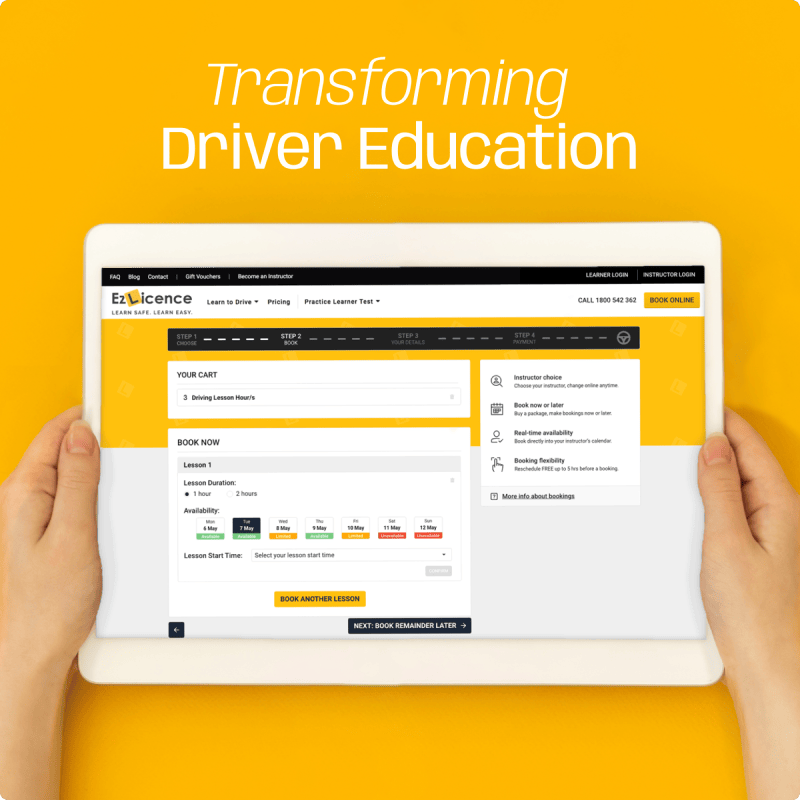
EzLicence had seven years of product evolution scattered across documents, tickets, threads and the heads of the people who had been there longest. The question was not whether a language model could summarise a document - everyone knew that. It was whether a system built on one could be trusted by a team that would notice immediately if it were wrong. We shipped the AI knowledge system in 4 weeks: it consolidated seven years of product evolution, delivers a 50 percent efficiency gain across workflows, and automates 90 percent of documentation updates with 10 percent human oversight. That last number is the interesting one. The 10 percent is designed in, not left over. Deciding up front which cases a human still judges is what made the other 90 percent safe to automate, and it is the single decision that most AI pilots skip on their way to a demo that impresses and a rollout that never happens. This is what rapid prototyping is actually for: not building something quickly, but validating quickly what has to be true before anyone commits to a full AI MVP.

Independent recognition for the team behind the EzLicence AI knowledge system, OpBill's AI OCR claiming flow and 100+ shipped products - Apple Best of Developers, Watch and TV App of the Year, and Top Clutch App Development and Software Development Company in Australia 2026. PixelForce is an AWS Advanced Tier Partner with 15+ AWS-accredited engineers, holding a 99.99 percent uptime rate and a 98 percent first-time app store approval rate. Those engineering credentials matter more on an AI build than on a conventional one, because the hard part of an AI product is rarely the model call. It is the data pipeline feeding it, the infrastructure carrying the load, the observability that makes a quiet failure visible, and the cost controls that keep a working prototype from becoming an unaffordable product.




Four reasons founders, product teams and corporate innovation groups bring an AI idea here rather than to a generalist agency or an internal spike that never finishes. An AI prototype is a different discipline to a conventional first build, because the thing most likely to kill the project is not the feature list - it is that the model does not clear the bar on your real data, or that it clears it and costs too much per interaction to be worth running. Everything below is organised around validating that early and cheaply, and being honest about the answer. AI validation is only valuable if you are willing to act on what it tells you, including when it tells you to stop.
Most AI projects begin with a feature and discover the quality question later, usually in front of a stakeholder. We invert that. Phase 1 Scoping & Design settles what "good enough" means for your context, who judges it, how it is measured, and what happens to the cases that fall short - before a single screen is designed. That definition becomes the pass mark the prototype is built against, so the result is a verdict rather than an opinion. The 1-3-1 method frames each trade-off: one problem, three options with their consequences, one recommendation across budget, timeline and scope.
There is a real place for throwaway code, and we say so plainly when a question is best answered that way. What we will not do is let a throwaway quietly become the product. When a prototype is meant to grow up, it is built on scalable architecture with real instrumentation, hosted on your own AWS account with the IP transferring to you. PixelForce is an AWS Advanced Tier Partner with 15+ AWS-accredited engineers and holds a 99.99 percent uptime rate across 100+ shipped products. The EzLicence AI knowledge system shipped in 4 weeks and is still running - that combination is the point.
The people who scope your AI prototype are the people who build it. PixelForce runs 100% in-house development from an Adelaide headquarters, so there is no subcontracting chain between the conversation and the code and no timezone gap turning a two-minute judgement call into a two-day round trip. Prototyping depends on that speed more than any other kind of work, because the whole method is a tight loop of build, look at the output, decide. Cadence is fixed and visible: squad sessions every 2 weeks, planning every 4 weeks, and sprint demos you attend rather than a status email you skim.
A good deal of what gets scoped as an AI problem is a workflow problem wearing a costume, and a rules engine or a better integration would answer it faster and cheaper. We will say so. We never scope something a client cannot afford to build, budget alignment happens at the first consultation rather than after a proposal lands, and no development quote is issued without a completed Phase 1. Declining a project, or recommending against building, is a valid outcome here. Across 100+ shipped products, consequence-awareness has been worth more to clients than enthusiasm about a model.
Six services covering the distance between an AI idea and something you can put in front of real users, in the order they normally run. Most teams need three or four of them sequenced rather than all six bought at once, and which three is settled in Phase 1. The dividing line that matters throughout is between validating technical feasibility and validating demand: they cost different amounts to answer and they call for different things to be built. If you are building AI features into an existing product rather than validating a new one, our AI-powered app development service is the closer fit, and for a conventional first build with no model risk, go to MVP app development.
The cheapest thing we can sell you, and often the most useful. A structured review validating the idea against current model capability, the data you already hold, the accuracy your use case actually requires, the latency your users will tolerate, and the operating cost at realistic volume. It ends in a clear recommendation, including the recommendation not to proceed. Data readiness is the part that surprises people most often, because preparation is usually the largest single piece of work in an AI build and it is invisible until somebody looks.
The fastest way to replace an argument with an artefact. A rough working version, built deliberately quickly, so the team can react to something real instead of to a slide. We are explicit up front about whether it is a throwaway or the seed of the real thing, because the two are engineered differently and confusing them is how organisations end up running a demo in production. Rapid prototyping is where AI-accelerated development genuinely earns its keep, and it is also where it has to stop.
When the dominant risk is technical, a proof of concept is the right first move. It answers one narrow question - can this model reach the accuracy we need on our data, can it integrate with the legacy system, can it run fast enough at this volume - and it succeeds the moment the question is answered, including when the answer is no. That is a good outcome, cheaply bought. We run AI proof of concept development as its own engagement, sized to the unknown, so you are not paying full build prices to settle one engineering question.
The first version real users touch, which means it needs a real user experience and not just a working model. Enterprise-grade design system, high-fidelity screens for every consumer flow and the key admin screens, and interaction patterns built for uncertainty - showing confidence, making the reasoning inspectable, and always leaving a manual path. OpBill is the shape of this done well: an AI OCR claiming flow reduced to Snap, Scroll, Done, which made medical billing 90 percent faster with 98 percent user satisfaction, built in 4 months.
Choosing between hosted models, and between a hosted model and a fine-tuned one, is an evidence problem rather than a preference. We build an evaluation set from your real inputs, benchmark candidates against the accuracy bar agreed in Phase 1, and measure latency and cost per interaction alongside quality so the decision accounts for all three. The same harness then becomes your regression suite, which matters because a prompt change or a provider model update can move quality without moving a single line of your code.
The step that decides whether the prototype was an investment or an expense. Scalable infrastructure and CI/CD on your own AWS account, observability covering model behaviour as well as servers, fallback and graceful degradation for when the model is unavailable or unsure, human escalation for the cases needing judgement, and the cost controls that keep unit economics viable at volume. Where the work turns into standing automation and agentic workflows rather than a product feature, our AI agents and automation service picks it up.
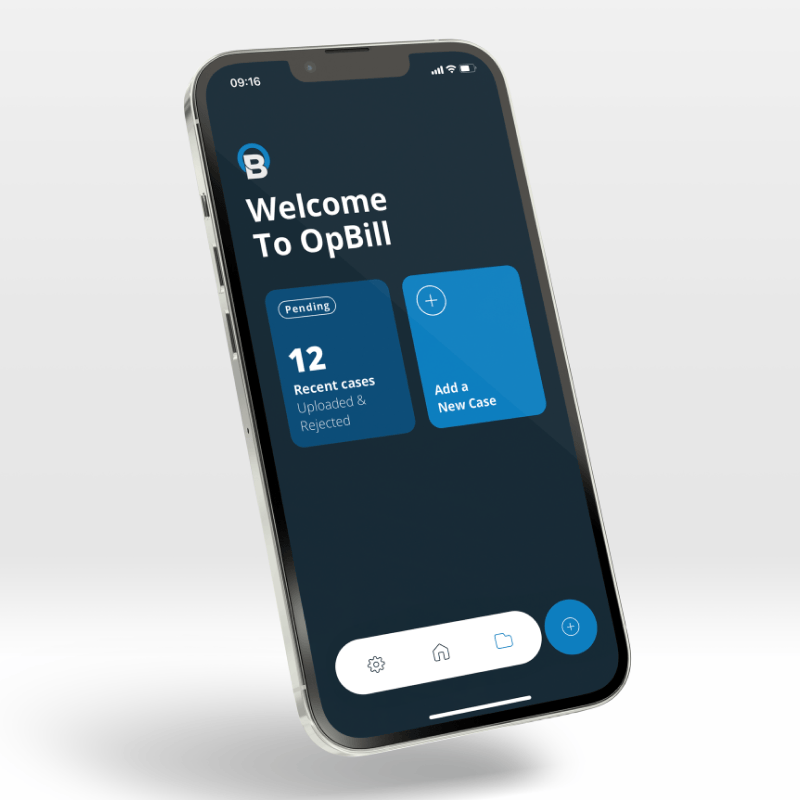
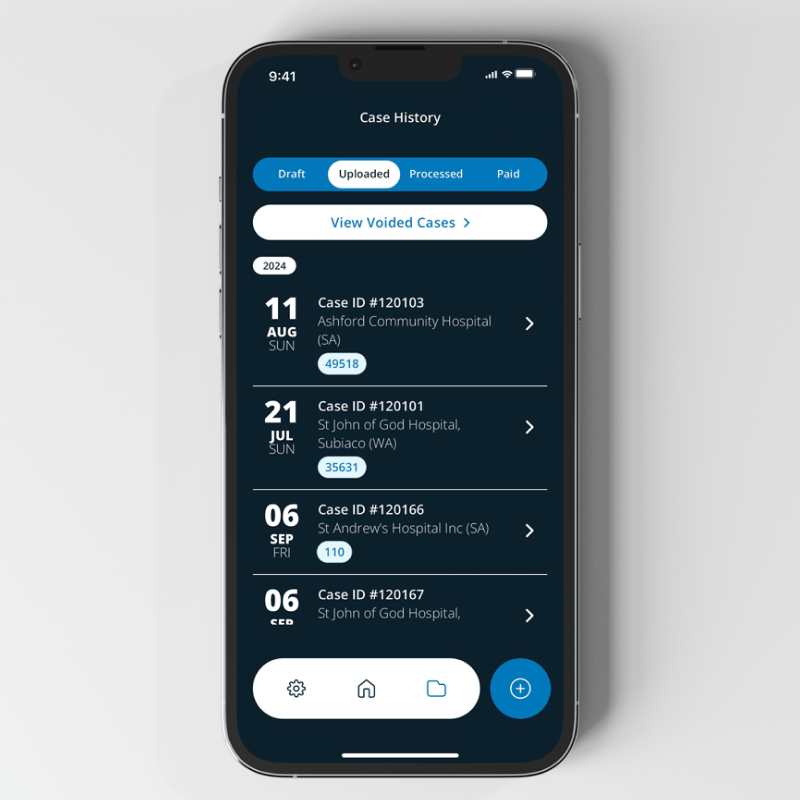
Medical billing is the kind of problem AI is genuinely good at and product teams are frequently bad at, because the model is the easy part and the workflow around it is where the value sits. OpBill's AI-powered OCR claiming flow made medical billing 90 percent faster with 98 percent user satisfaction, and it was built in 4 months. The whole interaction was reduced to three words - Snap, Scroll, Done - which is worth dwelling on, because a document-capture model that is right most of the time is only useful if correcting the remainder takes seconds rather than restarting the task. That is an interface problem, not a machine learning one. The 98 percent user satisfaction figure is the one we would point at if you are evaluating AI prototyping partners, because accuracy benchmarks are easy to quote and adoption is the number that decides whether anything was worth building.
Three engagement models, in the order they normally run. Scope is what drives everything below, which is exactly why Scoping & Design comes first and why no development commitment is made without it. On an AI build the cost drivers are slightly different from a conventional one: how much data engineering the model needs, whether hosted models clear your accuracy bar or a custom one is required, how much regulated logic sits underneath, and how much of the work is making the output trustworthy rather than making it exist. Separate from all of it is the model bill you pay your AI provider directly, which we model against current published rates during Phase 1 rather than quoting here, because provider pricing changes and a stale number is worse than none.
The mandatory first phase of every build, and a standalone commitment you can stop after. Preliminaries and two strategic workshops produce the Business Requirements Document, a complete enterprise-grade UX/UI design covering every consumer screen and the key admin screens, a Product Requirements Document and a fixed-cost Statement of Work for the build. On an AI engagement it also carries the work specific to model risk: a data audit, a feasibility view on whether current models clear your accuracy bar, the model selection decision with its trade-offs written down, and a projection of operating cost at realistic volume. No Blueprint, no Build.
The AI MVP build itself, developed, tested and released against the signed Statement of Work: foundation and authentication, the data pipeline and retrieval layer feeding the model, backend services and cloud infrastructure, the application itself across the platforms agreed in Phase 1, the evaluation harness that proves quality against the accuracy bar, internal QA against the PRD acceptance criteria, client User Acceptance Testing, then release. A tight version one is a recommendation, not a constraint we impose. With a larger budget we still advise holding the first release to that scope and spending the rest on evidence-led iteration, and that advice is stronger on an AI product than anywhere else, because the first month of real usage reliably redirects the roadmap.
Where a validated AI MVP becomes a product, and the phase AI products need most, because model quality drifts, provider models change underneath you and real inputs keep getting stranger. There are two ways to engage. Option 1, Warranty, Monitoring & Support, covers the critical-bug warranty, 24/7 monitoring, business-hours incident response and a monthly Platform Health Report, with technical support capped at seven hours per month. Option 2, the Product Retainer, includes everything in Option 1 and adds a roadmap workshop in month one, continuous sprints shipping designed features into production, and quarterly business reviews. It runs per four-week cycle against a committed story-point capacity, across tiers from Steady through to Momentum, with Enterprise on application.
Six modules that appear in nearly every AI prototype and AI MVP we build, whatever the market. This is the part worth examining hardest when comparing AI prototyping partners, because the difference between a prototype that settles a question and one that merely demonstrates a model lives entirely in these layers - whether there is an evaluation set, whether the interface admits uncertainty, whether a quiet failure is visible, whether the cost curve was ever measured. A demo needs none of them. Validation needs all of them, because a prototype that cannot be measured cannot validate anything.
The artefact that turns "it seems good" into a measurable validation result. Built from your real inputs, judged against a standard agreed before the build, and reused as the regression suite every time a model or prompt changes.
Usually the largest single piece of work, and the one most often left out of estimates. Getting your data into a shape the model can use, keeping it current, and giving the model the right context at request time rather than hoping it already knows.
The single capability the prototype exists to test, built to production quality while everything around it stays deliberately thin. Breadth is what makes AI pilots inconclusive - five half-built features answer nothing.
Probabilistic output needs an interface that admits it. Users trust an AI feature that shows its reasoning and is easy to correct far more than one that is silently confident, and correction speed decides adoption.
AI fails quietly. A wrong answer looks exactly like a right one unless you instrument for it, so model behaviour is monitored alongside infrastructure and quality drift shows up as a signal rather than as a slow loss of trust.
The per-interaction economics that are irrelevant at prototype scale and decisive at production scale, built in from the start on your own AWS account so the cost curve is a decision rather than a discovery.
The same canonical PixelForce engagement model behind 100+ shipped products and $1.5B+ in combined client revenue, applied to your AI MVP. The 1-3-1 method runs through every conversation - one problem, three options with honest trade-offs across budget, timeline and scope, one recommendation. No Blueprint, no Build.
A free, no-obligation conversation to find the right path for your AI MVP before you commit a dollar.
Everything you need to build with total confidence - a fully costed, designed plan with no scope surprises.
From approved designs to your live AI MVP, built and tested at a steady sprint cadence.
We do not disappear at launch - monitoring, warranty, and an optional retainer keep your AI MVP growing.
The questions teams ask before committing to an AI build - what an AI MVP is and how it differs from a conventional first version, what an AI MVP costs, how fast a prototype can be built, where vibe coding is useful and where it is dangerous, how an AI idea gets validated and what validation actually proves, what data you actually need, how model and token costs are controlled, what happens when the model underperforms in front of real users, and the difference between a rapid prototype, a proof of concept and an AI MVP. If your question is not here, bring it to a discovery call - the first consultation is free and settling exactly this kind of question is what it is for.
An AI MVP is a lean, focused version of an AI product idea, built to answer one question that cannot be settled on a whiteboard: does the model actually work well enough on your data, and does anyone want the result? A standard MVP carries product risk. An AI MVP carries product risk plus model risk, and model risk is the one that surprises people, because a demo that impresses in a meeting can behave very differently against messy real inputs.
Starting lean matters more here than anywhere else. You discover the data problems early, while they are still cheap to fix, and data preparation is usually the largest single piece of work in an AI build. You force a decision about which one AI feature creates the most value, and you build that first. You get evidence from real interactions rather than opinions about a model you have never put in front of a user. And you find out whether the economics work before the operating cost is locked into an architecture.
Our own experience matches this. The AI knowledge system we shipped for EzLicence went from idea to shipped in 4 weeks, consolidated seven years of product evolution, and now delivers a 50 percent efficiency gain across workflows while automating 90 percent of documentation updates with 10 percent human oversight. That was a narrow first version aimed squarely at one problem, not a platform.
An AI MVP is not cutting corners. It is being deliberate about which corners matter. If your product is a conventional app that happens to need a first version, the discipline is different and the page you want is MVP app development.
An AI MVP is scoped before it is priced: Phase 1 Scoping and Design first, then Phase 2 Development, QA and Release quoted against the fixed-cost Statement of Work that Phase 1 produces.
We do not quote a build before it is scoped, because the honest number is decided by scope, and scope is decided in Phase 1. Phase 1 Scoping & Design is mandatory before any build - no Blueprint, no Build - and it is a standalone commitment, so you can stop after it if the evidence says stop. For an AI product Phase 1 does extra work: a data audit, a feasibility view on whether current models clear your accuracy bar, and a decision about hosted models versus custom ones.
Phase 2 Development, QA and Release is quoted against that Statement of Work, and the number is set by what is actually being built - web or mobile, single-sided or multi-sided, how many integrations, how much regulated or financial logic sits underneath, and how much data engineering the model needs. Where a budget stretches further than the scope requires, we advise keeping version one tightly scoped and channelling the rest into evidence-led iteration afterwards, because with an AI product the first month of real usage almost always redirects the roadmap.
Phase 3 Post Launch Support has two options. Option 1, Warranty, Monitoring & Support, is a flat monthly fee covering the critical-bug warranty, 24/7 infrastructure monitoring, business-hours incident response and a monthly Platform Health Report, with technical support capped at seven hours per month. Option 2, the Product Retainer, includes everything in Option 1 and adds a roadmap workshop, continuous sprints and quarterly business reviews, priced per four-week cycle against a committed story-point capacity, in tiers named Steady, Growth, Scale, Velocity and Momentum, with Enterprise on application.
Separate from all of this is the model bill you pay your AI provider directly. Those rates change often, so we do not republish them - check the current pricing pages for Anthropic, OpenAI or AWS Bedrock, and we will model your expected consumption against them during Scoping & Design.
An AI prototype is built faster than a full product because scope is cut rather than engineering, and shipped work calibrates the range: the EzLicence AI knowledge system went from idea to shipped in 4 weeks.
Faster than a full product, and the speed comes from cutting scope rather than cutting engineering. A rapid AI prototype exists to answer one question - can this be built, on this data, fast enough, accurately enough - and it succeeds the moment that question is answered. We are explicit up front about whether the prototype is a throwaway or the seed of the real thing, because the two are built differently and mixing them up is expensive.
The most useful evidence is what we have actually shipped. The AI knowledge system we built for EzLicence went from idea to shipped in 4 weeks. OpBill's AI-powered OCR claiming flow, Snap, Scroll, Done, was built in 4 months and made medical billing 90 percent faster with 98 percent user satisfaction. Revia, a conventional product rather than an AI one, reached number 3 in Apple's Health and Fitness category within 48 hours of launch after a 4-month build. Those are the shapes to calibrate against.
We will not quote you a week count before Scoping & Design, because on an AI build the timeline is dominated by data readiness rather than by feature count. If your data is clean and already accessible, prototyping is quick. If it is scattered across legacy systems, unstructured, or subject to consent and privacy constraints, that preparation becomes the critical path and no amount of engineering optimism removes it.
The other variable is you. Prototyping runs on tight feedback loops - review, judge the output, decide. Projects that stall are the ones where nobody is available to say whether the model's answers are good enough.
Vibe coding is building fast by prompting AI tools and iterating on whatever works, without tests, monitoring or error handling. It is genuinely useful for prototypes and genuinely dangerous in production, and the distinction is worth being precise about.
It is appropriate when you are discovering whether something is technically possible, you have no real users yet, and you fully intend to throw the code away and rebuild. In that setting the lack of rigour is the point: you are buying an answer, not an asset.
It becomes dangerous the moment you ship it to real users, money is involved, failures harm someone, compliance applies, or you plan to maintain and scale the code. AI systems make this sharper than ordinary software, because they fail in ways that look like success - a confidently wrong answer produces no stack trace and no alert.
Our rule is simple. We use AI-accelerated development during rapid prototyping, and we transition to engineered code before production. Your AI MVP has to be production-ready. Not polished like a mature product, but built to standards so it survives real usage, so failures are visible, and so it can be extended rather than restarted. Many founders ask for a vibe-coded MVP because it is faster to build. We argue for the extra time spent on tests, error handling and monitoring, because when a user hits your product and something breaks, they do not care that you were prototyping - you lose the credibility and you lose the data you launched to collect.
PixelForce validates an AI idea in three stages, cheapest first: technical feasibility through a rough prototype, then product and market fit with real users, then economics once real usage exposes the cost per interaction.
In three stages, in order, because each one is cheaper than the stage after it.
First, technical feasibility. We build a rough prototype to answer whether this can be built with current AI technology, whether the data exists and is usable, whether latency is acceptable to a real user, and what infrastructure it needs. This stage kills ideas quickly and cheaply, which is the point.
Second, product and market fit. We put a properly built version in front of real users and watch what they do. Do they engage with the AI feature? Do they trust the output enough to act on it? Would they pay? Which parts matter? This is where most AI ideas fail, and usually not because the technology does not work - it is because users do not care, or because the manual alternative was never that painful.
Third, economics. Can you acquire customers for less than the value you create, and does the AI feature justify its operating cost as volume grows? These answers only come from real usage.
Throughout, we measure rather than assume. During an AI MVP we track engagement, accuracy against a human-judged benchmark, latency, cost per interaction, and retention. The strongest validation signal is not a satisfaction score - it is users repeatedly choosing the AI path over the manual one when both are available.
Scaling an AI MVP to production means scaling three separate things - volume, reliability and cost - and because first versions are built on scalable architecture from the start, this is usually extension rather than rebuild.
The MVP proved the idea. Production is about scaling three different things: volume, reliability and cost.
Volume means the architecture has to hold when usage multiplies. Database optimisation, caching, load balancing, queueing, and sometimes dedicated model-serving infrastructure. Because we build first versions on scalable architecture from the start, hosted on your own AWS account with the IP transferring to you, this is usually extension rather than rebuild. PixelForce is an AWS Advanced Tier Partner with 15+ AWS-accredited engineers, and holds a 99.99 percent uptime rate across 100+ shipped products.
Reliability means designing for the ways AI fails. In an MVP you can notice a bad output and correct it by hand. In production you need monitoring on model behaviour as well as on servers, fallback paths when the model is unavailable or unsure, graceful degradation to simpler rule-based logic, and human escalation for the cases that need judgement.
Cost means the per-interaction economics that were irrelevant at MVP scale and decisive at production scale. Batching, caching repeated results, routing routine work to smaller and cheaper models, tightening prompts and context, and only then considering a fine-tuned or self-hosted model where the volume justifies it. Provider rates change, so we model this against the rates published by the provider at the time rather than against a figure quoted in agency marketing.
Commercially this sits in Phase 3. Option 1, Warranty, Monitoring & Support, is a flat monthly fee. Option 2, the Product Retainer, includes all of Option 1 and adds a roadmap workshop, continuous sprints and quarterly business reviews, priced per four-week cycle against a committed story-point capacity, in tiers named Steady, Growth, Scale, Velocity and Momentum, with Enterprise on application. Our recommendation is to run the MVP and gather real usage data first, so the optimisation work is targeted at what is actually costing you money rather than at what seems likely to.
Yes, an AI MVP can be built on existing hosted models rather than custom ones, and PixelForce almost always starts there, because production-grade hosted models remove months of data science work from the critical path.
Yes, and we almost always start there. Hosted models from Anthropic, OpenAI, Google and AWS are production-grade, well documented, and remove months of data science work from the critical path. For most first versions they are the correct choice, and they let you validate the idea while the cost of being wrong is still small.
Custom or fine-tuned models come later, and only once you have proved you need them. The three legitimate reasons are accuracy the general models cannot reach on your specific task, proprietary data that creates a genuine competitive advantage, and unit economics where running your own model is cheaper than API calls at your volume. All three are real, and all three are far easier to judge after you have shipped something.
The typical progression is to prove value with hosted models and existing APIs, then examine whether a custom model would measurably improve accuracy or reduce cost, and only invest in custom model development once the product is scaling and the case is evidenced. The failure mode we see repeatedly is the opposite order: months spent building a custom model, followed by the discovery that users did not want the feature. Using hosted models, that would have been known far sooner and for far less.
Model choice is a Phase 1 decision, documented in the Product Requirements Document with the trade-offs written down, so it is a decision you make rather than one that happens to you. Where the work is mostly about generative models, retrieval and prompt architecture, our generative AI and LLM development service goes deeper.
The data you need to start an AI MVP is less than most people assume and depends entirely on the feature type, since large language model features need no proprietary training data at all.
Less than most people assume, and the answer depends entirely on the type of AI feature.
Large language model features - chat, drafting, summarisation, extraction, analysis - need no proprietary training data at all. The hosted models are already trained. What you need instead is a way to give the model your context at request time, which is a retrieval and architecture problem rather than a data-collection problem. You can start immediately.
Computer vision features are similar if you use a hosted vision service. Custom vision models are where training data genuinely becomes a prerequisite, and the volume needed is real.
Recommendation features need user behaviour data, but far less than people expect to begin with. A modest volume of real interactions is enough to power a first version, and the system is built so it improves as data accumulates. Classification features need labelled examples of each category, and the honest constraint is that quality of labelling matters more than quantity.
During Scoping & Design we audit what you already hold and what you would need to collect. In practice most organisations have more usable data than they think, sitting in their production database, in logs, in support tickets and in behavioural traces. The conversation is almost never that you cannot start without data. It is a question of what we can build today with what you have, and what to start collecting so version two is better.
An AI MVP differs from a standard MVP app because it tests two unknowns rather than one: whether people want the product, and whether the model itself works reliably enough to be worth using.
A standard MVP tests one unknown: will people use this? An AI MVP tests two, because the feature itself may not work reliably enough to be worth using. That second unknown changes how the work is planned, built and measured.
Scoping is different. A conventional MVP scopes features. An AI MVP scopes an accuracy bar first - what "good enough" means in your context, who judges it, and what happens to the cases that fall short - and only then scopes the product around it. Without that bar there is no way to tell whether the prototype succeeded.
The build is different. Conventional software is deterministic, so testing is about correctness. AI features are probabilistic, so testing is about distributions: evaluation sets, benchmarks against human judgement, and regression checks when a model or prompt changes. The user experience also has to be designed for uncertainty - showing confidence, making the reasoning inspectable, and always leaving a manual path.
The economics are different. Conventional software costs roughly the same to run whether a user does one thing or fifty. AI features carry a per-interaction cost that scales directly with usage, so unit economics belong in the validation criteria rather than in a later optimisation phase.
If your product does not carry model risk, you do not need any of this and you should not pay for it. Go to MVP app development instead - that is the right service and the right process for a conventional first build.
PixelForce keeps AI model and token costs under control by treating cost per interaction as a first-class design constraint, instrumented during the AI MVP alongside accuracy and latency rather than discovered later in an invoice.
By treating cost per interaction as a first-class design constraint rather than a bill that arrives later. It is one of the metrics we instrument during an AI MVP, alongside accuracy and latency, precisely because it is the number that decides whether the product can scale profitably.
The practical levers, roughly in the order we reach for them: keep prompts and context tight, because most early cost overruns are simply sending far more context than the task needs. Cache results for repeated or near-identical requests. Batch work that does not need to be real time. Route routine, low-stakes tasks to smaller and cheaper models and reserve the expensive model for the work that genuinely needs it. Set hard limits and alerting so a runaway loop or an abusive user cannot quietly generate a very large bill. Only after all of that does fine-tuning or self-hosting make sense, and only where volume clearly justifies the fixed cost.
PixelForce deliberately does not publish provider rates in its own marketing material. They change frequently, and a stale number in a marketing page is worse than no number. Check the current pricing for Anthropic, OpenAI or AWS Bedrock directly. During Scoping & Design we model your expected consumption against current rates and build the projection into the business case, so the cost curve is something you decided on rather than discovered.
When an AI model underperforms once real users arrive, PixelForce treats it as normal rather than exceptional and plans four defences: visibility, graceful degradation, human escalation, and a measured route to improvement.
We plan for it, because it is normal rather than exceptional. A model that performs well on curated test inputs will meet messier ones in production - unusual phrasing, poor quality images, edge cases nobody wrote down, and users deliberately probing the limits.
The first defence is visibility. AI failures are quiet: a wrong answer looks exactly like a right one to your monitoring unless you build for it. We instrument model behaviour as well as infrastructure, so confidence distributions, refusal rates, latency and user corrections are all observable, and a drift in quality shows up as a signal rather than as a slow decline in trust.
The second is graceful degradation. When the model is unavailable, slow or unsure, the product should fall back to something useful - simpler deterministic logic, a cached result, or an honest message with a manual path - rather than failing outright or, worse, presenting a low-confidence answer as certain.
The third is human escalation for the cases that need judgement. The EzLicence AI knowledge system is a good illustration of the pattern: it automates 90 percent of documentation updates with 10 percent human oversight. The oversight is designed in, not an admission of failure, and it is what makes the automation trustworthy enough to rely on.
The fourth is a route to improvement. Corrections and low-confidence cases are captured as an evaluation set, so each iteration is measured against real failures rather than against a benchmark that no longer represents your users. That improvement loop is exactly what the Phase 3 Product Retainer is for.
A rapid prototype answers whether something could exist at all, a proof of concept answers one narrow technical question, and an AI MVP tests whether real users want it and whether it works reliably enough to keep using.
They answer different questions, cost different amounts, and choosing the wrong one is a common and avoidable waste.
A rapid prototype answers whether this could exist at all. It is the fastest and roughest of the three, often deliberately throwaway, and it is the right choice when the idea is still being shaped and you need something concrete to react to. Nobody outside the team should be relying on it.
A proof of concept answers one narrow technical question - can this model reach the accuracy we need on our data, can it integrate with the legacy system, can it run fast enough at this volume. A proof of concept succeeds the moment the question is answered, even if the answer is no. That is a good outcome, cheaply bought. It is the right choice when the dominant risk is technical rather than commercial.
An AI MVP answers whether people want this, and whether it works reliably enough for them to keep using it. It goes in front of real users, so it needs a real user experience, real infrastructure, monitoring and a support path. It is the most expensive of the three and the only one that produces market evidence.
The sequence is not compulsory. Plenty of products go straight to an AI MVP because the technical risk is low and the commercial question is the only one open. Others stop after a proof of concept because the answer was no, which is the cheapest good outcome available. We recommend which one you need during the first consultation, using the 1-3-1 method: one problem, three options with their trade-offs, one recommendation.
Choose an AI MVP development company on whether it scopes an accuracy bar before it scopes features. Ask what good enough will mean for your model, who judges it, and what happens to the cases that fall short of it.
Then check three things a conventional MVP provider will not have thought about. Ask how the evaluation set is built and how many real examples it holds, because without one there is no way to tell whether the prototype succeeded. Ask whether the first version will be production-ready, with tests, error handling and monitoring, or vibe-coded and thrown away, and make sure both sides agree which one is being bought. Ask how cost per interaction will be instrumented, because AI features carry a per-use cost that scales with success rather than with headcount.
Look for a stated model strategy. Starting on hosted models and moving to custom ones only on measured evidence keeps the cost of being wrong small, and a provider proposing a custom model before anything has shipped is selling data science you may never need.
Finally, ask what would make them tell you to stop. A proof of concept that returns a no is a cheap good outcome, and a provider who cannot describe one is not really validating anything.
Bring the AI idea, the data you already hold and the question you cannot answer on a whiteboard. The first consultation is free, covers an NDA and ends with the 1-3-1 recommendation: one problem, three options with their trade-offs, one recommendation across budget, timeline and scope. If validation shows the prototype is not worth building yet, we will tell you that instead of quoting it.


