MVP App Development - Concept to Launch in 3 to 4 Months

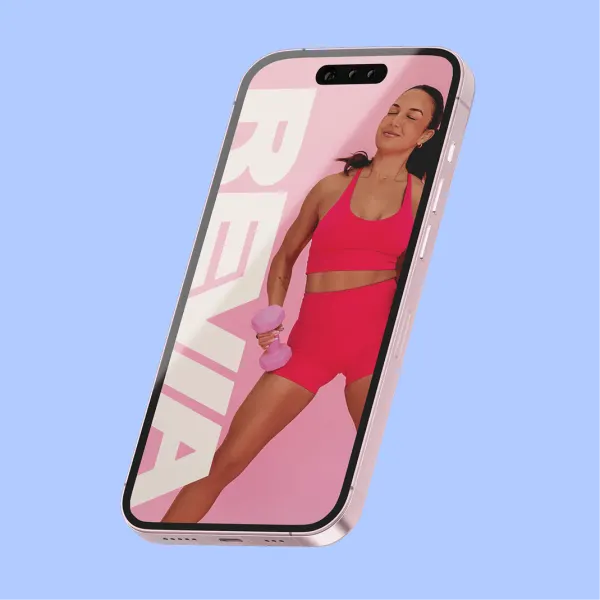
MVP app development starts with Scoping and Design - a Product Blueprint defining what to build and what to cut. From there, a 3 to 4 month build takes you to launch. Revia reached number 3 in Apple’s Health and Fitness category within 48 hours of launch, after a 4-month build.

  • SWEAT: built from MVP to a $400M acquisition
  • Revia: #3 in Apple Health & Fitness in 48 hours
  • 98% first-time app store approval across 100+ products
  • 100% in-house development · Adelaide HQ
$400MSWEAT acquisition, built from MVP
100+Products, apps and projects shipped
98%First-time app store approval
99.99%Uptime across the portfolio

Three founders who backed an MVP and were right.

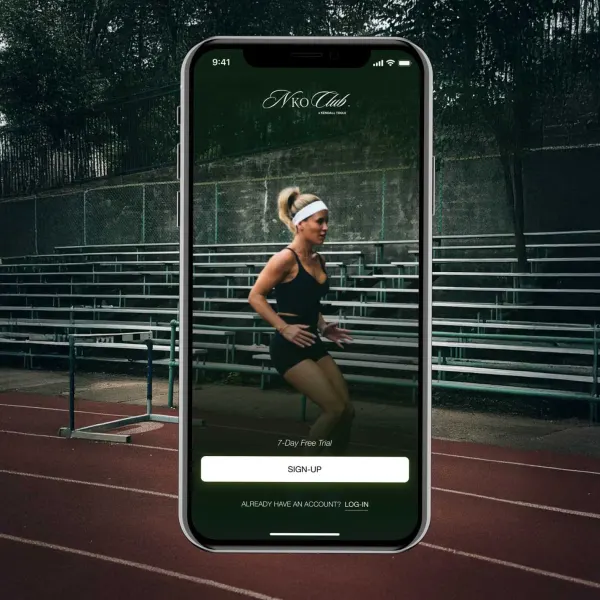
Every product below started as a first version with a short feature list and a real deadline. PixelForce is a startup app development company, and MVP app development is the work we have done longest - taking a founder from an idea and an audience to something people can download, use and pay for. SWEAT went from that first build to a $400M acquisition by iFIT, with 30 million users across 155 countries, and the platform passed Big 4 due diligence at exit. Revia reached number 3 in Apple's Health and Fitness category within 48 hours of launch, after a 4-month build. Traininpink became the number one female-focused Pilates and fitness app in Italy, serving over 182,000 women with a 4.91 App Store rating and acquiring over 40,000 paying subscribers since 2021. The same pattern runs through NKO Club, a cross-platform wellness app launched for former Peloton instructor Kendall Toole with 50 workouts across six modalities on day one, and EzLicence, which now processes $100M+ in annual bookings on the platform we built and still operate. Different markets, one pattern: scope hard, launch early, iterate on evidence. Startup app development is a different sport to enterprise delivery - the budget is finite, the deadline is a funding round or a competitor, and the wrong feature list costs a startup its runway rather than a line item. That is the constraint every MVP above was built inside.

An MVP that became a $400M acquisition.

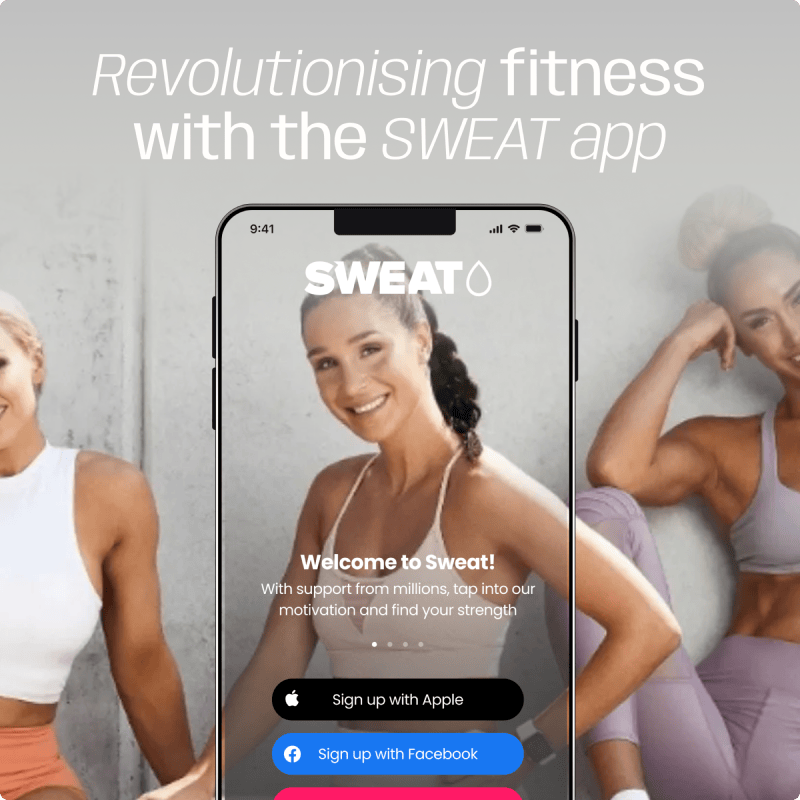
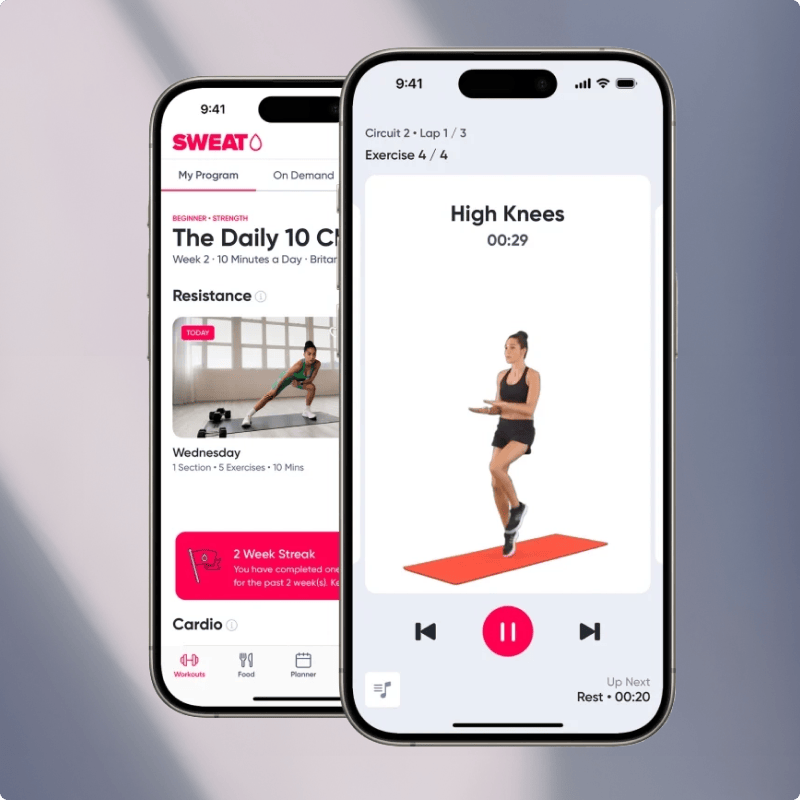
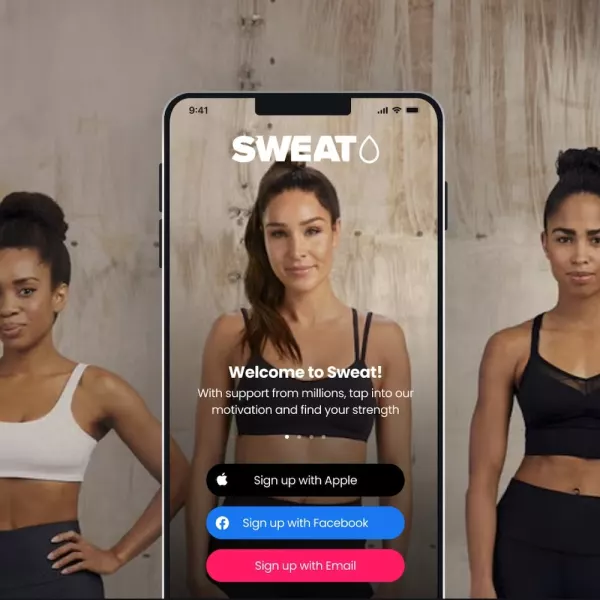
Kayla Itsines and Tobi Pearce came to PixelForce with an audience, a training method and no app. We built and scaled SWEAT from launch to a $400M acquisition by iFIT - 30 million users across 155 countries, and a platform that passed Big 4 due diligence at exit. That last detail is the one founders underestimate. An MVP built as a throwaway becomes a liability the day someone opens the data room; an MVP built properly becomes an asset in it. The first release was narrow on purpose, the roadmap after it was driven by what subscribers actually did, and the architecture was written to survive the growth nobody had promised yet. Tobi Pearce is now a strategic investor and advisor to PixelForce. If you are choosing an MVP app development company, that is the arc worth asking every one of them to show you.

SWEAT app workout screen built by PixelForce SWEAT app progress tracking screen
Built by PixelForce $400M acquisition by iFIT · from MVP

Recognised by Apple, Clutch & the founders who actually launched.

Independent recognition for the team behind SWEAT, Revia, NKO Club and SuspectED - Apple Best of Developers, Watch and TV App of the Year, and Top Clutch App Development and Software Development Company in Australia 2026. PixelForce is an AWS Advanced Tier Partner with 15+ AWS-accredited engineers, holding a 99.99 percent uptime rate and a 98 percent first-time app store approval rate across 100+ shipped products. For an MVP that approval rate is not a vanity number: a rejected submission costs a founder weeks of runway at precisely the moment the launch window matters most. Startups do not get infinite launch attempts, and an MVP is usually the one credible first impression a new product gets.

Apple Watch App of the Year
Clutch Top User Experience Company
Apple TV App of the Year
Apple Best of Developers
Clutch Top App Development Company
Clutch Top Software Developers
Australian Technology Services Achiever
Web Excellence Awards (Website)
Web Excellence Awards (App)
ACS Digital Disruptor Gold Award
Clutch Top Android App Development
Clutch Top iPhone App Development

Why founders choose our MVP development company.

PixelForce builds investment-grade MVPs for founders who plan to raise, scale and exit. Four reasons pre-launch founders, funded startups and corporate innovation teams pick us as their MVP development company rather than a generalist agency or an offshore build shop. An MVP is not a smaller version of a big project - it is a different discipline, because the constraint is runway and the deliverable is evidence. Scope discipline, an architecture that survives success, an in-house Adelaide team you actually speak to, and honest advice about whether to build at all are the four things that decide whether your first version teaches you something or simply spends your money. Startups arrive here from every direction - bootstrapped founders protecting a small runway, seed-funded startups that need traction before a Series A, and corporate teams testing a new business model at startup speed. The MVP work is the same shape for all three.

Scope discipline, not order taking

Most agencies build the feature list you hand them. We argue with it, because the fastest way to waste a startup's runway is to build twenty features when four would have answered the question. Phase 1 Scoping & Design runs two strategic workshops that separate the core value from the nice-to-have, lock priorities, and produce a Business Requirements Document that becomes the lens for every later decision. The 1-3-1 method frames each trade-off: one problem, three options with their consequences, one recommendation across budget, timeline and scope. You leave knowing what you are building and, just as importantly, what you are deliberately not building yet.

  • Two strategic workshops before any code
  • Core value separated from nice-to-have
  • 1-3-1: one problem, three options, one recommendation
  • BRD as the lens on every later decision

Architecture that survives success

The cheapest MVP is the one you have to rebuild, and startup founders usually only discover that during a fundraise or a growth spike. We build first versions on scalable architecture with clean code, real documentation and proper instrumentation, hosted on your own AWS account with the IP transferring to you. PixelForce is an AWS Advanced Tier Partner with 15+ AWS-accredited engineers, and holds a 99.99 percent uptime rate across 100+ shipped products. SWEAT is the proof at the far end of that curve: the platform we built and scaled passed Big 4 due diligence at exit on a $400M acquisition. Build it once, properly, then grow into it.

  • AWS Advanced Tier Partner, 15+ accredited engineers
  • 99.99% uptime across 100+ shipped products
  • Your own AWS account, IP transfers to you
  • SWEAT passed Big 4 due diligence at exit

100% in-house Adelaide team

The people who scope your MVP are the people who design it, build it and ship it. PixelForce runs 100% in-house development from an Adelaide headquarters, so there is no subcontracting chain between the conversation and the code, and no timezone gap that turns a two-minute clarification into a two-day round trip. For a founder that matters more on an MVP than on any other kind of project, because scope moves weekly and decisions have to be made in hours. Cadence is fixed and visible: squad sessions every 2 weeks and planning every 4 weeks, with sprint demos you attend.

  • 100% in-house development, Adelaide HQ
  • No subcontracting chain, no timezone gap
  • Squad every 2 weeks, planning every 4 weeks
  • Sprint demos you attend, not a status email

Honest advice before an invoice

We never scope something a client cannot afford to build, and budget alignment happens at the first consultation rather than after a proposal lands. If Scoping & Design shows your riskiest question is demand rather than technology, we will tell you to go test demand before spending on a build. If it shows the honest number is above your runway, we will say that too. Declining a project, or recommending against building, is a valid outcome here - over 100+ shipped products, consequence-awareness has been worth more to founders than enthusiasm. That is also why the development quote comes after the blueprint, never before it. MVP or not, we would rather lose the project than build the wrong thing well.

  • Budget aligned at the first consultation
  • No development quote without a completed Phase 1
  • Recommending against a build is a valid answer
  • Consequence-awareness across 100+ shipped products

MVP development services we deliver.

Six MVP development services we have shipped repeatedly for founders and startups - from product discovery and app prototype development through to cross-platform builds, native iOS and Android, proof of concept work and the post-launch iteration that follows. The technical building blocks repeat across projects: authentication, a backend and API layer, payments, analytics, app store release. What changes is which question the first version has to answer. Take one service, or combine them into a single engagement scoped in Phase 1 - most startups need three or four of the six, sequenced rather than bought at once. If your product is built around a model rather than a workflow, our AI MVP and rapid prototyping service covers that cluster.

MVP scoping and product discovery

Phase 1 Scoping & Design, the mandatory first step of every MVP build. Preliminaries, then two strategic workshops covering business requirements, product requirements, design direction and the scope of version one. You leave with a Business Requirements Document, a Product Requirements Document and a fixed-cost Statement of Work for development, typically for $35,000 to $65,000. It is a standalone commitment on purpose, so you can stop after it if the evidence says stop. No Blueprint, no Build.

  • Two strategic workshops and preliminaries
  • Business Requirements Document (BRD)
  • Product Requirements Document (PRD)
  • Fixed-cost SoW for the build

MVP design and app prototype development

An enterprise-grade design system - colour, typography, accessibility, iconography, components - plus high-fidelity designs for every consumer screen and the key admin screens, delivered development-ready with the full user journey mapped end to end. App prototype development sits here too: clickable prototypes that let you test a flow with real people before a single sprint is paid for. An MVP that looks like a prototype does not get downloads, so we design first versions to look like products.

  • Enterprise-grade design system
  • High-fidelity screens, development-ready
  • Clickable prototypes for early user testing
  • Full user journey mapped end to end

Cross-platform MVP app development

One Flutter codebase reaching iOS and Android together, which is the default recommendation for most startups because the point of an MVP is to test demand across the widest realistic audience with one team iterating rather than two drifting apart. NKO Club launched this way - a cross-platform wellness app spanning workouts, nutrition and mindset for former Peloton instructor Kendall Toole, with 50 workouts across six modalities at launch. Deeper detail on the trade-offs sits on our cross-platform app development page.

  • Single Flutter codebase, iOS and Android
  • One team iterating, not two drifting apart
  • Widest realistic audience for demand testing
  • Shipped this way for NKO Club

Native iOS and Android MVP development

Native Swift or Kotlin when the product genuinely needs it - a premium iOS-first market, platform capabilities that cross-platform frameworks do not expose cleanly, heavy on-device processing, or a deliberate single-platform go-to-market. Revia launched native-quality into Apple's Health and Fitness category and reached number 3 within 48 hours of launch, after a 4-month build. We will not sell you two native apps when one cross-platform build answers the same question, and the recommendation is made in Scoping & Design with the trade-offs written down.

  • Native Swift and Kotlin builds
  • For premium or platform-dependent products
  • Revia: #3 in Apple Health and Fitness in 48 hours
  • Recommendation made in Phase 1, with trade-offs

Proof of concept development

When the biggest risk is technical rather than commercial, a proof of concept is the cheaper first move. A PoC answers a single narrow question - can this integrate with that legacy system, can this pipeline handle the volume, can this run fast enough on device - and it succeeds the moment the question is answered. PixelForce runs PoC development as its own engagement so you are not paying full MVP development prices to de-risk a single engineering unknown. If the risk is demand rather than feasibility, we will point you at the MVP instead.

  • Answers one narrow technical question
  • Separate engagement, sized to the unknown
  • Feasibility, integration and performance spikes
  • Recommended only when the risk is technical

Post-launch iteration and scale

Phase 3, where the MVP finally earns its keep, and there are two ways to engage. Warranty, Monitoring & Support is $4,000 per month - critical-bug warranty, 24/7 infrastructure monitoring, business-hours incident response and a monthly Platform Health Report, with technical support capped at seven hours per month. Most founders step up to the Product Retainer, which includes all of that and adds a roadmap workshop, continuous sprints shipping features into production and quarterly business reviews, priced per four-week cycle from Steady $10,000 to Momentum $50,000. That is how a first version becomes a product.

  • Warranty, Monitoring & Support from $4,000 per month
  • Product Retainer from $10,000 per four-week cycle
  • 24/7 monitoring and monthly Platform Health Report
  • Sprints driven by real user behaviour

A four-month build that hit #3 in 48 hours.

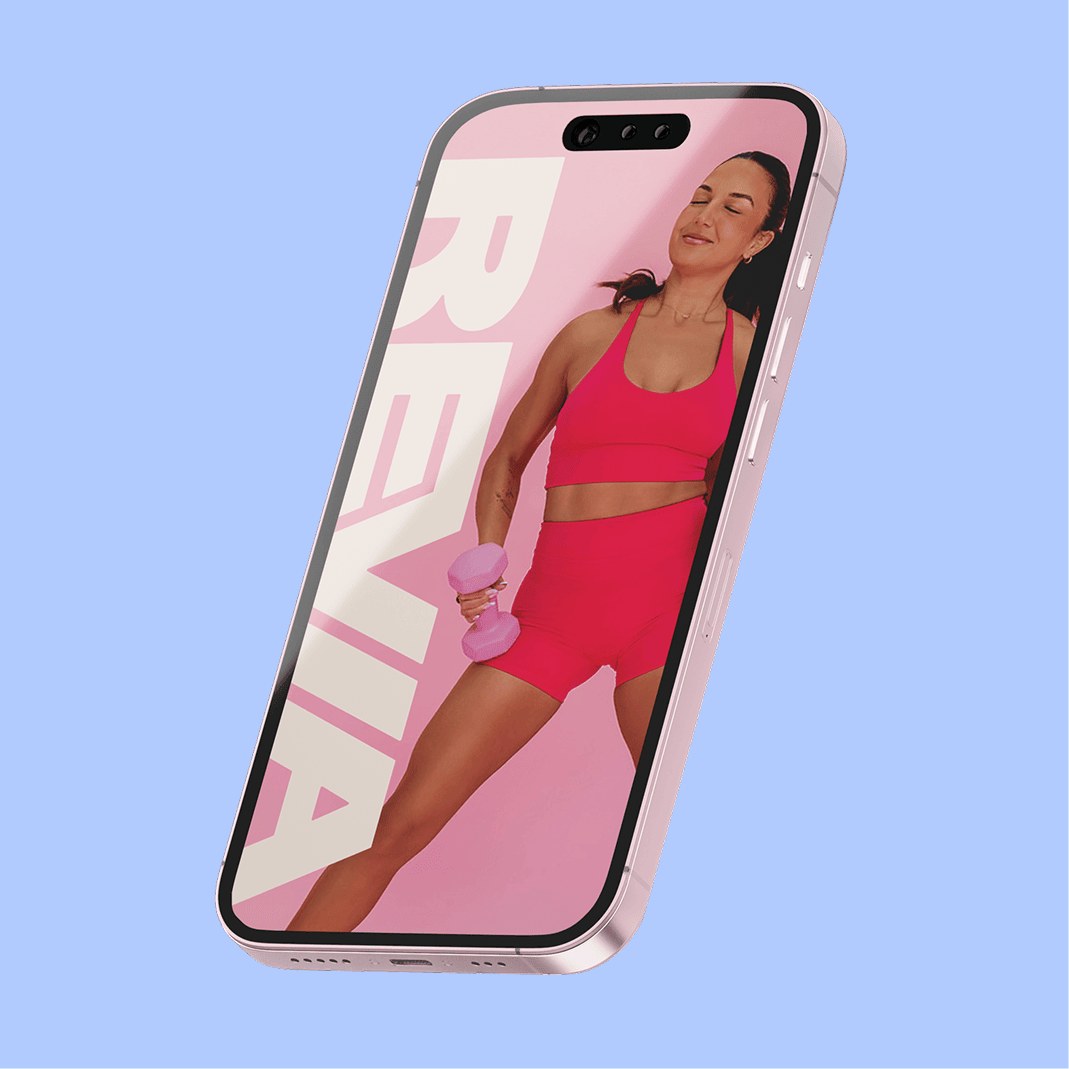
Revia reached number 3 in Apple's Health and Fitness category within 48 hours of launch, after a 4-month build. That is what a well-scoped first version looks like from the outside, and it is worth being precise about what produced it. Scoping & Design came first and settled what the product had to do on day one and what could wait. The build then ran to a fixed scope against a signed Statement of Work, which is why the timeline held. Nothing about the launch was lucky: the feature set was small enough to finish, polished enough to review well, and instrumented enough that the team could see what users did in the first week. If you are comparing MVP software development companies, ask each one what they cut - the answer tells you more than the feature list does. For a startup, a launch date that actually holds is itself a result.

Revia hybrid fitness app home screen Revia app training programme screen
Built by PixelForce #3 Apple Health & Fitness · 48 hours from launch

How an MVP build is scoped and priced.

Three engagement models, in the order they normally run. Every figure below is an envelope shaped by scope, never a fixed quote off a rate card - which is exactly why Scoping & Design comes first and why no development quote is issued without it. MVP development cost is driven by what is actually being built: web or mobile, single-sided or multi-sided, how many integrations, how much regulated or financial logic sits underneath. Founders asking how much it costs to build an MVP should read the two build numbers together, because a real first version needs both phases. For a startup the totals matter less than knowing which phase you are committing to today, and Phase 1 is deliberately a separate decision. MVP development for startups is structured this way on purpose, so the commitment always matches the evidence you have.

Phase 1 · Scoping & Design

$35,000 to $65,000

The mandatory first phase of every MVP build, and a standalone commitment. Preliminaries and two strategic workshops produce the Business Requirements Document, a complete enterprise-grade UX/UI design covering every consumer screen and the key admin screens, a Product Requirements Document, and a fixed-cost Statement of Work for the build. Best for any founder who has an idea and no development-ready blueprint - which is almost every founder. You can stop here if the evidence says stop, and some do. No Blueprint, no Build.

  • Two strategic workshops, priorities locked
  • BRD, PRD and full UX/UI design
  • Fixed-cost SoW for development
  • Standalone - stop here if it says stop

Phase 3 · Product retainer

From $10,000 per 4 weeks

Where a validated MVP becomes a product. There are two ways to engage after launch. Option 1, Warranty, Monitoring & Support, is $4,000 per month and covers the critical-bug warranty, 24/7 monitoring, business-hours incident response and a monthly Platform Health Report - protection without the complexity. Option 2, the Product Retainer, includes everything in Option 1 and adds a roadmap workshop in month one, continuous sprints shipping designed features into production, and quarterly business reviews. It is priced per four-week cycle against a committed story-point capacity: Steady $10,000, Growth $20,000, Scale $30,000, Velocity $40,000, Momentum $50,000, Enterprise on application. The retainer is where the longest partnerships live, because it is the only option that keeps building.

  • Option 1 - Warranty, Monitoring & Support, $4,000 per month
  • Option 2 - Product Retainer, from $10,000 per four-week cycle
  • Roadmap workshop in month one, then continuous sprints
  • Quarterly business reviews

What goes into a first version that actually validates.

Six modules that appear in nearly every MVP we build, whatever the market. This is the part founders comparing an MVP software development company should look hardest at, because the difference between a first version that teaches you something and one that simply exists lives in the plumbing - whether the onboarding gets someone to value, whether the analytics can answer the question you launched to answer, whether the release pipeline lets you ship a fix the same week. Every MVP module below is built to be extended, because the point of a startup MVP is what comes after it. For definitions of the terminology, our MVP glossary entry covers the ground.

Onboarding and accounts

Nothing else matters if people do not reach the core action, so onboarding is where MVP validation quietly succeeds or fails. We build the shortest credible path from install to value, and instrument every step of it so drop-off is visible rather than guessed at.

  • Email, social and passwordless sign-in
  • Shortest path from install to first value
  • Profile and account management
  • Drop-off instrumented at every step
  • Password reset and account recovery

The one core feature

The single thing your product does that nothing else does, built properly rather than broadly. This is the feature the whole MVP exists to test, so everything in the first release either serves this feature or is a candidate for the post-launch roadmap.

  • The unique value, built to production quality
  • Supporting flows kept deliberately thin
  • Edge cases handled where users will hit them
  • Everything else deferred, on the record
  • Scope locked in the signed SoW

Payments and subscriptions

Included when revenue is one of the things the MVP has to validate. We build the billing, entitlement and renewal logic properly the first time, and design for the failure cases that quietly cost money. Processor fees change, so check each provider's current pricing.

  • In-app purchase and subscription billing
  • Card payments through your chosen gateway
  • Entitlement, trial and renewal logic
  • Declines, retries and refunds handled
  • Revenue events fed into analytics

Analytics and validation metrics

An MVP without instrumentation is an expensive opinion. We define the success metrics during Scoping & Design, then build the tracking that measures them, so launch week produces evidence instead of anecdotes.

  • Success metrics defined before the build
  • Activation, retention and cohort tracking
  • Funnel events across the core journey
  • In-app feedback capture
  • Dashboards the founder can actually read

Admin portal and content tools

The screens your own team lives in. Without them a founder ends up asking developers for database changes every week, which is slow, expensive and a bad use of a startup's short runway.

  • Content and catalogue management
  • User administration and support tooling
  • Configuration without a code release
  • Role-based access for the team
  • Operational reporting for the founder

Infrastructure and release pipeline

Cloud infrastructure, CI/CD and monitoring on your own AWS account, so shipping a fix takes hours rather than a fortnight and a traffic spike is a good day. This is the layer that decides whether the MVP can grow without a rebuild.

  • Your own AWS account, IP transfers to you
  • CI/CD pipelines and staging environments
  • Monitoring, alerting and crash reporting
  • Auto-scaling for launch-day spikes
  • App Store and Google Play submission

One conversation.
Three phases.
Built to grow.

The same canonical PixelForce engagement model behind 100+ shipped products and $1.5B+ in combined client revenue, applied to your MVP app. The 1-3-1 method runs through every conversation - one problem, three options with honest trade-offs across budget, timeline and scope, one recommendation. No Blueprint, no Build.

  1. 0
    Free

    Discovery call

    A free, no-obligation conversation to find the right path for your MVP app before you commit a dollar.

    • Mutual NDA signed up front
    • 1-3-1 method: one problem, three options, one recommendation
    • Honest trade-offs across budget, timeline and scope
    • A straight answer on what a credible build looks like
  2. 1
    4-8 weeks

    Scoping & Design

    Everything you need to build with total confidence - a fully costed, designed plan with no scope surprises.

    • Strategic workshops and BRD
    • Full UX/UI design system, every screen built
    • PRD and a fixed-cost Statement of Work
    • No Blueprint, no Build - Phase 1 before any Phase 2 quote
  3. 2
    3-6 months

    Development, QA and Release

    From approved designs to your live MVP app, built and tested at a steady sprint cadence.

    • Sprint cadence with regular demos
    • QA across iOS, Android and the edge cases
    • End-to-end App Store and Google Play submission
    • Built to scale from 1,000 to 1,000,000 users
  4. 3
    Ongoing

    Post Launch Support

    We do not disappear at launch - monitoring, warranty, and an optional retainer keep your MVP app growing.

    • 24/7 monitoring and a critical-defect warranty
    • Ongoing technical support
    • Optional Product Retainer: four-week sprints and quarterly reviews
    • The model that grew SWEAT to a $400M platform

MVP app development case studies.

Selected MVP and startup app development work, built by a 100% in-house Adelaide team you would actually work with on your product. Each one launched as a deliberately narrow first version and grew from there on evidence. Founders comparing MVP development agencies should read these for the decisions rather than the screenshots - what was in version one, what was held back, and what the first month of real usage changed. Between them they cover the startup profiles we see most often - solo creators with an existing audience, funded startups chasing traction, and institutions shipping their first consumer product.

MVP app development questions.

The questions founders ask before committing to a first build - what MVP development costs in Australia, how long it takes, what is included, whether the MVP will scale or need rebuilding, whether we build for established businesses as well as startups, what help there is around fundraising, what happens after launch, how to get started, and how an MVP differs from a prototype or a proof of concept. Answers below come from shipping first versions for pre-launch founders, funded startups and corporate innovation teams. If your question is not here, ask it on a discovery call - MVP scoping questions are exactly what that call is for.

MVP app development at PixelForce is quoted as two phases, and every figure is an envelope shaped by scope rather than a fixed price off a rate card. Phase 1, Scoping & Design, is typically $35,000 to $65,000 and produces the Business Requirements Document, the complete UX/UI design, the Product Requirements Document and a fixed-cost Statement of Work for the build. Phase 2, Development, QA and Release, is typically $100,000 to $350,000, set by what is actually being built - web or mobile, single-sided or multi-sided, how many integrations, how much regulated or financial logic sits underneath. The $350,000 figure is a recommendation rather than a ceiling: even where the budget is larger we advise capping version one near it and channelling the remainder into post-launch iteration, because a bigger budget should buy a longer runway of evidence-led improvement, not a bigger guess. Scoping & Design exists so the development number is grounded in a real blueprint. No Blueprint, no Build.

MVP development timelines at PixelForce are set in two parts: a Scoping and Design phase that settles the scope and the schedule, then a fixed-scope development phase committed in the signed Statement of Work.

Scoping & Design comes first, then a three to four month build. Phase 1 runs the Blueprint Preliminaries and two strategic workshops covering business requirements, product requirements, design direction and the scope of version one, and delivers the BRD, the full UX/UI design, the PRD and a fixed-cost Statement of Work. Only once that blueprint is signed does development begin. The Phase 2 sequence is a familiar shape: foundation setup and authentication, backend services and cloud infrastructure, the app build across iOS, Android and any admin portal, internal QA against the PRD acceptance criteria, then client User Acceptance Testing and app store submission. More complex products - marketplaces, payments, regulated data, heavy third-party integration - run longer, and we say so during scoping rather than after. Revia is the benchmark for a focused build: number 3 in Apple Health and Fitness within 48 hours of launch, after a 4-month build. OpBill, an AI-powered medical billing product, was also built in 4 months.

A PixelForce MVP engagement includes Phase 1 Scoping and Design, Phase 2 Development, QA and Release, and Phase 3 Post Launch Support, with the intellectual property and the infrastructure ending up in your hands.

Phase 1 delivers the Blueprint Preliminaries, two strategic workshops, a Business Requirements Document, an enterprise-grade design system with high-fidelity designs for every consumer screen and the key admin screens, a Product Requirements Document, and a fixed-cost Statement of Work. Phase 2 delivers the build against that SoW: native iOS in Swift, native Android in Kotlin or cross-platform Flutter, backend services and cloud infrastructure on your own AWS account, payments where the model needs them, analytics and event instrumentation, an admin portal, internal QA against the PRD acceptance criteria, client User Acceptance Testing, and submission to the App Store and Google Play. Phase 3 follows with a three-month warranty term covering defect resolution, 24/7 infrastructure monitoring, business-hours critical incident response and a monthly Platform Health Report, with technical support capped at seven hours per month. The IP transfers to you and the platform runs on infrastructure you own.

PixelForce ships MVPs faster than most Australian agencies because the scope is settled and signed before development starts, and because a 100% in-house Adelaide team removes the subcontracting and timezone delays that stretch most schedules.

Because the process is rehearsed and the scope is settled before the build starts. PixelForce has shipped 100+ products since 2013, all through a 100% in-house team working from an Adelaide headquarters - no subcontracting chain between the conversation and the code, and no timezone gap that turns a two-minute clarification into a two-day round trip. The bigger factor is Phase 1. Because the build runs to a fixed scope against a signed Statement of Work, the schedule is not renegotiated every fortnight, which is where most MVP timelines actually go. Release is rehearsed too: we hold a 98 percent first-time app store approval rate across 100+ submissions, and a rejected submission is one of the most common ways a launch date slips by weeks. Revia shows the shape of it - a 4-month build, then number 3 in Apple Health and Fitness within 48 hours of launch.

PixelForce builds MVPs for both pre-launch founders and established businesses, including corporate innovation teams testing a new product line, and the process is identical in each case even though the governance around it differs.

Both, and the process does not change. A large share of our MVP work is pre-launch and pre-Series A founders, and a substantial share is corporate innovation teams testing a new product line or business model inside an established organisation. The constraint is the same in each case: a finite budget, a real deadline, and a question that has to be answered with evidence rather than opinion. What differs is the surrounding governance. Corporate builds usually carry more stakeholder review, tighter governance and review expectations from the outset, and integration with systems that already exist, all of which is captured in Phase 1 rather than discovered mid-build. Founders typically move faster on decisions and need us to challenge scope harder. Either way the engagement runs Scoping & Design first, then a fixed-scope build, then post-launch iteration - and either way we will tell you if the honest recommendation is not to build.

A PixelForce MVP is built to scale rather than to be thrown away, on the same architecture, documentation and cloud infrastructure standards we use for production platforms, so growth does not force a rebuild.

It is built to scale, and that is a deliberate cost decision rather than a technical preference. The cheapest MVP is the one you have to rebuild, and founders usually discover that during a fundraise or a growth spike - the two worst possible moments. Every PixelForce MVP runs on the same architecture we use for production platforms: clean code, real documentation, proper instrumentation, and cloud infrastructure on your own AWS account with the IP transferring to you. PixelForce is an AWS Advanced Tier Partner with 15+ AWS-accredited engineers and holds a 99.99 percent uptime rate across 100+ shipped products. SWEAT is the proof at the far end of that curve: built and scaled by PixelForce to a $400M acquisition by iFIT, with 30 million subscribers across 155 countries, and the platform passed Big 4 due diligence at exit. The MVP is a fast version of a real product, not a throwaway prototype.

PixelForce produces the product documentation, design and working MVP that investors ask to see, and builds the product to survive technical due diligence, but does not coach on pitch decks or build financial models.

Partly, and it is worth being precise about where the line sits. We produce the business and product documentation and the visual design that investors ask to see - the Business Requirements Document, the Product Requirements Document, the full UX/UI design, and a working product with analytics behind it. We also build the MVP so that it survives technical due diligence, which is the part founders most often underestimate: scalable architecture, clean code, real documentation, and infrastructure on your own AWS account. SWEAT is the strongest evidence we can point at, because the platform we built and scaled passed Big 4 due diligence at exit on a $400M acquisition by iFIT. What we do not do is coach on pitch decks or build financial models - that is a different specialism, and we would rather refer you to advisors who do it properly than pretend otherwise. Honest advice first.

Phase 3, Post Launch Support, is where the MVP earns its keep, and there are two ways to engage. Option 1, Warranty, Monitoring & Support, is $4,000 per month: critical-bug warranty, 24/7 infrastructure monitoring with proactive alerts, business-hours critical incident response, update notifications with cost implications flagged upfront, and a monthly check-in with a Platform Health Report, with technical support capped at seven hours per month. That is protection without the complexity. Option 2, the Product Retainer, includes everything in Option 1 and adds a roadmap workshop in month one, continuous sprints that ship designed features into production, and quarterly business reviews aligning the product to the commercial goals. It is priced per four-week cycle against a committed story-point capacity: Steady $10,000, Growth $20,000, Scale $30,000, Velocity $40,000, Momentum $50,000, and Enterprise on application. Most founders move to the retainer, because it is the only option that keeps building - and it is where our longest partnerships live.

Getting started on an MVP with PixelForce means booking a free consultation through our contact page, after which the first paid step is Phase 1 Scoping and Design rather than a development contract.

Book a free consultation through our contact page. It is a genuine discovery conversation rather than a sales call: we sign a mutual NDA, work through the business, the problem, the users and the vision, and then give you the 1-3-1 - one problem, three options with their trade-offs, and one clear recommendation across budget, timeline and scope. Budget alignment happens in that conversation rather than after a proposal lands, because we never scope something a client cannot afford to build. You leave knowing what Phase 1 costs, what it delivers, and what the realistic development envelope looks like on the other side of it. If the honest recommendation is that you should go and test demand before spending anything on a build, we will say that - declining a project, or advising against building, is a legitimate outcome here. The next step after the consultation is Phase 1, Scoping & Design.

A prototype is a simulation; an MVP is a product. A prototype - typically a clickable design produced during Phase 1 Scoping & Design - exists to test whether a flow makes sense, whether the interface communicates, and whether stakeholders agree on what is being built. Nothing behind it is real: there is no backend, no data, no payments, and nobody can use it to do the job they would pay you for. An MVP is a live, released product with real users, real accounts, real data and, where the model requires it, real transactions. The distinction matters commercially because the two answer different questions. A prototype answers "do people understand this?" and can be produced quickly and cheaply as part of design. An MVP answers "do people want this enough to use it, keep using it, and pay for it?" and requires a genuine build. Most founders need both, in that order, which is why app prototype development sits inside Phase 1 and the MVP build is Phase 2.

A proof of concept (PoC) tests whether something is technically possible. An MVP tests whether a business is viable. A PoC is usually narrow and internal - can this model run fast enough on device, can we integrate with this legacy system, can this pipeline handle the data volume - and it succeeds the moment the technical question is answered, whether or not anyone outside the team ever sees it. PixelForce runs PoC development as its own engagement (service code 053A) for exactly that reason. An MVP is external by definition: it goes to market, it is used by people who are not you, and its measure of success is user behaviour rather than a technical result. If your biggest risk is technical feasibility, build the PoC first and spend very little proving the hard part. If your biggest risk is demand, go straight to the MVP, because a PoC will never tell you whether anyone wants it. Scoping & Design is where we work out which risk is actually yours.

Choosing an MVP development company comes down to five checks: who actually writes the code, what you own at the end, how the price is built, what they would cut from your scope, and what happens after launch.

Who actually writes the code? Ask whether the team in the room is the team that builds, or whether the work is subcontracted to another firm in another timezone once the contract is signed. Ask for the names and roles of the people who would be on your project, and ask who you speak to when something breaks.

What do you own, and where does it run? A good answer is that the intellectual property transfers to you and the platform runs on cloud infrastructure in your own account. A poor answer is a proprietary platform you cannot leave, hosting you do not control, or an ownership clause that only takes effect once every invoice is settled.

How is the number built? A fixed price quoted before anyone has defined the scope is either padded or about to become a variation. Ask what a scoping engagement costs, exactly what it delivers, whether you can buy it and walk away with the artefacts, and what specifically drives the development range up and down.

What would they cut? An MVP exists to answer one commercial question with evidence, which means version one has to be smaller than your wish list. A firm that agrees with every feature you name is taking an order rather than advising. Ask what they would remove, and ask them to explain why.

What happens after launch? Ask for the post-launch model in writing with a price against it, because a build with no support arrangement behind it is where most MVPs quietly stall. Ask to see a product the firm built and still operates today, because operating a platform for years teaches things that shipping one never does.

For reference, our answers to those five are: 100% in-house development from an Adelaide headquarters, intellectual property transferring to you on your own AWS account, Phase 1 Scoping and Design sold as a standalone engagement at typically $35,000 to $65,000 with no development quote issued before it, scope challenged in that phase using the 1-3-1 method, and Phase 3 priced openly at $4,000 per month for Warranty, Monitoring and Support or from $10,000 per four-week cycle for the Product Retainer.

Build your MVP with the team behind SWEAT.

Every MVP starts the same way - a free consultation, then Scoping & Design. You leave Phase 1 with a Business Requirements Document, a complete UX/UI design, a Product Requirements Document and a fixed-cost Statement of Work, so the build is quoted against a real blueprint instead of a guess. No Blueprint, no Build. Tell us what you are trying to prove, and we will tell you the shortest honest path to proving it.

  • Top Clutch App Development Company · Australia 2026
  • 100+ products shipped · 50M+ users served
  • AWS Advanced Tier Partner · 15+ accredited engineers
  • 100% in-house development · Adelaide HQ