








App rescue and modernisation for platforms that are failing.

Your app crashes, ships slowly and costs more every month. PixelForce has rescued 15+ platforms in the past 3 years - crash rates typically cut 50 to 70 percent within 2 weeks, and app ratings recovered from 3.8 to 4.6 stars. Every rescue starts with an audit.

  • 15+ platforms rescued in the past 3 years
  • Crash rates typically cut 50 to 70 percent within 2 weeks
  • Feature development 60 to 80 percent faster after modernisation
  • 100% in-house Adelaide team · seamless developer handover
15+platforms rescued in 3 years
50-70%crash rates typically cut, within 2 weeks
4.6app ratings recovered, up from 3.8
60-80%faster feature development after modernisation

Three platforms that were failing before we rescued them.

Every platform below arrived broken, inherited, or both. PixelForce has rescued 15+ platforms in the past 3 years: app ratings recovered from 3.8 to 4.6 stars, crash rates typically cut 50 to 70 percent within 2 weeks, and feature development 60 to 80 percent faster after modernisation. Move With Us came to us with 200,000+ users on a platform accumulating technical debt faster than it could ship: crash rates reduced 50 percent, app performance improved 40 percent, user satisfaction up 30 percent, and zero business interruption during the fix. Train With Cass arrived from a previous developer with a crash rate that was costing it reviews: crashes down 90 percent, 99 percent uptime, maintenance costs cut 50 percent, through a seamless handover. Designerex grew 650 percent since the pandemic and became the number one designer dress-sharing platform, with $40M+ in retail value listed, after our onshore rescue and replatform. Different failures, one method: audit before opinion, stabilise before improve, and modernise only what the evidence says needs modernising. App rescue and legacy modernisation is not a smaller version of a build project - it is archaeology first and engineering second.

A 200,000-user platform rescued with zero interruption.

Move With Us was not a failed app. It was a successful one carrying enough technical debt that growth had become the threat rather than the goal - performance degrading, crash rates climbing, and development slowing to the point where shipping anything meant risking something else. We rescued the platform and its 200,000+ users: crash rates reduced 50 percent, app performance improved 40 percent, user satisfaction up 30 percent, and zero business interruption during the fix. The structural work is the part worth understanding. Rather than rebuild, we refactored the user program engine from duplicated per-user data to templates. The core workout table shrank from 42GB to 0.9GB, 98 percent smaller. Database CPU peaks fell from 40 percent to under 5 percent. Programming changes now reach users instantly, with no workout reboot. That is what technical debt elimination actually buys: not a prettier codebase, but a platform where the next change is cheap instead of dangerous.

Move With Us fitness app rescued and modernised by PixelForce Move With Us programme content screen
Rescued by PixelForce 50% crash rates reduced · 200,000+ users

The team you hand a broken platform to should be independently verified.

Choosing a rescue partner is a trust decision made at the worst possible moment, usually after the last one went badly. Independent recognition is one of the few signals that is not self-reported: Apple Best of Developers, Watch and TV App of the Year, and Top Clutch App Development and Software Development Company in Australia 2026. PixelForce is an AWS Advanced Tier Partner with 15+ AWS-accredited engineers, holding a 99.99 percent uptime rate and a 98 percent first-time app store approval rate across 100+ shipped products. That approval rate matters more on a rescue than on a new build, because a platform already failing its users cannot also afford a rejected update sitting in review while the crashes continue.

Apple Watch App of the Year
Clutch Top User Experience Company
Apple TV App of the Year
Apple Best of Developers
Clutch Top App Development Company
Clutch Top Software Developers
Australian Technology Services Achiever
Web Excellence Awards (Website)
Web Excellence Awards (App)
ACS Digital Disruptor Gold Award
Clutch Top Android App Development
Clutch Top iPhone App Development

Why businesses hand us a failing platform.

App rescue and legacy modernisation are bought under pressure, usually by someone who has already paid once for the problem. That changes what matters in a supplier. Four reasons founders, product owners and boards choose PixelForce to take over an inherited or failing platform rather than the agency that will quote fastest. The pattern behind all four is the same: we do not tell you what a rescue costs before we know what is wrong, we do not recommend the largest engagement by default, and we do not treat the previous team's work as automatically worthless. Across 15+ rescues in the past 3 years, the most common honest answer has been a targeted stabilisation and a selective refactor, not the rebuild everybody expected to be quoted.

Every rescue starts with an audit

We will not quote a rescue we have not scoped, because nobody can know what is under the hood until they look. The audit examines codebase quality and coupling, architecture, the data model, dependency currency and support status, test coverage, infrastructure, crash analytics and security exposure. What comes out is a severity-ranked findings list ordered by business impact rather than technical elegance, a recommended path between refactor, replatform and rebuild, and a scoped price for the work itself. If the audit says the problem is smaller than you feared, that is what it will say. A rescue quote given before an audit is a guess, and guesses on a failing platform are expensive in both directions.

  • No rescue quote without an audit first
  • Findings ranked by business impact, not elegance
  • Refactor, replatform or rebuild recommended explicitly
  • Scoped per platform after a free consultation

We have seen worse than yours

PixelForce has rescued 15+ platforms in the past 3 years, which is enough repetition that the failure patterns are familiar rather than surprising: offshore builds that cannot scale, inherited codebases with no documentation and no tests, platforms assembled by developers who have since moved on, and successful products collapsing under their own growth. Across those engagements app ratings recovered from 3.8 to 4.6 stars, crash rates were typically cut 50 to 70 percent within 2 weeks, and feature development ran 60 to 80 percent faster after modernisation. Experience on a rescue is not a soft credential. It is the difference between finding the real fault in days and discovering it in month three.

  • 15+ platforms rescued in the past 3 years
  • App ratings recovered from 3.8 to 4.6 stars
  • Crash rates typically cut 50 to 70 percent within 2 weeks
  • Feature development 60 to 80 percent faster after modernisation

100% in-house, and a clean handover

The engineers who audit your platform are the engineers who fix it. PixelForce runs 100% in-house development from an Adelaide headquarters, so there is no subcontracting chain between the finding and the fix, and no timezone gap turning a two-minute clarification into a two-day round trip. On a rescue that matters more than on a new build, because the diagnosis changes as the work uncovers things. Taking over from another developer is routine here: we rescued Train With Cass through a seamless handover from the previous developer, and we do not need the outgoing team to cooperate for the audit to reconstruct the picture from the code and the infrastructure.

  • 100% in-house development, Adelaide HQ
  • The engineers who audit are the ones who fix
  • Seamless handover from a previous developer
  • No cooperation required from the outgoing team

The honest answer, including no

We prioritise fixes by revenue impact, not by what generates the most billable work, and the recommendation that follows an audit is frequently the smaller engagement. Most platforms need selective refactoring of the critical systems rather than the complete rebuild people arrive expecting to be sold. The 1-3-1 method frames the decision the same way it does on every PixelForce engagement: one problem, three options with their real trade-offs, one recommendation across budget, timeline and scope. Declining a project, or telling you the problem is operational rather than technical, is a valid outcome here. Over 100+ shipped products, being right has been worth more than being enthusiastic.

  • Fixes prioritised by revenue impact
  • Selective refactor recommended over rebuild where it fits
  • 1-3-1: one problem, three options, one recommendation
  • Recommending against the work is a valid answer

Application modernisation and app rescue services we deliver.

Six application modernisation and app rescue services covering the full range from a two-week stabilisation to a ground-up rebuild with data migration. They are sequential more often than they are separate: an audit leads to stabilisation, stabilisation exposes the technical debt, and the debt work decides whether legacy application modernisation, a replatform or a rebuild is the honest end state. Most engagements stop well before the last card. Where the primary fault is cloud architecture, deployment or infrastructure cost rather than the application itself, that work lives on our cloud infrastructure and DevOps page. Where the audit concludes a rebuild is the answer, our MVP and product build practice runs it under the standard Phase 1 and Phase 2 structure.

Technical audit and rescue triage

The mandatory first step, and the only one we will price before seeing your platform. We review codebase quality, coupling and duplication, architecture and the data model, dependency currency and support status, test coverage, cloud infrastructure, and crash and performance telemetry. Triage runs alongside it: anything actively costing revenue gets stopped first, before the longer plan is written. You finish with a severity-ranked findings report, an explicit refactor, replatform or rebuild recommendation, and a scoped price for the work. Some clients take that report and hand it to their own team, which is a legitimate outcome.

  • Codebase, architecture and data model review
  • Dependency currency and test coverage assessment
  • Crash and performance telemetry analysis
  • Severity-ranked findings and a costed path forward

Stabilisation and crash elimination

Stopping the bleeding, and the phase where results arrive fastest. Crash rates are typically cut 50 to 70 percent within 2 weeks, because the highest-impact failures usually cluster in a small number of places rather than spreading evenly through the codebase. The work is memory-leak detection, edge-case handling, device-specific defects, third-party SDK failures, and the query and caching problems behind the slowest screens. Monitoring and crash reporting go in first so every change can be measured. Train With Cass came out of this phase with crashes down 90 percent and 99 percent uptime.

  • Crash rates typically cut 50 to 70 percent within 2 weeks
  • Memory leaks, edge cases and device-specific defects
  • Query, index and caching work behind slow screens
  • Monitoring and crash reporting installed first

Technical debt elimination

Structural rather than surgical, and the phase that decides what the platform costs to run for the next five years. We refactor the tightly coupled areas, replace or retire unsupported dependencies, introduce automated testing so regressions are caught rather than reported, establish CI/CD so a fix can ship the same week it is written, and document what only existed in one person's head. Feature development runs 60 to 80 percent faster after modernisation, which is the number that decides whether the rescue paid for itself. Move With Us is the worked example: a refactor that shrank the core workout table from 42GB to 0.9GB.

  • Refactoring of tightly coupled and duplicated code
  • Unsupported dependencies replaced or retired
  • Automated test coverage and CI/CD pipelines
  • Feature development 60 to 80 percent faster afterwards

Legacy application modernisation

Legacy app modernisation brings an ageing platform onto supported technology without stopping the business. On iOS that is Objective-C to Swift and UIKit to SwiftUI; on Android, Java to Kotlin and XML layouts to Jetpack Compose. Alongside it sits framework and dependency currency, API modernisation, and authentication upgrades to current standards including OAuth 2.0, single sign-on and biometrics. Each step is staged against a running product, because most rescue clients cannot pause shipping while the work happens. The commercial driver is rarely elegance - it is App Store and Google Play compliance, security exposure, and being able to hire developers who will work on the stack.

  • Objective-C to Swift, UIKit to SwiftUI
  • Java to Kotlin, XML layouts to Jetpack Compose
  • API modernisation and authentication upgrades
  • Staged against a running product, not a freeze

Replatforming and consolidation

For platforms where the business logic is sound but the technology underneath it has no future. Replatforming preserves what works and moves it onto something supported, which is materially cheaper than a rebuild and materially safer than pretending the current stack has another five years in it. The most common shape is consolidating separately-written iOS and Android apps onto a single Flutter codebase so one team ships both, instead of two teams drifting apart. Designerex is the reference: after our onshore rescue and replatform it grew 650 percent since the pandemic, and became the number one designer dress-sharing platform with $40M+ in retail value listed.

  • Business logic preserved, platform replaced
  • iOS and Android consolidated onto one Flutter codebase
  • Cheaper than a rebuild, safer than standing still
  • Designerex: 650 percent growth after replatform

Strategic rebuild with data migration

The last resort, recommended when the technology is deprecated, the architecture cannot scale whatever is done to it, or the cost of fixing approaches the cost of replacing. A rebuild is not a fresh start, which is what makes it harder than a new build: existing data has to migrate intact and existing users have to move across without noticing, on a platform that must keep running throughout. That is scoped in Phase 1 Scoping and Design before any development begins. Train With Cass 2.0 was rebuilt from the ground up in Flutter after years of instability, delivering the experience the original was meant to.

  • Recommended only when refactor and replatform will not hold
  • Existing data migrated intact
  • Existing users moved across without disruption
  • Migration scoped in Phase 1, before development

Crashes down 90% after the previous developer.

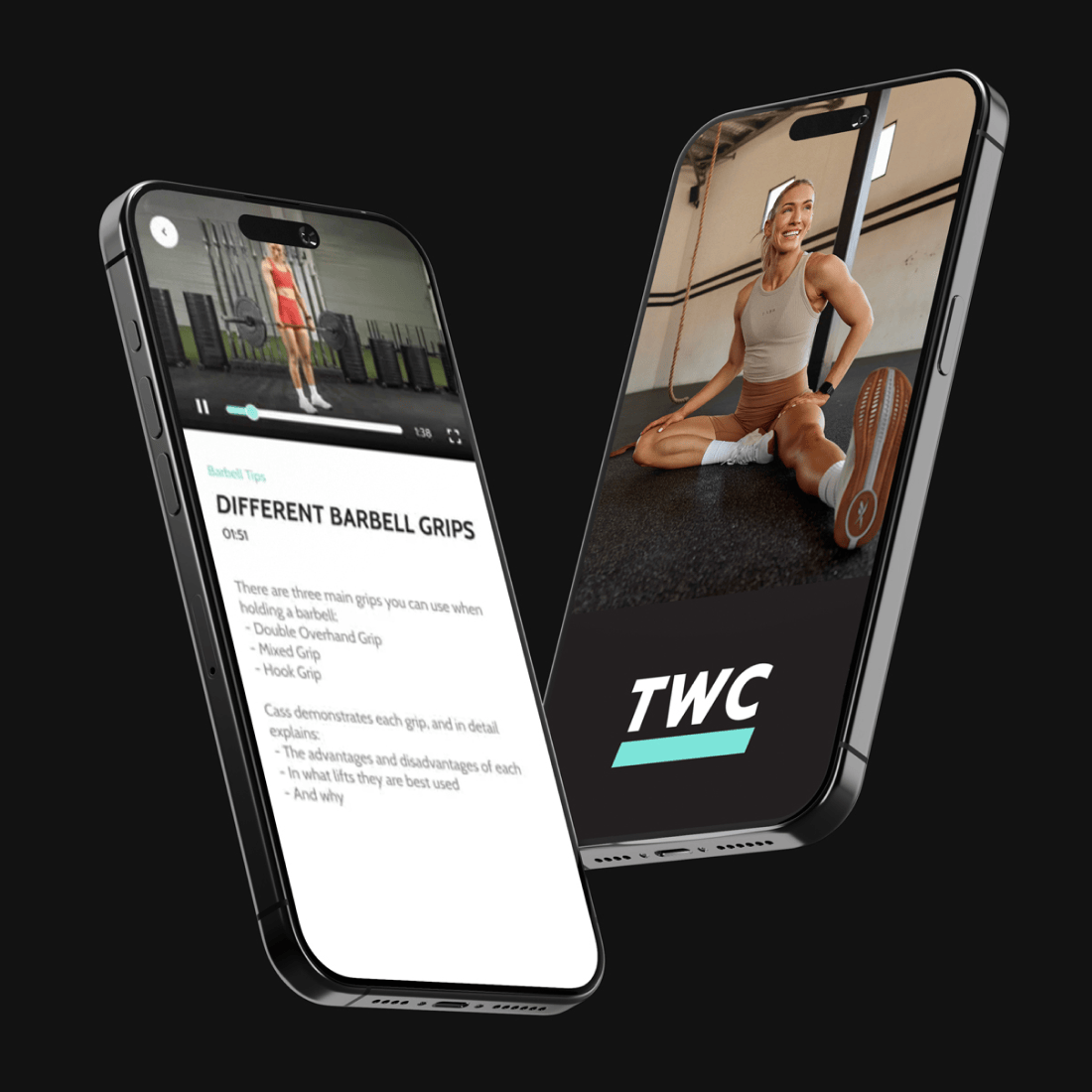
Train With Cass arrived the way most rescue clients do: an app built by someone else, a founder who had run out of confidence in it, and a review page filling up with complaints about crashes rather than the product. We rescued the app through a seamless handover from the previous developer, taking the crash rate down 90 percent, achieving 99 percent uptime and cutting maintenance costs 50 percent. The handover is the part worth dwelling on, because it is the part people fear most about changing suppliers. We did not need the outgoing team's cooperation or their documentation, and the business did not stop while the work happened. Stabilisation came first and stopped the damage; the structural work followed once there was telemetry to prove what was actually failing. The platform was later rebuilt as Train With Cass 2.0 in Flutter, which is the honest sequence - rescue the product you have before deciding whether it deserves replacing.

Train With Cass 2.0 fitness app rebuilt by PixelForce Train With Cass app after the PixelForce rescue
Rescued by PixelForce 90% crash rate reduction · 99% uptime

How a rescue or modernisation project is scoped and priced.

Rescue and application modernisation work is the one PixelForce service with no price list, and that is deliberate rather than evasive. A new build starts from a blank page whose scope can be agreed in advance; a rescue starts from somebody else's decisions, and the honest cost is unknowable until the codebase has been read. So the sequence below always begins with an audit and only ever quotes what has been seen. Three engagement shapes, in the order they normally run. Every figure is an envelope shaped by scope, never a fixed quote off a rate card, and the third one is the only path with a published range because it is the only path that is a build project underneath.

Step 1 · Technical audit

Scoped per platform after a free consultation

Where every rescue begins, and a standalone commitment. We review the codebase, architecture, data model, dependencies, test coverage, infrastructure, crash telemetry and security exposure, then hand back a severity-ranked findings report, an explicit refactor, replatform or rebuild recommendation, and a scoped price for the work itself. The audit is sized to the platform, so it is quoted after a consultation rather than from a list. Best for anyone who has been told a number by another supplier and wants to know whether it is real. You can stop here and take the report to your own team.

  • Severity-ranked findings report
  • Explicit refactor, replatform or rebuild recommendation
  • Scoped price for the work that follows
  • Standalone - the report is yours either way

Step 3 · Rebuild or replatform

$150,000 to $400,000

Recommended only where the audit concludes the codebase cannot be saved economically. A rebuild typically runs slightly above an equivalent build from scratch, because on top of the product itself it must migrate your existing data intact and move your current users across seamlessly while the old platform keeps serving them. It runs under the standard PixelForce structure: Phase 1 Scoping and Design, typically $35,000 to $65,000, produces the requirements, the UX/UI and a fixed-cost Statement of Work before Phase 2 Development, QA and Release begins. Afterwards, Phase 3 has two options - Warranty, Monitoring and Support at $4,000 per month, or the Product Retainer, which includes everything in Option 1 and adds a roadmap workshop, continuous sprints and quarterly business reviews, priced per four-week cycle from Steady $10,000 to Momentum $50,000, Enterprise on application.

  • Phase 1 Scoping and Design, typically $35,000 to $65,000
  • Data migration and user cutover included in scope
  • Phase 3 Option 1 - Warranty, Monitoring and Support, $4,000 per month
  • Phase 3 Option 2 - Product Retainer, Steady $10,000 to Momentum $50,000 per four-week cycle

What an application modernisation project actually changes.

Six layers, in roughly the order a legacy modernisation project touches them. This is the part worth reading closely if you are comparing application modernisation services, because the difference between a platform that stays fixed and one that degrades again within a year is almost entirely in the last three layers rather than the first. Anyone can suppress a crash. Fewer teams leave behind the tests, pipelines and documentation that stop it coming back once they have gone.

Observability first

Nothing gets changed before failures are visible. Monitoring, crash reporting and performance telemetry go in at the start, so every subsequent fix can be proven rather than assumed.

  • Crash reporting and alerting installed
  • Performance and error telemetry baselined
  • Release-over-release comparison
  • Failure patterns identified by device and version
  • Evidence replacing guesswork about causes

Stability and crash elimination

The fastest-moving layer, and the one users notice first. Crash rates are typically cut 50 to 70 percent within 2 weeks because the worst failures usually cluster rather than spread.

  • Memory leak detection and remediation
  • Edge case and error-state handling
  • Device-specific and OS-version defects
  • Third-party SDK integration failures
  • Ratings and review recovery as the visible outcome

Performance and load

Slow is a failure mode that does not show up in crash analytics. Profiling finds where the time actually goes, which is rarely where the team assumes it goes.

  • Code profiling and bottleneck identification
  • Database query and index optimisation
  • Caching strategy and redundant work removal
  • Image and asset optimisation, lazy loading
  • API response time improvement

Architecture and data model

The layer that decides what every future change costs. The data model is the hardest thing to alter later, so it gets the most scrutiny during the audit and the most care during the work.

  • Tight coupling and duplication refactored out
  • Data model corrected before it calcifies further
  • Separation of concerns reintroduced
  • Unsupported dependencies replaced or retired
  • Scaling constraints removed at the source

Dependencies, authentication and access

Inherited platforms almost always carry unpatched dependencies and authentication built to an older standard. This layer brings both onto current, supported foundations rather than documenting the gap and leaving it.

  • Outdated dependencies patched or replaced
  • Authentication and authorisation brought to a current standard
  • Encryption in transit and at rest
  • API rate limiting and request validation
  • App store requirements met and deprecated APIs removed

Tests, pipelines and documentation

The layer that decides whether the rescue holds. Without it the platform drifts straight back, which is how most of the apps we are handed got here in the first place.

  • Automated test coverage catching regressions
  • CI/CD pipelines and staging environments
  • Same-week releases instead of risky batches
  • Documentation in the repository, not in one head
  • A handover any future team can pick up

One conversation.
Three phases.
Built to grow.

The same canonical PixelForce engagement model behind 100+ shipped products and $1.5B+ in combined client revenue, applied to your app rescue. The 1-3-1 method runs through every conversation - one problem, three options with honest trade-offs across budget, timeline and scope, one recommendation. No Blueprint, no Build.

  1. 0
    Free

    Discovery call

    A free, no-obligation conversation to find the right path for your app rescue before you commit a dollar.

    • Mutual NDA signed up front
    • 1-3-1 method: one problem, three options, one recommendation
    • Honest trade-offs across budget, timeline and scope
    • A straight answer on what a credible build looks like
  2. 1
    4-8 weeks

    Scoping & Design

    Everything you need to build with total confidence - a fully costed, designed plan with no scope surprises.

    • Strategic workshops and BRD
    • Full UX/UI design system, every screen built
    • PRD and a fixed-cost Statement of Work
    • No Blueprint, no Build - Phase 1 before any Phase 2 quote
  3. 2
    3-6 months

    Development, QA and Release

    From approved designs to your live app rescue, built and tested at a steady sprint cadence.

    • Sprint cadence with regular demos
    • QA across iOS, Android and the edge cases
    • End-to-end App Store and Google Play submission
    • Built to scale from 1,000 to 1,000,000 users
  4. 3
    Ongoing

    Post Launch Support

    We do not disappear at launch - monitoring, warranty, and an optional retainer keep your app rescue growing.

    • 24/7 monitoring and a critical-defect warranty
    • Ongoing technical support
    • Optional Product Retainer: four-week sprints and quarterly reviews
    • The model that grew SWEAT to a $400M platform

App rescue and modernisation case studies.

Platforms we inherited, stabilised and modernised, rescued by a 100% in-house Adelaide team. Read these for the decision rather than the screenshots: what the audit found, whether the answer was a refactor, a replatform or a rebuild, and what changed on the other side. Between them they cover the three situations we see most often - a successful platform collapsing under its own technical debt, an app inherited from a developer who is no longer available, and a product where the technology underneath it had simply run out of road.

App rescue and modernisation questions.

The questions people ask before handing over a failing platform - what a rescue costs, whether to rebuild or refactor, whether we can take over from another developer, how long it takes, how technical debt is measured, what the warning signs are, whether a legacy app can be modernised without a rebuild, whether users are affected during the work, what modernisation actually changes, and who owns the code afterwards. If your question is not here, ask it on a consultation. That call is free, and the honest answer is sometimes that you do not need a rescue at all.

There is no honest upfront price for a rescue, and any agency that gives you one has guessed. We cannot know what is under the hood until we look, so every rescue starts with a technical audit: codebase quality, architecture, data model, dependencies, infrastructure, crash analytics and security. The audit produces a severity-ranked findings list, a recommended path and a scoped price for the work itself, and it is scoped per platform after a free consultation.

Where the audit concludes the platform can be stabilised and refactored, the work is priced case by case against those findings. Where it concludes the codebase is beyond salvaging, the rebuild is priced through the standard PixelForce engagement structure: Phase 1 Scoping and Design typically $35,000 to $65,000, then Phase 2 Development, QA and Release typically $100,000 to $350,000, where $350,000 is a recommendation rather than a ceiling. A rebuild usually sits at the upper end of its scope, because it must also migrate your existing data and move your current users across without them noticing. Every figure is an envelope shaped by scope, never a fixed quote off a rate card.

Whether to rebuild or refactor a failing app is the most expensive decision in an app rescue, and it is answered by the technical audit rather than assumed, because there are three realistic paths rather than two.

That is the single most expensive decision in an app rescue, and it is exactly what the audit exists to answer. There are three realistic paths, not two. Refactoring improves the existing codebase in place and is right when the core architecture is sound, most features work, and the technology is modern but poorly implemented. Replatforming preserves the business logic while moving to a supported framework, and is right when the code is salvageable but the platform underneath it is not. A rebuild starts fresh with modern architecture, and is right when the technology is deprecated, the architecture cannot scale no matter what you do to it, or the cost of fixing approaches the cost of replacing.

Most platforms we audit need selective refactoring of the critical systems rather than a complete rebuild, and we will say so even though it is the smaller engagement. Move With Us is the example: rather than rebuild, we refactored the user program engine from duplicated per-user data to templates, and the core workout table shrank from 42GB to 0.9GB, 98 percent smaller, with database CPU peaks falling from 40 percent to under 5 percent.

Yes, PixelForce takes over apps built by another developer or agency, and inherited platforms are the majority of our rescue work, including builds whose original team has moved on entirely.

Yes. Inherited platforms are the majority of our rescue work - apps built by teams that have moved on, offshore builds that cannot scale, and codebases with no documentation and no tests. We rescued the Train With Cass fitness app through a seamless handover from the previous developer, taking the crash rate down 90 percent, achieving 99 percent uptime and cutting maintenance costs 50 percent.

What we need to start is read access to the repository, the app store and cloud accounts, and whatever documentation exists, which is often none. We do not need the previous team to cooperate, though it helps. If they are unresponsive or the relationship has broken down, the audit reconstructs the picture from the code and the infrastructure instead.

How long an app rescue takes is decided by what the technical audit finds, but stabilisation lands first and fast: across 15+ rescues in the past 3 years, crash rates are typically cut 50 to 70 percent within 2 weeks.

It depends on what the audit finds, which is why we do not publish a timeline before we have run one. What we can say from the pattern across 15+ rescues in the past 3 years is that stabilisation lands first and lands fast: crash rates are typically cut 50 to 70 percent within 2 weeks, because the highest-impact defects are usually a small number of concentrated failures rather than a diffuse problem across the whole codebase.

Deeper technical debt elimination and modernisation take longer, because they are structural rather than surgical. The payoff is measurable on the other side - feature development runs 60 to 80 percent faster after modernisation, which is the number that actually decides whether the rescue was worth doing.

Technical debt is the accumulated cost of shortcuts, outdated dependencies and architectural decisions that made sense at the time and do not any more. It compounds quietly. You do not see it as a line item, you see it as simple changes taking weeks, every fix breaking something else, and new developers taking months to become useful.

Measuring it is the first job of the audit. We profile the codebase for coupling and duplication, check dependency currency and support status, review test coverage, examine the data model and query patterns, and read the crash and performance telemetry. The output is not a score, it is a ranked list of what is actually costing you money, ordered by business impact rather than by technical elegance, so the first thing we fix is the thing bleeding hardest.

The warning signs that an app needs rescuing are commercial before they are technical: sliding app store ratings, rising crash analytics, simple changes taking weeks, and infrastructure bills growing faster than the user base.

The reliable signals are commercial before they are technical. App store ratings sliding from above 4.5 towards the high threes, with reviews naming crashes and slowness. Crash analytics trending upward. Load times and animations degrading release over release. Simple feature requests taking weeks because every change risks breaking something else. Infrastructure bills growing faster than your user base. Dependencies with known vulnerabilities and failed security audits. App Store or Google Play warning about deprecated APIs. The original developers gone and nobody wanting to take over the codebase. Retention declining with app quality cited as the reason.

Any one of those has ordinary explanations. Three or more together is a structural problem, and structural problems do not resolve themselves - they get more expensive every quarter you leave them.

Yes, a legacy iOS or Android app can usually be modernised without a full rebuild where the architecture underneath is sound, and incremental migration in stages is the cheaper answer in that situation.

Usually, yes, and that is the cheaper answer when the architecture underneath is sound. Legacy app modernisation is incremental by design: migrating Objective-C to Swift and UIKit to SwiftUI on iOS, Java to Kotlin and XML layouts to Jetpack Compose on Android, bringing frameworks and dependencies onto supported versions, modernising the API layer, and upgrading authentication to current standards such as OAuth 2.0, single sign-on and biometrics.

Each of those can be done in stages against a running product, which matters because most rescue clients cannot afford to stop shipping while the work happens. The exception is a platform built on technology that no longer has a migration path at all. That is a replatform or a rebuild, and the audit will say so plainly rather than sell you an upgrade that cannot work.

Keeping your users unaffected during an app rescue is a design constraint at PixelForce rather than a hope: we rescued the Move With Us platform, which serves 200,000+ users, with zero business interruption during the fix.

Keeping the business running through the rescue is a design constraint, not a hope. We rescued the Move With Us platform, which serves 200,000+ users, with crash rates reduced 50 percent, app performance improved 40 percent, user satisfaction up 30 percent, and zero business interruption during the fix.

The way that is achieved is unglamorous: monitoring and crash reporting go in before anything is changed, so the effect of every release is visible. Work ships in small increments behind staged rollouts rather than as one large cutover. On the Move With Us refactor, programming changes now reach users instantly with no workout reboot, which was itself part of the outcome. Where a full rebuild is the answer, the migration plan for existing data and existing users is scoped before development begins, not improvised at the end.

An application modernisation project changes six things, in roughly this order: observability, stability, performance, structure, security and documentation, with infrastructure cost usually falling out of the same work.

Six things, in roughly this order. Observability, so failures are visible instead of inferred from reviews. Stability, through crash elimination, memory-leak fixes and edge-case handling. Performance, through profiling, query and index work, caching and asset optimisation. Structure, through refactoring the coupled areas, introducing automated tests and establishing CI/CD so a fix can ship the same week. Security, through dependency patching, authentication hardening, encryption in transit and at rest, and the compliance obligations that apply to your market. Documentation, so the knowledge lives in the repository rather than in one person.

Infrastructure cost usually falls out of the same work, and our rescue engagements routinely cut server costs 30 to 50 percent. Where cloud architecture and cost optimisation is the primary problem rather than the application itself, that is covered on our cloud infrastructure and DevOps page.

Yes, you own the code and the infrastructure after a PixelForce rescue, because your intellectual property transfers to you on full payment under our Services Agreement and your platform is hosted on your own cloud account.

Yes. Your intellectual property is yours, it transfers to you on full payment under our Services Agreement, and your platform is hosted on your own cloud account rather than ours. That is deliberate, because a rescue client has usually just learned what it costs to be locked out of your own product by a previous vendor.

It also means the handover at the end is real. You leave with a documented codebase, automated tests, working CI/CD pipelines and monitoring you can read, so a future team - ours, yours or someone else entirely - can pick the platform up without a second rescue. PixelForce is an AWS Advanced Tier Partner with 15+ AWS-accredited engineers, and holds a 99.99 percent uptime rate across 100+ shipped products.

Choose an app rescue and modernisation company by insisting on a technical audit before a price. Any provider quoting a rescue figure before reading your codebase, infrastructure and crash analytics has guessed, and the guess will be wrong in one direction or the other.

Ask four questions. What does the audit actually cover: codebase quality, architecture, data model, dependencies, infrastructure, crash analytics and security, or only the parts that are quick to look at? Will you tell us when refactoring is the right answer rather than a rebuild, given the rebuild is the larger engagement? How will the product keep running for existing users while the work happens? And what do we hold at the end: documented code, automated tests, working pipelines and monitoring, or a working app that nobody else can maintain?

Check the ownership terms in writing before you sign. Your intellectual property should transfer to you and your platform should sit on your own cloud account, because being locked out of your own product by a previous vendor is very often what caused the rescue in the first place. Finally, ask for rescue outcomes with numbers attached - crash rate, uptime, maintenance cost - rather than adjectives.

Every rescue starts with an audit.

We cannot tell you what your platform needs until we have looked inside it, and we will not quote a rescue we have not scoped. Book a free consultation and we will talk through what is failing, what the symptoms point at, and whether the honest answer is a targeted fix, a refactor, a replatform or a rebuild. Sometimes the answer is that you do not need us yet. We will tell you that too.

  • 15+ platforms rescued in the past 3 years
  • AWS Advanced Tier Partner · 15+ accredited engineers
  • 100% in-house development · Adelaide HQ
  • 99.99% uptime across 100+ shipped products