Train With Cass had a working product and a coach who could not move it forward. The original app was iOS only, which excluded roughly half the mobile market from a business whose reach is its audience, and its architecture had been assembled feature by feature without a consistent set of patterns underneath. PixelForce had already stabilised that app in an earlier engagement, and that work showed clearly where the remaining ceiling sat: publishing a new program was slow and constrained, the codebase resisted change, and each new capability cost more than the last. The constraint was no longer stability. It was that the product could not grow.

Rebuilt on one Flutter codebase, and on Android for the first time ever on 25 March 2026.
One codebase, both platforms
PixelForce rebuilt Train With Cass from the ground up on Flutter, replacing an iOS-only app that had reached the limits of its original architecture. The rebuilt product ships six structured training programs, a publishing system Cass Olholm controls herself, and Android availability for the first time in the app's history.
Platforms iOS + Android
Android launch 25 March 2026
Training programs 6
The Problem
The Solution
PixelForce rebuilt the product on Flutter, so a single cross-platform codebase serves iOS and Android from one source. The member experience was redesigned around the way people actually plan training - a weekly calendar rather than a content library - and a new content management system put program publishing in Cass Olholm's hands directly. Existing members and their training history were carried across through a planned data migration rather than asked to start again.
The Outcome
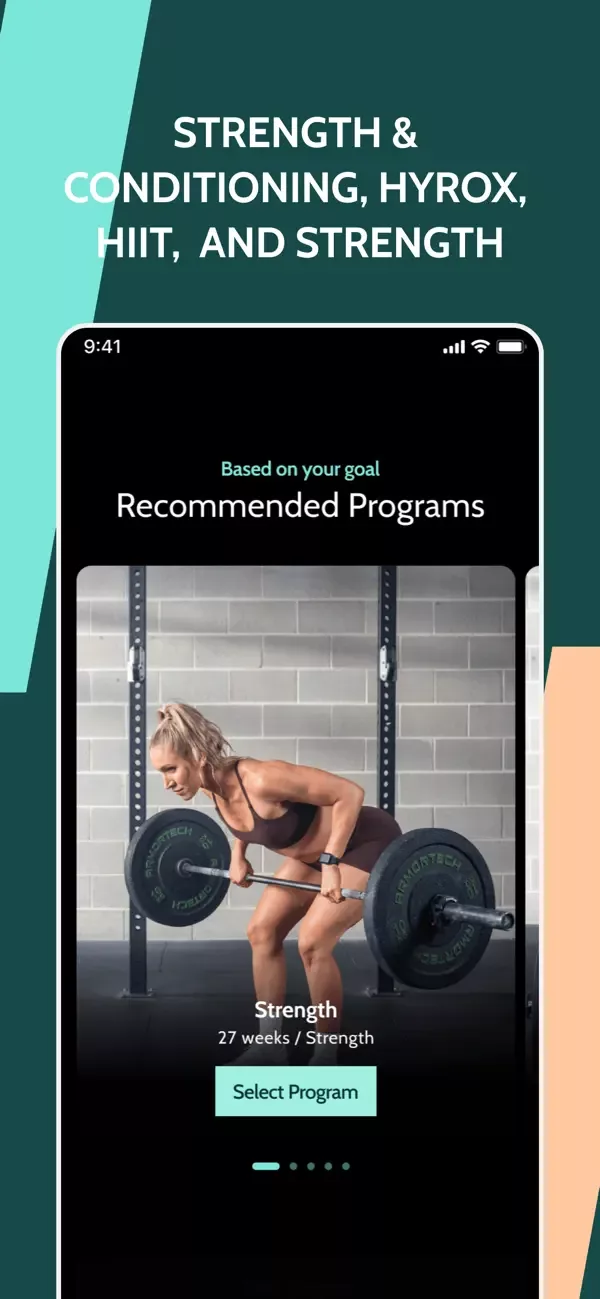
Train With Cass now runs on iOS and Android from one codebase. According to its Google Play listing, the app became available to Android users for the first time ever on 25 March 2026. It ships six structured training programs - Strength, Strength and Conditioning, HIIT, Functional Mobility, a Minimal Equipment program and a 12-week Hyrox program - alongside on-demand sessions and Cass Olholm's video library, which is added to monthly.
When stabilising is not enough
Cass Olholm is a qualified nutritionist, head coach and qualified pre and post natal trainer, and Train With Cass is built on a philosophy she states plainly: train for performance, not for appearance. That shows in what the app contains. It is not a library of workout videos but a set of structured programs that progress - Strength, Strength and Conditioning, HIIT, Functional Mobility, a Minimal Equipment program for people training away from a gym, and a 12-week Hyrox program for a specific race. Programming like that only works if the coach can keep shaping it.
The original iOS app made that difficult. PixelForce had already taken the platform over from its first developer and stabilised it, and that engagement produced an honest finding: the crashes were fixable, but the architecture underneath them would keep limiting what the product could become. Publishing a new program was constrained by a rigid content system, changes were slow and carried risk, and the absence of an Android build meant a large share of Cass Olholm's audience could not buy the product at all. The brief was to stop paying interest on the original architecture and rebuild, once, properly.
No Android, no access
The app had only ever existed on iOS. Every follower on an Android device was someone who could not become a member, regardless of how much they wanted to.
A coach blocked by her own CMS
Publishing a new program meant working around a rigid content system. For a business whose product is programming, anything that slows publishing slows the business.
An architecture at its ceiling
The earlier stabilisation engagement fixed the crashes and showed why they had happened. The underlying structure made every subsequent change more expensive than the last.
Existing members had to come with it
The rebuild could not ask paying members to start again. Accounts, subscriptions and training history had to arrive in the new product intact.



Train With Cass operates from Brisbane and PixelForce works from Adelaide and Sydney. Because PixelForce had already stabilised the previous app, the rebuild started with an accurate picture of the existing system rather than a discovery period spent acquiring one. Cass Olholm was directly involved in designing the publishing tools, which is the correct order of priorities on a creator-led product: the person who has to use the admin system every week is the person whose feedback on it counts.
Hinney Lo Founder & CEO, PixelForce
Book a consultationThe hardest decision on a rebuild is not technical. It is refusing to rebuild the old product faithfully. Everything the previous architecture forced on the experience arrives looking like a requirement, and if you do not separate the constraints from the choices during scoping, you spend the budget recreating the ceiling you were trying to remove.
Swipe to explore
How we rebuilt it
The engagement ran through Phase 1 Scoping and Design before any code was written: workshops, a Business Requirements Document, the full UX/UI design, a Product Requirements Document and a fixed-cost Statement of Work. On a rebuild that discipline matters more, not less. A rebuild carries an existing user base with existing expectations, and the temptation is to reproduce the old product with better code. Scoping is where you decide, deliberately, which parts of the previous experience were constraints rather than choices.
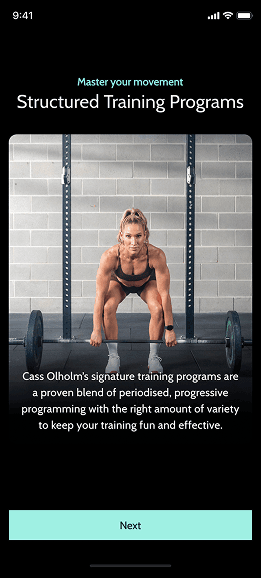
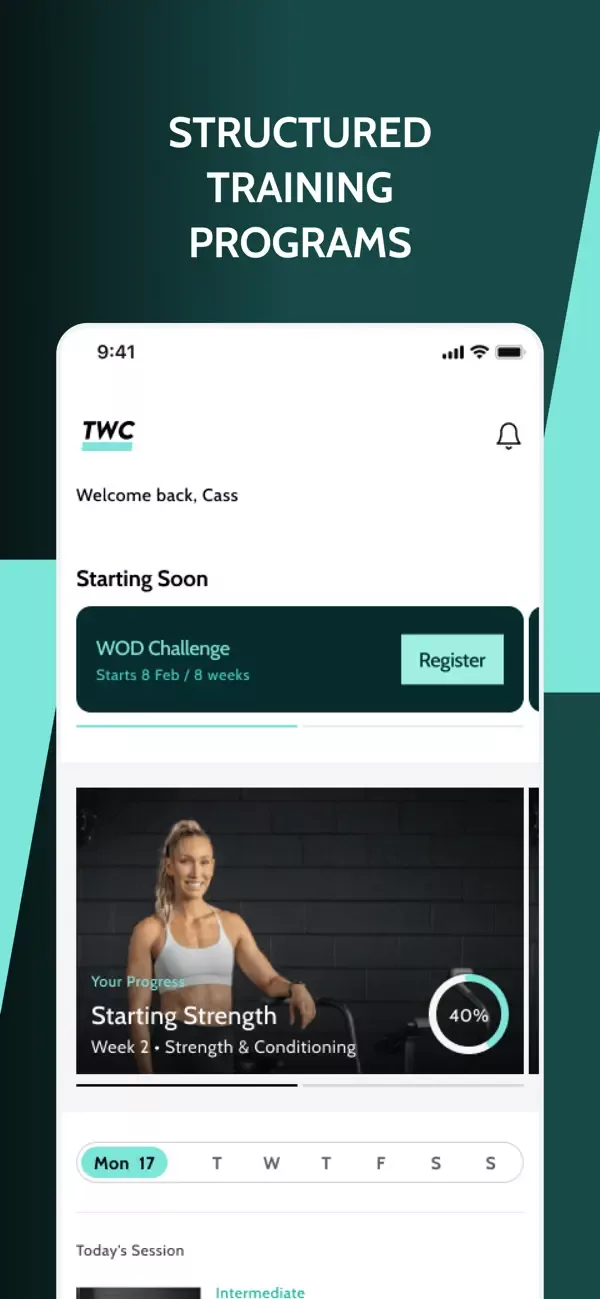
Flutter was chosen so that one codebase produces both platforms, and that decision is what made an Android release economically sensible at all: rather than commissioning a second native app and then maintaining two, Cass Olholm gets one product, one release cycle and one place where a change is made. According to its Google Play listing, the app became available to Android users for the first time ever on 25 March 2026. The interface was rebuilt around a weekly calendar planner, because a member following a progressive program is planning a week rather than browsing a catalogue, and exercise video demonstrations sit alongside written instructions so a movement can be checked either way. Weight and performance tracking make the progression visible across a block.
The second half of the build is the part members never see. A new content management system gives Cass Olholm direct control over programs, sessions and her video library, which is added to monthly, removing the developer from the publishing path entirely. Existing accounts, subscriptions and training history were moved across in a planned data migration so the switch was continuous for paying members. Because the new architecture was designed for change rather than assembled around it, features have continued to ship since launch: the current release lets a member substitute exercises around equipment, injuries or preferences directly from the workout overview screen, and preview the full workout before starting. Every release moves through structured quality assurance.
Strength · Conditioning · HIIT · Mobility · Hyrox
Six structured programs, published by the coach who wrote them.
One codebase, two platforms, and Android for the first time ever.

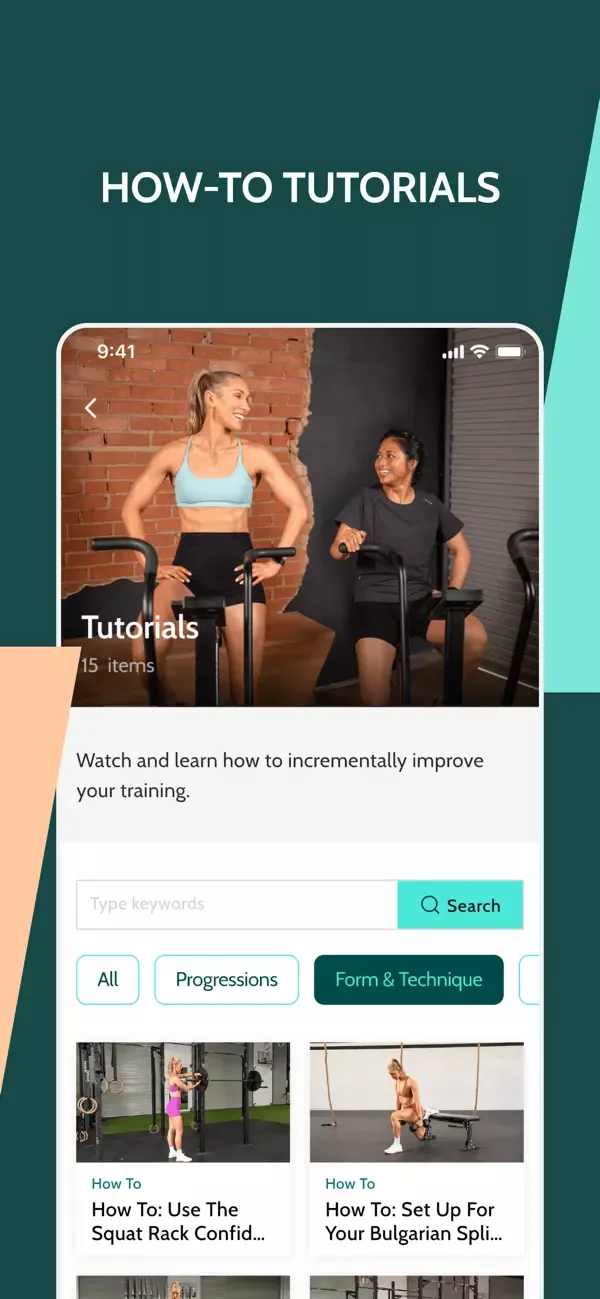
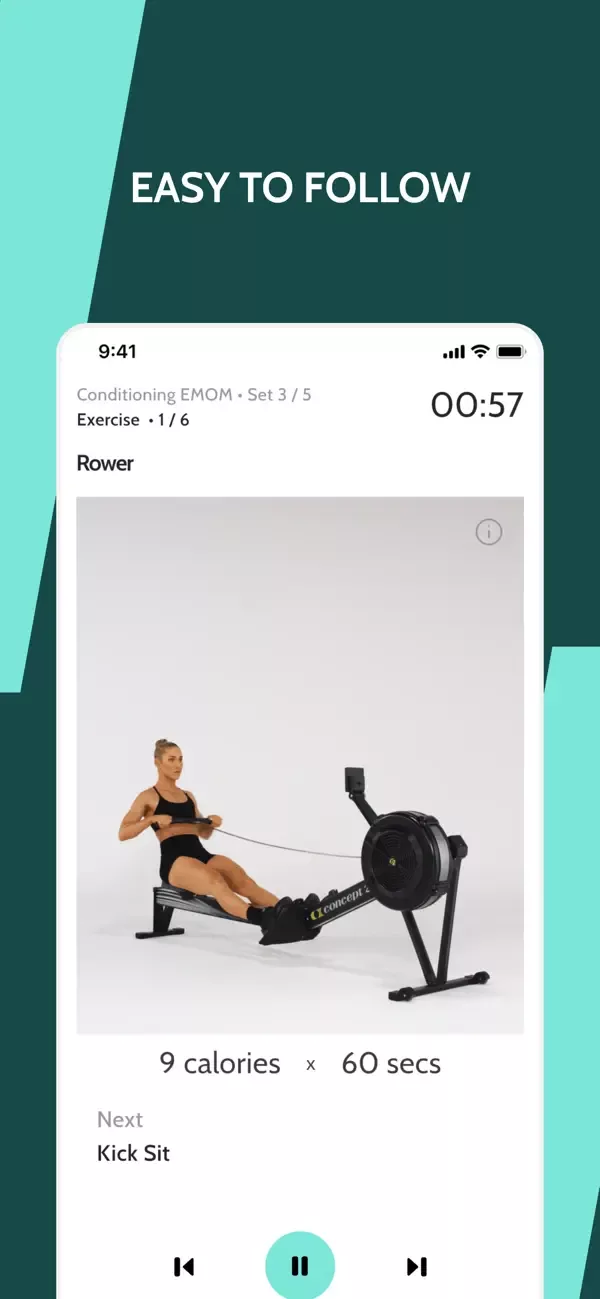
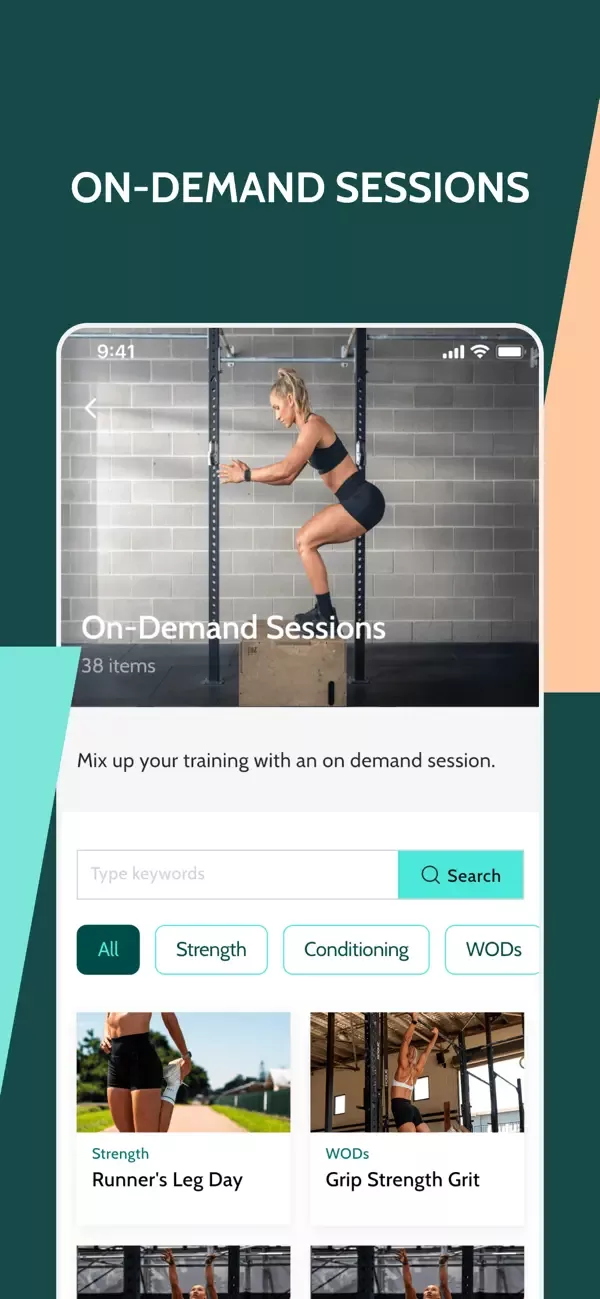
Inside the app
The app opens on a weekly calendar rather than a content library, because a member following a progressive program is planning a week. Each session carries exercise video demonstrations and written instructions, weight and performance tracking record the progression across a block, and on-demand sessions cover the days that fall outside the plan. Before a session starts, a member can preview the whole workout and substitute exercises around the equipment they have, an injury or a preference.
- One Flutter codebase
- Android, first time ever
- Weekly calendar planner
- Exercise substitution
- A CMS the coach controls
- Migrating existing members
01 06
One Flutter codebase
The rebuild replaced an iOS-only application with a single Flutter codebase serving both platforms. One implementation, one release cycle, one place a change is made.
This is what made Android viable. The alternative was commissioning a second native app and then carrying the cost of keeping two products in step forever.
02 06
Android, first time ever
According to its Google Play listing, the Train With Cass app became available to Android users for the first time ever on 25 March 2026. Every follower on an Android device had previously been unable to become a member no matter how much they wanted the product.
03 06
Weekly calendar planner
The experience is organised around a weekly calendar rather than a catalogue of content. Progressive programming is planned a week at a time, and building the interface around that unit means the app matches how members actually use it instead of asking them to assemble a plan themselves.
04 06
Exercise substitution
A member can substitute exercises around the equipment available to them, an injury or a personal preference, directly from the workout overview screen before the session starts, and preview the full workout first. It is the feature that keeps a structured program usable on the days when the plan and the real world do not match.
05 06
A CMS the coach controls
Programs, sessions and the video library are published by Cass Olholm directly through a purpose-built content management system, with the video library added to monthly. Removing the developer from the publishing path is the difference between programming that evolves weekly and programming that waits for a release.
06 06
Migrating existing members
Accounts, subscriptions and training history were carried into the new product through a planned data migration, so paying members moved to the rebuilt app without losing their record or being asked to sign up again. A rebuild that resets its own members undoes most of what it set out to achieve.
Services in the Train With Cass 2.0 rebuild
Frequently Asked Questions
Train With Cass is a subscription fitness app from Cass Olholm, a Brisbane-based qualified nutritionist, head coach and qualified pre and post natal trainer. It delivers six structured training programs - Strength, Strength and Conditioning, HIIT, Functional Mobility, a Minimal Equipment program and a 12-week Hyrox program - plus on-demand sessions and a video library. PixelForce rebuilt the app on Flutter for iOS and Android.
Yes. According to its Google Play listing, the Train With Cass app became available to Android users for the first time ever on 25 March 2026. Before the rebuild the app existed only on iOS. PixelForce rebuilt it on a single Flutter codebase, which is what made shipping to both platforms a single piece of work rather than a second app to build and then maintain separately.
Because at some point the architecture, not the bugs, becomes the constraint. PixelForce had already stabilised the original Train With Cass app in an earlier engagement, and that work showed the crashes were fixable while the underlying structure would keep making every new capability more expensive than the last. A rebuild is justified when the evidence shows the ceiling is structural. Without that evidence it is an expensive assumption.
Scoping and development are priced separately at PixelForce. Phase 1 Scoping and Design comes first and produces the blueprint, and Phase 2 Development, QA and Release is quoted against the fixed-cost Statement of Work that comes out of it. Building both platforms from one cross-platform codebase costs materially less than commissioning two native apps, and the saving compounds afterwards because there is one product to maintain rather than two.
They should not notice anything except a better product. On Train With Cass 2.0, existing accounts, subscriptions and training history were carried into the rebuilt app through a planned data migration, so paying members were not asked to sign up again or start their progress from zero. Migration is scoped as part of the build rather than treated as a launch-week task, because it is the part of a rebuild that decides whether members stay.
Yes, when the app is built with that as a requirement. Train With Cass 2.0 includes a purpose-built content management system that Cass Olholm uses to publish programs, sessions and video content directly, with the video library added to monthly. On a creator-led fitness business the publishing tools are as important as the member experience, because a program that has to wait for a developer is a program that ships late or does not ship.
Yes. Phase 3 Post Launch Support is a standing part of every PixelForce engagement, available as a warranty, monitoring and support arrangement on a flat monthly fee, or as a full product retainer priced per four-week cycle against a committed story-point capacity, in tiers named Steady, Growth, Scale, Velocity and Momentum, with Enterprise on application. Train With Cass has continued to receive new capability since the rebuild, including exercise substitution from the workout overview screen, which is what an architecture built for change is supposed to allow.
Up next
More products we have designed, built and launched end to end.
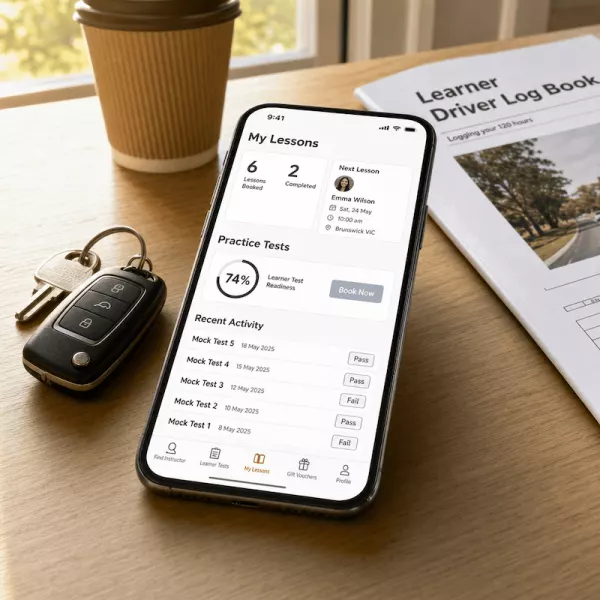
EzLicence UK From Australia to the United Kingdom
Taking a proven driving-lesson marketplace from Australia to the UK, localised for a new market from day one.

Pilates Obsession From Studio to Global Platform
How we turned Sara Colquhoun's studio expertise into a global Pilates platform in three months