






Healthcare app development

PixelForce builds secure, compliant healthcare app development for Australian providers and health startups - telehealth, EHR integration and patient engagement. Revia reached #3 in Apple's Health and Fitness category within 48 hours of launch. AWS Advanced Tier Partner, 99.99 percent uptime.

  • Revia · #3 in Apple Health and Fitness in 48 hours
  • OpBill · medical billing 90 percent faster, 98 percent satisfaction
  • HIPAA, Australian Privacy Principles, My Health Record & TGA ready
  • AWS Advanced Tier Partner · 99.99 percent uptime
99.99%Uptime across the portfolio
98%First-time app-store approval
$1.5B+Client revenue generated
100+Products shipped

Three healthcare apps. Three clinical-grade builds.

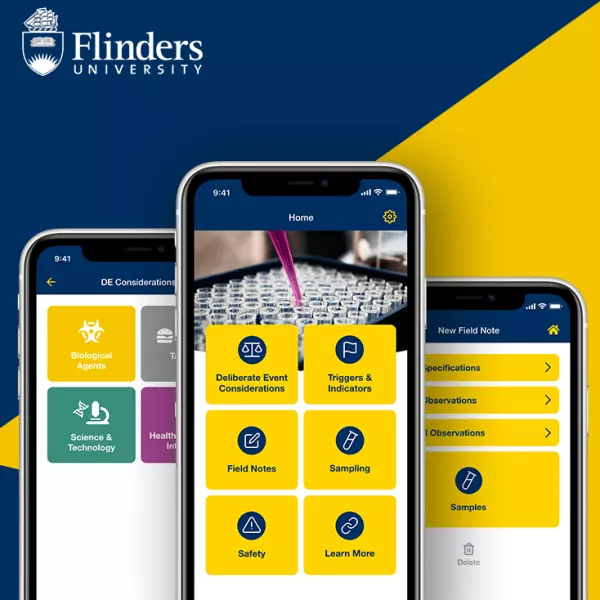
We do not just write code - we ship regulated, clinical-grade products. From OpBill's AI-powered medical billing to Revia's consumer health app and SuspectED's field biosecurity platform for Flinders University, our healthcare app development and custom healthcare software development portfolio spans telehealth, medical billing, patient engagement and clinical data capture. Every build is engineered for the parts that decide whether a medical app is trusted - data security, EHR integration, audit trails, and compliance with HIPAA, the Australian Privacy Principles and the TGA Software-as-a-Medical-Device framework.

Medical software development that made billing 90% faster.

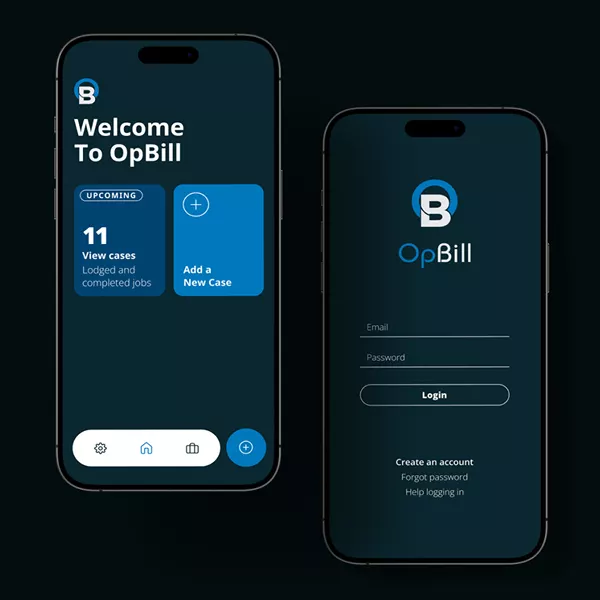
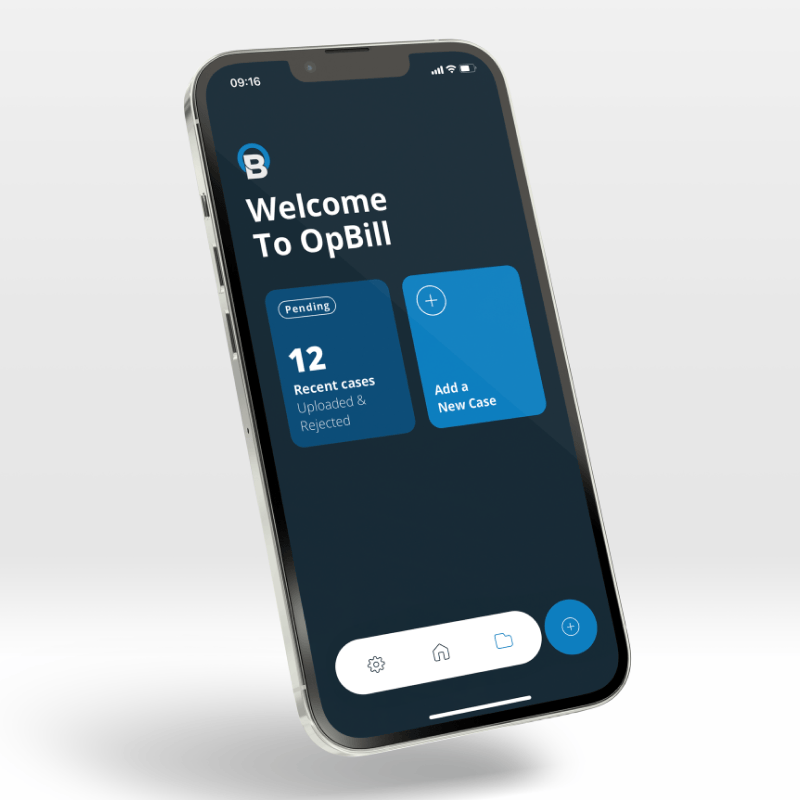
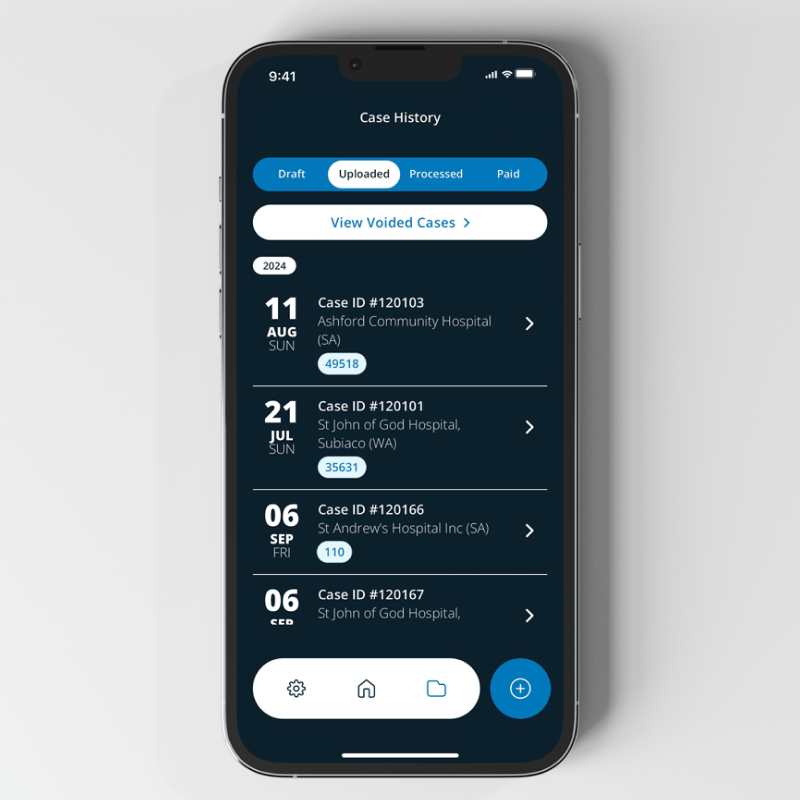
PixelForce built OpBill's AI-powered OCR claiming flow - Snap, Scroll, Done - which made medical billing 90 percent faster with 98 percent user satisfaction, delivered in a 4-month build. Medical software development is unforgiving: it has to be clinically accurate, secure by default, and fast enough that busy clinicians actually adopt it. We solved the hard parts - HIPAA-equivalent data handling, Privacy Act and Australian Privacy Principles alignment, Medicare item-number claiming, and OCR accurate enough to trust with a rebate. The same healthcare app developers are available for your telehealth, EHR integration or patient engagement build.

OpBill medical billing app claim screen OpBill medical billing app dashboard screen
Built by PixelForce 90% faster billing · 98% user satisfaction

Recognised by Apple, Clutch & the clients who ship regulated products.

Independent recognition for the team behind OpBill, Revia and SuspectED - Apple Best of Developers, Watch and TV App of the Year, and Top Clutch App Development and Software Development Company in Australia 2026. As an AWS Advanced Tier Partner with 15+ AWS-accredited engineers, PixelForce holds a 99.99 percent uptime rate and a 98 percent first-time app-store approval rate across 100+ shipped products - the reliability record that regulated healthcare software has to meet.

Apple Watch App of the Year
Clutch Top User Experience Company
Apple TV App of the Year
Apple Best of Developers
Clutch Top App Development Company
Clutch Top Software Developers
Australian Technology Services Achiever
Web Excellence Awards (Website)
Web Excellence Awards (App)
ACS Digital Disruptor Gold Award
Clutch Top Android App Development
Clutch Top iPhone App Development

Why health founders pick our healthcare app development team.

Four reasons clinicians, health startups, and medical device companies choose PixelForce as their healthcare app development and custom healthcare software development partner. Healthcare is not a normal build - it is regulated, clinically sensitive, and unforgiving of data or reliability failures. Compliance depth, healthcare integration expertise, a real medical track record, and enterprise-grade reliability are the four things that decide whether your medical app clears review, earns clinician trust, and stays live.

Patient data and clinical requirements

Healthcare data is the most sensitive data there is, so the product is built to that standard from the start rather than adjusted later. We align to the Privacy Act 1988 and the Australian Privacy Principles, connect to My Health Record where relevant, and classify against the TGA Software-as-a-Medical-Device framework when the app makes a clinical claim. Encryption in transit and at rest, full audit logging, role-based access, and consent management are standard, not extras.

  • Consent management and audit logging in every build
  • Privacy Act & Australian Privacy Principles aligned
  • My Health Record and TGA SaMD ready
  • Encryption, audit logging and role-based access

Healthcare integration expertise

EHR integration is where most healthcare apps stall. We work fluently in the HL7 and FHIR interoperability standards and integrate with major Australian practice management systems - Best Practice, Medical Director, Genie and Zedmed - covering patient demographics, appointments, clinical notes and billing. We also build Medicare claiming and item-number workflows, private health fund claiming, and secure clinician-to-clinician and clinician-to-patient messaging.

  • HL7 and FHIR interoperability standards
  • Best Practice, Medical Director, Genie, Zedmed
  • EHR integration for demographics, notes and billing
  • Medicare and private health fund claiming

A real medical track record

We have shipped regulated healthcare products that people rely on. OpBill made medical billing 90 percent faster with 98 percent user satisfaction. Revia reached #3 in Apple's Health and Fitness category within 48 hours of launch. SuspectED, built for Flinders University, gives frontline responders forensic-grade chain-of-custody and has been deployed across India, Pakistan and Indonesia. Healthcare app development here is validated by live clinical outcomes, not slideware.

  • OpBill: medical billing 90% faster, 98% satisfaction
  • Revia: #3 in Apple Health & Fitness in 48 hours
  • SuspectED: forensic chain-of-custody, 3+ countries
  • Clinical-grade outcomes, independently verifiable

Enterprise-grade reliability

In healthcare, downtime is a clinical risk, not just a support ticket. PixelForce is an AWS Advanced Tier Partner with 15+ AWS-accredited engineers, and we hold a 99.99 percent uptime rate across 100+ shipped products with a 98 percent first-time app-store approval rate. Every healthcare platform runs on your own AWS account with monitoring, alerting, and infrastructure that scales from a pilot clinic to a national rollout without a rebuild.

  • AWS Advanced Tier Partner, 15+ accredited engineers
  • 99.99% uptime across 100+ shipped products
  • 98% first-time app-store approval rate
  • Client owns the IP and the AWS account

Healthcare app development services we deliver.

Six healthcare software development services we have shipped repeatedly - from telehealth and telemedicine app development to EHR integration, medical app development, medical billing, and clinical device software. The technical building blocks repeat (HL7 and FHIR, secure video, encryption, audit logging, Medicare claiming, offline-first data capture). What changes is the clinical workflow, the regulatory classification, and who pays. Pick a service, or combine them into a single digital health platform.

Telehealth & telemedicine app development

Secure video consultations, waiting rooms, triage, e-prescribing, and post-consult follow-up, built for reliable clinical video on real-world connections. Our telehealth app development and telemedicine app development covers patient and clinician apps, consent capture, and Medicare-claimable consultations. Designed for GP clinics, allied health, specialists, and health startups launching a virtual-care offering.

  • Secure, low-latency video consultations
  • Triage, waiting room and e-prescribing
  • Medicare-claimable telehealth consultations
  • Patient and clinician apps from one codebase

EHR integration & interoperability

EHR integration through the HL7 and FHIR standards, connecting your app to Best Practice, Medical Director, Genie and Zedmed. We sync patient demographics, appointments, clinical notes and billing, and build custom integrations for legacy systems. Interoperability is scoped in Phase 1 so the data model, consent flows and audit trail are locked before development starts.

  • HL7 and FHIR interoperability
  • Best Practice, Medical Director, Genie, Zedmed
  • Demographics, appointments, notes and billing sync
  • Custom integration for legacy clinical systems

Medical billing & claiming

Medical software development for billing and claiming, the category where we built OpBill's AI-powered OCR flow that made billing 90 percent faster. Medicare item-number claiming, bulk billing, patient rebates, and private health fund claiming, with OCR accurate enough to trust with a rebate. Built for practices, billing agents, and health SaaS platforms that need claims out the door in seconds, not minutes.

  • Medicare item-number and bulk-billing claiming
  • AI-powered OCR claim capture (OpBill)
  • Patient rebates and private health fund claiming
  • 90% faster billing, 98% user satisfaction

Patient engagement & remote monitoring

Patient engagement apps that improve adherence and outcomes - appointment booking and reminders, secure messaging, care plans, symptom tracking, medication reminders, and remote patient monitoring from connected devices and wearables. We design for accessibility and low digital literacy, because a patient app only works if the patient it was built for can actually use it.

  • Booking, reminders and secure messaging
  • Care plans, symptom and medication tracking
  • Remote patient monitoring from wearables
  • Accessible design for low digital literacy

Custom healthcare software & practice management

Custom healthcare software development for the workflows off-the-shelf systems do not cover - practice management, provider credentialing, scheduling, admin portals, and clinical reporting dashboards. We build the web and mobile apps plus the backend, the admin portal, and the analytics layer, so clinical and operations teams run the whole platform from one place with full audit visibility.

  • Practice management and scheduling
  • Provider credentialing and admin portals
  • Clinical reporting and analytics dashboards
  • Web, mobile and backend from one team

Clinical & medical device software (SaMD)

Software that makes a clinical claim is a medical device. We build to the TGA Software-as-a-Medical-Device framework, with the traceability, risk management, and audit trail that regulatory review requires. SuspectED, our field biosecurity platform for Flinders University, is the clearest example - forensic-grade chain-of-custody, fully offline, deployed across three-plus countries. The right partner for regulated clinical tools and diagnostics.

  • TGA Software-as-a-Medical-Device classification
  • Traceability, risk management and audit trails
  • Offline-first clinical data capture
  • Forensic-grade chain-of-custody (SuspectED)

A digital health app that hit #3 in 48 hours.

Revia reached number 3 in Apple's Health and Fitness category within 48 hours of launch, after a 4-month build. Consumer health and digital health app development lives or dies on the first session - onboarding that respects the user, data that syncs reliably, and a health experience polished enough to earn a five-star review on day one. Our healthcare mobile app development portfolio spans consumer health, telehealth, medical billing and clinical tools, and every model runs on the same secure, compliant foundation - HIPAA-equivalent security, Privacy Act alignment, and enterprise-grade AWS reliability. Health founders, clinics, and medical device companies pick the same team.

Revia consumer health app screen Revia consumer health app training screen
Built by PixelForce #3 Apple Health & Fitness · in 48 hours

Healthcare app monetisation that fits who pays.

Three healthcare app revenue models we have built and operated. The right path depends on who your app serves - providers, a telehealth network, or patients directly. Provider SaaS is the default for clinical tools and practice software. Transaction fees suit telehealth and marketplaces where value is per consultation. Patient subscriptions, often paired with Medicare claiming, work for consumer health and remote monitoring. We model the economics during Scoping and Design.

Transaction & telehealth fees

Per consultation · % or flat

A fee on each consultation or claim. Best for telehealth platforms and two-sided health marketplaces where value is created per interaction and volume scales with adoption. Typically a percentage of each consultation, sometimes paired with Medicare claiming for bulk-billed appointments so patients pay nothing out of pocket. Low friction to onboard providers because they only pay when they earn.

  • Fee per consultation or per claim
  • Scales with platform adoption
  • Pairs with Medicare bulk-billing
  • Low onboarding friction for providers

Patient subscription

$29 – $199 /month

Direct-to-patient subscriptions for consumer health, remote monitoring, and care programs. Best for digital health apps where the patient is the customer and ongoing engagement drives the value - chronic condition management, coaching, and connected-device monitoring. Often blended with Medicare-claimable consultations and one-off care packages. Retention is earned through outcomes, so the product and the business model pull in the same direction.

  • Monthly or annual patient plans
  • Blends with Medicare-claimable consults
  • Care packages and one-off purchases
  • Retention driven by health outcomes

Essential healthcare app features that earn clinical trust.

Six modules we build into almost every healthcare app development project. The depth here is where medical apps quietly fail - a video consult that drops, an EHR sync that loses a note, an audit trail with a gap, or a booking flow a patient cannot navigate. Each is engineered for security, reliability, and compliance with HIPAA, the Australian Privacy Principles and the TGA framework, because in healthcare the boring, invisible parts are what earn a clinician's trust.

Secure video consultations

Clinical-grade video is the core telehealth primitive. We build for reliable calls on real-world connections, with encryption end to end and a waiting-room and triage flow clinicians actually run their day from.

  • Encrypted, low-latency video
  • Virtual waiting room and triage
  • In-consult notes and e-prescribing
  • Reliable on poor connections
  • Consent capture and recording controls

Scheduling & booking

Appointment scheduling is the most-used screen in most healthcare apps, so it has to be effortless. We sync availability with practice management systems and drive down no-shows with smart reminders.

  • Real-time provider availability
  • Practice-management calendar sync
  • Automated SMS and push reminders
  • Rescheduling and waitlists
  • Multi-provider and multi-site support

EHR integration & clinical notes

EHR integration is where healthcare apps prove they belong in a clinic. We use HL7 and FHIR to keep patient records, appointments and notes in sync with the systems clinicians already use, with no double entry.

  • HL7 and FHIR interoperability
  • Best Practice, Medical Director, Genie, Zedmed
  • Two-way demographics and notes sync
  • Structured clinical documentation
  • Custom integration for legacy systems

Medicare billing & payments

Getting paid has to be as reliable as the clinical care. We build Medicare item-number claiming, bulk billing, patient rebates and private health fund claiming, so revenue leaves the building the moment a consult ends.

  • Medicare item-number claiming
  • Bulk billing and patient rebates
  • Private health fund claiming
  • AI-powered OCR claim capture
  • Secure, PCI-aware payment handling

Privacy and audit

How patient data is handled is architecture, not a setting applied later. Every healthcare app we build encrypts data in transit and at rest, logs every access, and is designed against the Privacy Act and the TGA framework from the first commit.

  • Encryption in transit and at rest
  • Full audit logging of every access
  • Role-based access and consent management
  • Privacy Act and TGA aligned
  • My Health Record connectivity

Patient engagement & monitoring

Engagement is what turns a downloaded app into better outcomes. Secure messaging, care plans, symptom tracking and remote monitoring keep patients connected between visits - and give clinicians the signal to intervene early.

  • Secure patient-clinician messaging
  • Care plans and medication reminders
  • Symptom and outcome tracking
  • Remote monitoring from wearables
  • Accessible for low digital literacy

One conversation.
Three phases.
Built to grow.

The same canonical PixelForce engagement model behind 100+ shipped products and $1.5B+ in combined client revenue, applied to your healthcare app. The 1-3-1 method runs through every conversation - one problem, three options with honest trade-offs across budget, timeline and scope, one recommendation. No Blueprint, no Build.

  1. 0
    Free

    Discovery call

    A free, no-obligation conversation to find the right path for your healthcare app before you commit a dollar.

    • Mutual NDA signed up front
    • 1-3-1 method: one problem, three options, one recommendation
    • Honest trade-offs across budget, timeline and scope
    • A straight answer on what a credible build looks like
  2. 1
    4-8 weeks

    Scoping & Design

    Everything you need to build with total confidence - a fully costed, designed plan with no scope surprises.

    • Strategic workshops and BRD
    • Full UX/UI design system, every screen built
    • PRD and a fixed-cost Statement of Work
    • No Blueprint, no Build - Phase 1 before any Phase 2 quote
  3. 2
    3-6 months

    Development, QA and Release

    From approved designs to your live healthcare app, built and tested at a steady sprint cadence.

    • Sprint cadence with regular demos
    • QA across iOS, Android and the edge cases
    • End-to-end App Store and Google Play submission
    • Built to scale from 1,000 to 1,000,000 users
  4. 3
    Ongoing

    Post Launch Support

    We do not disappear at launch - monitoring, warranty, and an optional retainer keep your healthcare app growing.

    • 24/7 monitoring and a critical-defect warranty
    • Ongoing technical support
    • Optional Product Retainer: four-week sprints and quarterly reviews
    • The model that grew SWEAT to a $400M platform

Healthcare app development questions.

Common questions from clinicians, health startup founders, practice managers, and medical device companies choosing a healthcare app development company. Cost and timelines, essential features, compliance with HIPAA and the Australian Privacy Principles, EHR integration, Medicare claiming, and monetisation - the questions every health founder asks before committing to a build. Answers below come from shipping regulated healthcare software.

Healthcare app development typically ranges from $120K for a basic telehealth MVP to $700K or more for an enterprise medical system, set by scope rather than a fixed quote. As a guide: basic telehealth apps $120K-$180K (4-5 months); standard healthcare platforms $180K-$350K (6-8 months); enterprise medical systems $350K-$700K or more (9-18 months). Ongoing costs include hosting, monitoring and support. Every engagement begins with Phase 1 Scoping and Design (typically $35K-$65K), so the build is costed and de-risked before development - No Blueprint, no Build.

Most healthcare apps take 4 to 18 months depending on scope and regulatory classification. Telehealth MVPs launch in 4-5 months, standard healthcare apps in 6-9 months, and enterprise medical systems in 12-18 months. Add 2-4 weeks for TGA medical device classification where the app qualifies as Software-as-a-Medical-Device. Phase 1 Scoping and Design fixes the schedule before the build starts.

Every clinical-grade healthcare app needs secure patient identity, encrypted data and a full audit trail as its foundation. Core features then include patient registration, secure video consultations, appointment scheduling, EHR integration, digital prescriptions, secure messaging, payment and Medicare processing, provider credentialing, audit logging and emergency protocols - all built to HIPAA, the Australian Privacy Principles and the Privacy Act.

An Australian healthcare app is built to the Australian rules: the Privacy Act 1988 and the Australian Privacy Principles, connecting to My Health Record where that is relevant. Where the app makes a clinical claim, it is also classified against the TGA Software-as-a-Medical-Device framework. These requirements are settled during Phase 1 Scoping and Design, because they shape data handling and architecture rather than being applied afterwards.

Healthcare apps integrate with practice management systems through the HL7 and FHIR interoperability standards. These enable integration with major Australian systems including Best Practice, Medical Director, Genie and Zedmed, typically covering patient demographics, appointments, clinical notes and billing. Legacy systems may need custom integration, which we scope in Phase 1 before any development quote is issued.

The best healthcare app monetisation model depends on who pays. Provider-focused tools use SaaS subscriptions (typically $99-$499 per provider per month); telehealth platforms use transaction fees on each consultation; and patient apps use subscriptions (typically $29-$199 per month). Many Australian platforms also integrate Medicare claiming for bulk-billed consultations. We model the economics during Scoping and Design.

Yes - healthcare apps can process Medicare rebates once the provider is registered and item-number eligible. Integration with Medicare systems enables bulk billing, claiming Medicare item numbers and processing patient rebates. We build the Medicare API integration and billing workflows, and handle private health fund claiming where it is required.

Users trust a healthcare app when it is clinically accurate, secure and reliable every single time they open it. That means strong data security and privacy, dependable video quality, simple booking and payments, verified provider credentials, responsive support, and integration with the patient's existing providers. Trust in healthcare is earned through consistent, secure, reliable performance - which is why we hold 99.99 percent uptime across the portfolio.

Yes - every healthcare app launches into a warranty period and an optional ongoing support or product retainer. Support covers platform monitoring, dependency and operating-system updates, EHR and Medicare integration maintenance, provider training and performance monitoring. Product retainers run from $10K per 4-week cycle (Steady) up to Enterprise, sized to the platform, with regulatory and clinical-workflow updates handled inside the cycle.

Build clinical-grade healthcare software with .

Book a free consultation to scope your healthcare app development project. We will map the compliance requirements - HIPAA, the Australian Privacy Principles and Privacy Act, My Health Record and TGA Software-as-a-Medical-Device - alongside EHR integration, telehealth and patient engagement, then recommend one clear path across budget, timeline and scope. No Blueprint, no Build: every engagement starts with Scoping and Design, so your medical software is costed and de-risked before a line of production code is written.

  • AWS Advanced Tier Partner · 99.99% uptime
  • 98% first-time app-store approval · 100+ products shipped
  • 100% in-house development · Adelaide HQ
  • HIPAA, Privacy Act, My Health Record & TGA-ready builds