
Crop Shop Boutique
Fulfilment automation · Brisbane
100%pre-shipment notifications automated
2 wksdevelopment cycle
PixelForce delivers AI automation services and AI agent development for Australian businesses. We design, build and operate agentic workflows that take real work off your team, then keep them running - measured, governed and inside your own cloud account.
These are not pilots or proofs of concept sitting in a sandbox. Each one is an automation PixelForce built, shipped and still operates inside a live commercial business. EzLicence asked us for an AI knowledge system to stop seven years of product decisions living in people's heads. The Handbook shipped in 4 weeks, delivers a 50 percent efficiency gain across workflows, and automates 90 percent of documentation updates with 10 percent human oversight. Crop Shop Boutique was exporting order data by hand to keep customers informed across two continents. We connected ShipBob, Klaviyo and Shopify in a 2-week development cycle, and 100 percent of pre-shipment customer notifications are now automated with the manual CSV export workflow eliminated. OpBill needed clinicians to stop typing claim details from paper. The AI-powered OCR claiming flow we built in 4 months made medical billing 90 percent faster with 98 percent user satisfaction. Different industries, different technologies, one pattern: find the process where people are the bottleneck, automate the routine majority of it, and keep deliberate human oversight on the rest. That is what AI automation services look like when they are measured rather than announced.

AI knowledge system · Adelaide
Fulfilment automation · Brisbane
AI-powered OCR claiming · Adelaide
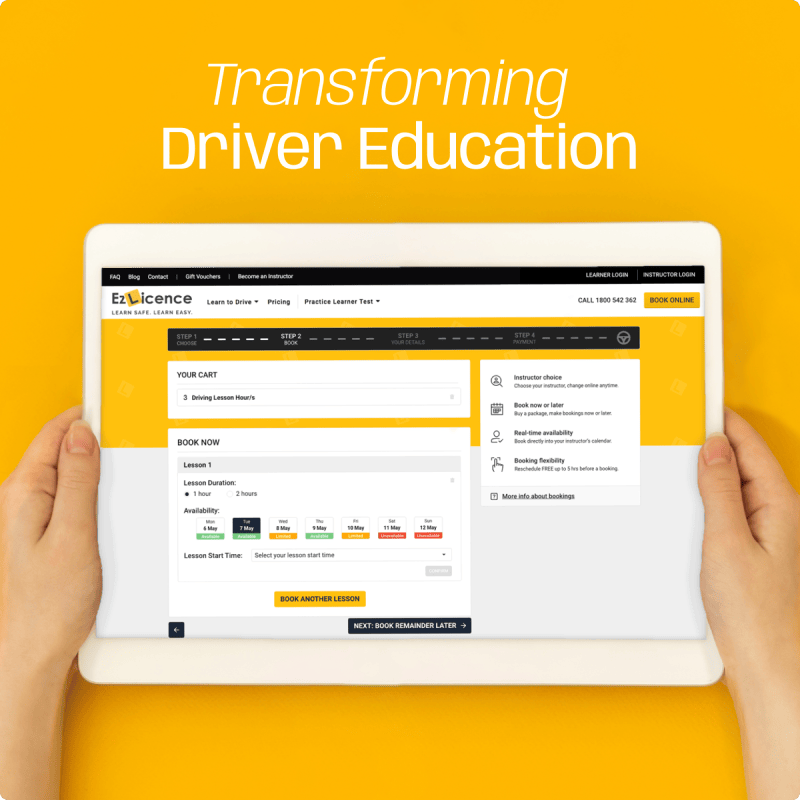
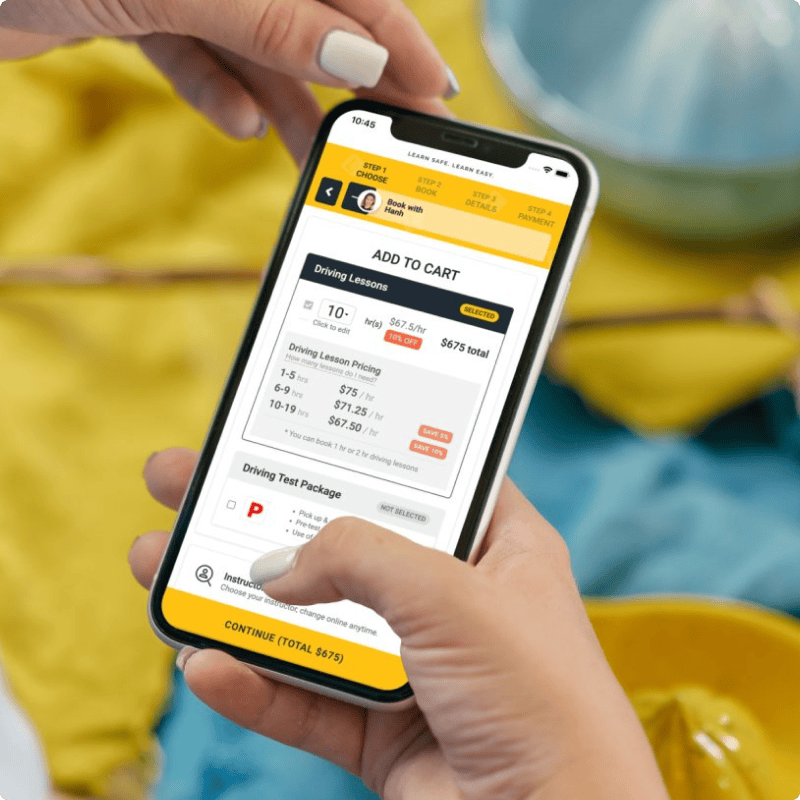
EzLicence had seven years of product evolution scattered across documents, tickets, code comments and the memories of the people who had been there longest. Every new decision meant reconstructing context that nobody had written down in one place. We shipped an AI knowledge system, The Handbook, in 4 weeks. It consolidated that history into a single source of truth, delivers a 50 percent efficiency gain across workflows, and automates 90 percent of documentation updates with 10 percent human oversight. The last number is the one worth reading twice. We did not chase 100 percent, because the final stretch of any knowledge workflow is exactly where judgement is required and where an over-confident agent does the most damage. Automating the routine 90 percent and deliberately keeping people on the remaining 10 percent is the shape we recommend for most business process automation, and it is why the system is still trusted a year on rather than quietly abandoned. EzLicence is the same platform we built and still operate as it processes $100M+ in annual bookings.
The hard part of production AI automation is not the model. It is the integration, the guardrails, the observability and the cloud engineering underneath - and that is ordinary, unglamorous software discipline. PixelForce is an AWS Advanced Tier Partner with 15+ AWS-accredited engineers, holding a 99.99 percent uptime rate across 100+ shipped products. Independent recognition includes Apple Best of Developers, Watch and TV App of the Year, and Top Clutch App Development Company and Software Developers in Australia 2026. That matters more than it might first appear when you are choosing between an AI automation agency and an engineering firm: an agent that reaches into your CRM, your billing system and your data warehouse is a distributed system with elevated permissions, and its failure modes are operational rather than conversational. An AI automation company that has never carried a pager for a production platform will not have designed for them. We have been building and running that kind of infrastructure for other people's businesses for well over a decade.



Most AI automation proposals fail in the same four places: they automate the wrong process, they cannot reach the systems where the work actually lives, they have no answer for what happens when the agent is wrong, and nobody owns them after launch. Those four failure modes are the reason this section exists. PixelForce is an engineering firm that builds and operates production software for other businesses, and we approach AI automation the same way - assess honestly, integrate properly, constrain deliberately, and stay accountable for it once it is running. We build and run AI agents Australia wide from an Adelaide headquarters, for clients in Adelaide, Sydney, Brisbane and beyond, and anyone evaluating an AI automation company here should test every shortlisted supplier against these four things specifically - because a convincing demo tells you almost nothing about any of them.
The most valuable output of an AI strategy consulting engagement is often a shorter list than the one you arrived with. Phase 1 Scoping & Design runs two strategic workshops that map your processes and rank automation candidates by volume, the cost of an error, and how stable the process actually is. The 1-3-1 method frames every trade-off: one problem, three options with their consequences written down, one recommendation across budget, timeline and scope. Plenty of that work ends with us saying that two processes are worth automating, the rest are not, and the real constraint is data quality rather than intelligence. We never scope something a client cannot afford to build, and declining to build is a valid outcome here.
An agent that cannot reach your CRM, billing, ticketing, ERP or warehouse is a demo, and demos are cheap. The engineering that makes automation pay is the plumbing into systems that were never designed to be automated. Crop Shop Boutique is the clean illustration: we connected ShipBob, Klaviyo and Shopify in a 2-week development cycle, and the result was 100 percent of pre-shipment customer notifications automated and the manual CSV export workflow eliminated, with no change to how the business already worked. During Phase 1 we audit your stack and confirm what each system can genuinely expose, rather than assuming an API exists because a vendor page says so.
AI agents do not fail the way ordinary software fails. They degrade quietly, producing plausible output that is gradually less correct, and the damage is done before anyone notices. We design for that from the start: hard constraints on what an agent may do, confidence thresholds that escalate to a person rather than guess, humans in the loop on high-consequence decisions, and a full audit log of every decision with the reasoning behind it. Where the escalation line sits is a business decision made with you in Phase 1, not a technical default. The EzLicence Handbook is the posture in practice - 90 percent of documentation updates automated, 10 percent deliberate human oversight retained.
An AI agent is not a deliverable you sign off and file. Its accuracy drifts as your business changes, as the underlying models change, and as people find edge cases nobody imagined. PixelForce runs 100% in-house development from an Adelaide headquarters, so the people who scoped and built your automation are the people monitoring it afterwards, with no subcontracting chain in between. Phase 3 covers that explicitly: 24/7 infrastructure monitoring, business-hours incident response, a monthly Platform Health Report, and, on the Product Retainer, continuous sprints that improve the agent against what real usage has shown. This is the part most AI automation suppliers do not offer, and it is the part that decides whether the automation is still working in a year.
Six AI automation services we have shipped repeatedly for Australian businesses, from the strategy assessment that decides whether to automate at all through to the governance that keeps an agent trustworthy years later. Most engagements combine three or four of them, sequenced rather than bought at once, and which ones you need is settled in Phase 1. This page is PixelForce's hub for internal automation - work aimed at your own operating cost and capacity. Three related services sit alongside it: putting intelligence inside a product your customers use is AI-powered app development, proving an unvalidated AI idea cheaply is AI MVP and rapid prototyping, and language-centred work such as retrieval over your own documents or a tuned model is generative AI and LLM development.
Phase 1 Scoping & Design, the mandatory first step of any build. Two strategic workshops map how work actually moves through your business, rank automation candidates by volume, error cost and process stability, and separate the processes where AI genuinely helps from the ones where a simple integration or a policy change would do more for less. You leave with a Business Requirements Document, a Product Requirements Document, the UX/UI design for anything people will touch, and a fixed-cost SoW. No Blueprint, no Build.
Building the autonomous components that observe a system, interpret what they find, decide what to do and act on it. That covers a single focused agent handling one process end to end, and multi-agent workflows where responsibilities are split because the steps need different context or different permissions. The engineering weight sits in the seams rather than the model: what each agent may do, what it must escalate, what gets written to the audit log, and how the whole thing is measured once it is live in front of real work.
Taking an existing process and rebuilding it so the routine majority runs without a person. Common candidates are support triage and drafting, lead qualification and enrichment, invoice and expense categorisation, claim and document processing, compliance checking, fulfilment notifications and recurring reporting. Not everything should be agentic: where a process is genuinely fixed, deterministic automation is cheaper, faster and easier to trust, and we will say so. Most businesses end up with a mix, and drawing that line correctly is a large part of the value.
Wiring agents into the systems where your work already lives: CRM records and opportunity updates, support and ticketing queues, finance and ERP for invoices and reconciliation, data warehouses for querying and reporting, email and messaging platforms, and anything exposing a REST API or webhook. Crop Shop Boutique connected ShipBob, Klaviyo and Shopify in a 2-week development cycle. Where the data itself is the obstacle, our data analytics and insights work handles the warehouse and pipeline layer that automation depends on.
Consolidating institutional knowledge into a single source of truth an agent keeps current, so context stops living in the memories of whoever has been there longest. The EzLicence Handbook is the reference build: shipped in 4 weeks, it consolidated seven years of product evolution, delivers a 50 percent efficiency gain across workflows, and automates 90 percent of documentation updates with 10 percent human oversight. This is usually the highest-return first automation in a business that has grown quickly, because the cost of scattered knowledge is real but rarely appears on any budget line.
Phase 3, and the service that separates automation still working in a year from automation quietly switched off. Warranty, Monitoring & Support covers critical-bug warranty, 24/7 infrastructure monitoring, business-hours incident response and a monthly Platform Health Report, with technical support capped at seven hours per month. Most clients running agents step up to the Product Retainer, which includes all of that and adds a roadmap workshop, continuous sprints improving the agent against real usage, and quarterly business reviews, running per four-week cycle across tiers from Steady through to Momentum.
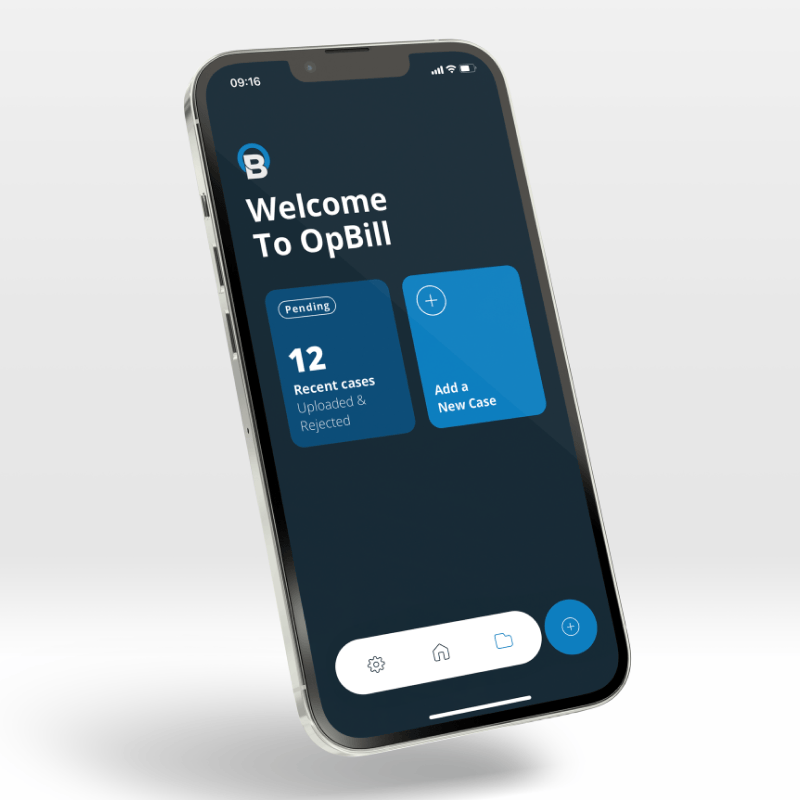
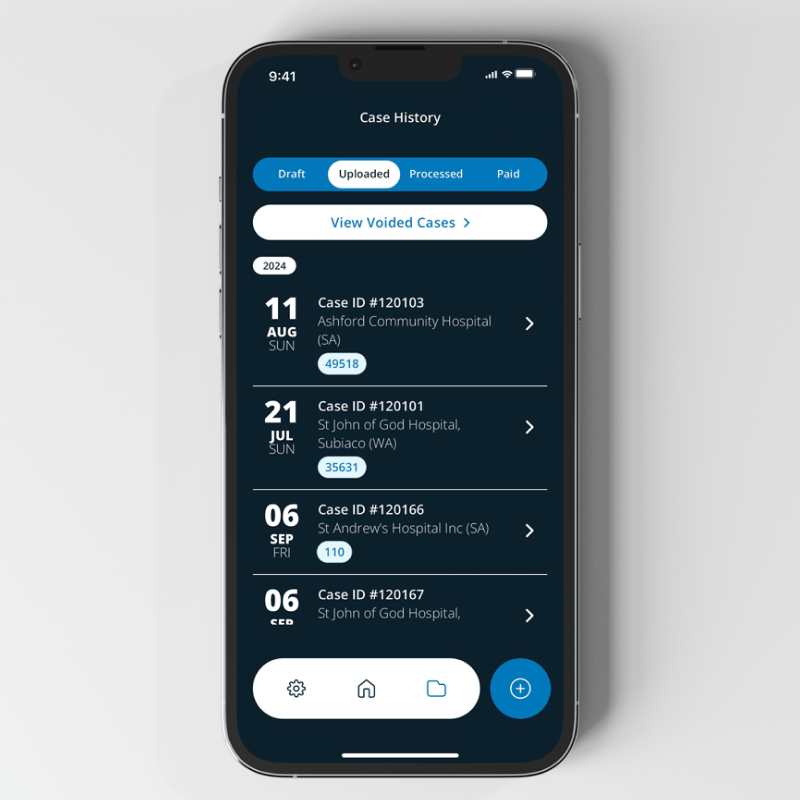
Medical billing is the kind of process AI automation was made for: high volume, heavily repetitive, unforgiving of errors, and until recently entirely dependent on a clinician typing details off paper into a form at the end of a long day. OpBill's AI-powered OCR claiming flow, Snap, Scroll, Done, made medical billing 90 percent faster with 98 percent user satisfaction, built in 4 months. The interesting number there is the second one. Extraction accuracy is a solvable engineering problem; getting busy professionals to actually adopt an automated flow is a design problem, and it fails far more often. The flow was built so a clinician can see what was extracted, correct it in place, and submit, which means the automation earns trust incrementally rather than demanding it upfront. That is the same principle behind every guardrail on this page, and it is why we treat UX/UI as part of AI automation work rather than a layer applied afterwards.
Three engagement models, in the order they normally run, covering AI consulting and AI implementation as one continuum rather than two separate purchases. Scope is what drives everything below, which is exactly why Scoping & Design comes first and why no development commitment is made without it. The cost of AI automation Australia wide is driven by how many systems the agent has to reach, how much regulated or financial logic sits underneath the decisions, how many agents have to coordinate, and how much of your data needs work before anything can be built on it. That last item surprises people most often. Note that model and inference charges from providers such as OpenAI, Anthropic or AWS Bedrock are billed by those providers under their own published pricing and sit outside this scope - we size them with you during Phase 1 so the running cost is understood before you commit to a build.
The AI strategy consulting engagement, and the mandatory first phase of every build. Preliminaries and two strategic workshops map your processes, rank automation candidates, and settle which work is genuinely worth handing to an agent. It produces the Business Requirements Document, the Product Requirements Document, the UX/UI design for anything a person will interact with, and a fixed-cost Statement of Work for development. It is a standalone commitment on purpose, so you can stop here if the assessment says the automation does not pay - and a meaningful share of clients do exactly that, which is the point. No Blueprint, no Build.
Building the automation against the signed Statement of Work: the agent runtime and orchestration, integrations into every system it must reach, retrieval and grounding over your own data, the guardrail and escalation layer, the audit and observability plumbing, and any interface the people supervising it will use. Internal QA runs against the PRD acceptance criteria, then client User Acceptance Testing on real scenarios and edge cases, then release. Scope should set the size of version one, not the budget available: with a larger budget we still advise keeping version one tight and spending the rest on evidence-led iteration once real usage has shown which assumptions were wrong. With agents that advice is stronger than usual, because you genuinely cannot predict the edge cases from a workshop.
Where an automation stays trustworthy, which matters more for agents than for ordinary software because their accuracy drifts rather than breaks. There are two ways to engage. Option 1, Warranty, Monitoring & Support, covers the critical-bug warranty, 24/7 infrastructure monitoring, business-hours incident response and a monthly Platform Health Report, with technical support capped at seven hours per month. Option 2, the Product Retainer, includes everything in Option 1 and adds a roadmap workshop in month one, continuous sprints improving the agent against what real usage reveals, and quarterly business reviews. It runs per four-week cycle against a committed story-point capacity, across tiers from Steady through to Momentum, with Enterprise on application.
Six components that appear in nearly every production AI automation we build. This is the part to interrogate hardest when comparing suppliers, because a demo exercises exactly one of the six. The model choice is the least consequential decision on this list and the easiest to change later. Everything else - how the agent reaches your systems, what grounds its answers in your data, what stops it when it is wrong, and how you find out that it was - is bespoke engineering that determines whether the automation survives contact with a real business. Cloud, CI/CD and monitoring foundations sit alongside our cloud infrastructure and DevOps work, on your own account.
The layer that decides what runs, in what order, and what happens when a step fails. It is ordinary distributed-systems engineering, and it is where most agent projects that look fine in a demo fall over in production.
The defined set of actions an agent is permitted to take against your real systems, each one scoped, authenticated and logged. An agent with unbounded system access is not a capability, it is a liability.
Connecting the agent to your own documents, records and policies so its output reflects your business rather than general knowledge. Grounding is the single most effective control on incorrect output, and it is a data engineering job before it is an AI one.
The boundaries that make the worst case bounded rather than open-ended, and the routes by which an unsure agent reaches a person. Where the escalation line sits is a business decision taken with you in Phase 1.
How you answer "why did it do that" months later, and how you notice that quality has slipped before a customer does. Agents degrade quietly, so measurement is not optional infrastructure here.
Everything runs in your own cloud account with the IP transferring to you, built by an AWS Advanced Tier Partner with 15+ AWS-accredited engineers. Inference is a variable cost, so it needs the same discipline as any other running expense.
The same canonical PixelForce engagement model behind 100+ shipped products and $1.5B+ in combined client revenue, applied to your AI automation. The 1-3-1 method runs through every conversation - one problem, three options with honest trade-offs across budget, timeline and scope, one recommendation. No Blueprint, no Build.
A free, no-obligation conversation to find the right path for your AI automation before you commit a dollar.
Everything you need to build with total confidence - a fully costed, designed plan with no scope surprises.
From approved designs to your live AI automation, built and tested at a steady sprint cadence.
We do not disappear at launch - monitoring, warranty, and an optional retainer keep your AI automation growing.
Automation work built and still operated by a 100% in-house Adelaide team. Read these for the decisions rather than the screenshots: which part of each process was handed to software, which part was deliberately left with a person, and what the number attached to the outcome actually measures. Between them they cover the three patterns that come up most often in Australian businesses - consolidating institutional knowledge, removing manual work from fulfilment and operations, and replacing data entry with extraction and decisioning.

ShipBob, Klaviyo and Shopify connected in a two-week development cycle, and a spreadsheet removed from the middle of the customer experience.

An AI knowledge system that consolidated seven years of product evolution, shipped in 4 weeks.
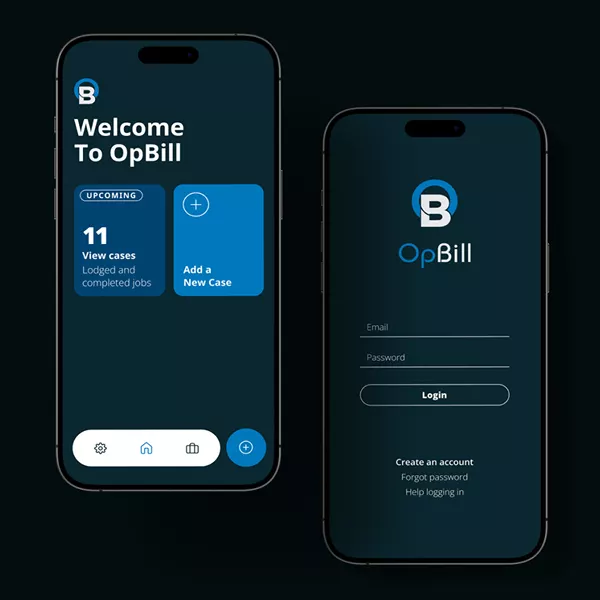
An AI-powered OCR claiming flow that made medical billing 90 percent faster, built in 4 months.
The questions businesses ask before committing to AI automation - how agents differ from the automation they already run, what AI agent development costs, how long it takes, which processes are worth automating, whether agents are reliable enough for production, how they integrate with existing systems, how they differ from chatbots, how safety is enforced, what AI automation services actually cover, whether we do AI strategy consulting, what an agentic workflow is, and how to choose between our four AI services. If your question is not here, ask it on a discovery call - working out whether automation pays for you is precisely what that call is for.
AI agents are software components that read a situation, weigh it against context and policy, decide what to do and then act, whereas traditional automation executes fixed steps in a fixed order and stops when an input arrives in an unexpected shape.
Traditional automation - robotic process automation, workflow tools, scripted integrations - executes fixed steps in a fixed order. It is fast, cheap and reliable right up to the moment something arrives in an unexpected shape, and then it stops.
An AI agent works differently. It reads the situation, weighs it against context and policy, decides what to do next, and can take a different path than the one it took yesterday. Put concretely: a scripted rule looks for an order number in a known position in an email and fails when the customer writes a paragraph instead. An agent reads the paragraph, works out what the customer is actually asking for, checks their history and the current inventory and pricing rules, and drafts a response a person would recognise as sensible.
That flexibility is the whole value, and it is also the whole risk. This is why most of the engineering effort in agentic AI goes into guardrails, escalation paths and measurement rather than into the model itself. Most businesses end up running both: deterministic automation where the process is genuinely fixed, and AI agents where judgement is required.
AI agent development at PixelForce runs through the standard engagement structure: Phase 1 Scoping and Design first, then Phase 2 Development, QA and Release quoted against the fixed-cost Statement of Work that Phase 1 produces.
PixelForce prices AI automation the same way it prices every build, because the phase structure is what keeps the number honest.
Phase 1 - Scoping & Design is mandatory before any development quote is issued. No Blueprint, no Build. It produces the Business Requirements Document, the Product Requirements Document, the UX/UI design and a fixed-cost Statement of Work. It is a standalone commitment on purpose, so you can stop after it if the evidence says the automation is not worth building.
Phase 2 - Development, QA and Release is quoted against that Statement of Work, and the number is driven by how many systems the agent touches, how much regulated or financial logic sits underneath it, and how many agents have to coordinate. Where a budget stretches further than the scope requires, we still advise keeping version one tightly scoped and spending the rest on evidence-led iteration afterwards.
Phase 3 - Post Launch Support has two options. Warranty, Monitoring & Support is a flat monthly fee. The Product Retainer includes everything in Option 1 and is priced per four-week cycle against a committed story-point capacity, in tiers named Steady, Growth, Scale, Velocity and Momentum, with Enterprise on application. Both are quoted for your platform before launch.
What you pay follows the scope rather than a rate card, which is why the honest number for your build comes out of Phase 1 rather than out of a web page. Model and inference costs from providers such as OpenAI, Anthropic or AWS Bedrock are billed separately by those providers on their own published pricing and sit outside the phase fees entirely.
How long AI agents take to build is decided by integration rather than by the AI, and shipped work sets the range: 2 weeks for Crop Shop Boutique, 4 weeks for the EzLicence Handbook, 4 months for OpBill.
Long enough to scope it properly, and less time than most people expect once it is scoped. Rather than quote a generic range, here is what we have actually shipped.
The EzLicence AI knowledge system, The Handbook, went from start to live in 4 weeks. It consolidated seven years of product evolution into a single source of truth, delivers a 50 percent efficiency gain across workflows, and automates 90 percent of documentation updates with 10 percent human oversight.
For Crop Shop Boutique we connected ShipBob, Klaviyo and Shopify in a 2-week development cycle: 100 percent of pre-shipment customer notifications automated and the manual CSV export workflow eliminated.
The OpBill AI-powered OCR claiming flow was built in 4 months and made medical billing 90 percent faster with 98 percent user satisfaction.
The variable that moves a timeline most is not the AI. It is integration. An agent talking to well-documented modern APIs moves quickly. An agent that has to reach into an undocumented legacy system, or into data that has never been cleaned, takes considerably longer - and we identify that during Phase 1 rather than discovering it mid-build.
AI agents suit business processes that are repetitive, multi-step, judgement-light but context-heavy and expensive in people's time, which in practice means internal knowledge and documentation, operations and fulfilment, and document and claim processing.
The processes worth automating share a shape: repetitive, multi-step, judgement-light but context-heavy, and expensive in people's time. In practice they cluster in a few places.
Internal knowledge and documentation, where an agent keeps a source of truth current. That is exactly what The Handbook does for EzLicence, automating 90 percent of documentation updates with 10 percent human oversight.
Operations and fulfilment, where an agent watches systems and triggers the right action. For Crop Shop Boutique the integration we built now automates 100 percent of pre-shipment customer notifications.
Document and claim processing, where extraction plus decisioning replaces typing. The OpBill AI-powered OCR claiming flow made medical billing 90 percent faster with 98 percent user satisfaction.
Beyond those, common candidates include support triage and drafting, lead qualification and enrichment, invoice and expense categorisation, compliance checking, and recurring reporting.
What matters more than the list is the filter. During Phase 1 we look at volume, the cost of an error, how stable the process actually is, and whether a person still has to check the output anyway - because if they do, the saving is much smaller than it looks on a slide.
Yes, AI agents are reliable enough for production use provided they are built to fail safely, because an agent degrades quietly rather than throwing an error, which is exactly what the guardrails are designed to catch.
Yes, provided they are built to fail safely, because they do not fail the way ordinary software fails. Buggy code throws an error and stops. An agent degrades quietly: it keeps producing plausible output that is gradually less correct, and nobody notices until something downstream breaks.
Designing for that is most of the work. We set confidence thresholds so an agent that is not sure enough escalates to a person instead of guessing, and the threshold itself is a business decision made in Phase 1 rather than a technical default. We keep humans in the loop on high-consequence decisions, with the agent preparing a recommendation and a person approving it. We constrain agents inside hard boundaries - spending limits, approval chains, policy rules - so the worst case is bounded rather than open-ended. We log every decision with its reasoning so it can be audited. And we monitor quality continuously after launch rather than deploying and walking away, which is one reason the Phase 3 retainers exist.
The EzLicence Handbook illustrates the posture: it automates 90 percent of documentation updates and deliberately keeps 10 percent human oversight. That last 10 percent is not a shortcoming, it is the design.
Yes, AI agents integrate with existing systems, and integration is usually where both the real value and the real effort sit: CRM, billing, ticketing, ERP, data warehouses and anything exposing a REST API or webhook.
Yes, and integration is usually where the real value and the real effort both sit. An agent that cannot reach your CRM, billing, ticketing, ERP or data warehouse is a demo. We design agents to work inside the technology you already run rather than asking you to replace it.
Typical integration surfaces are CRM records and opportunity updates, support and ticketing queues, finance and ERP systems for invoices and reconciliation, data warehouses for querying and reporting, email and messaging platforms, and any system exposing a REST API or webhook.
Crop Shop Boutique is the clean example. We connected ShipBob, Klaviyo and Shopify in a 2-week development cycle, and the outcome was 100 percent of pre-shipment customer notifications automated and the manual CSV export workflow eliminated. Three third-party platforms, one automated flow, no change to how the business already worked.
During Phase 1 we audit your stack and confirm what each system can actually expose, then design the workflow around that reality. PixelForce is an AWS Advanced Tier Partner with 15+ AWS-accredited engineers, and the automation runs in your own cloud account with the IP transferring to you.
An AI agent is proactive and autonomous, watching systems and acting without being prompted, whereas a chatbot is reactive and answers a question a person has already asked. Both are useful and they are not competing purchases.
A chatbot is reactive. A person starts the conversation and the bot answers. That is genuinely useful for customer-facing support and self-service, and it is a bounded problem.
An AI agent is proactive and autonomous. It watches systems, notices that something needs doing, decides what to do, and does it without anyone prompting it. A chatbot answers "where is my order". An agent notices that a shipment is late, checks the carrier, drafts the customer message, and either sends it or queues it for approval.
The distinction matters commercially because it changes what you are buying. A chatbot deflects contacts. An agent removes work from a process. Most organisations eventually want both, and they are not competing purchases - the chatbot sits at the front door and the agents sit behind it.
If your interest is specifically in conversational interfaces, retrieval over your own documents, or building directly on large language models, that is covered on our generative AI and LLM development page.
PixelForce builds safety into AI agents at four levels: hard constraints on what an agent can do, escalation of uncertain decisions to a person, auditable logging of every decision, and continuous measurement of decision quality after launch.
Safety is architectural, not a review step at the end. We build it at four levels.
Constraints. An agent operates inside explicit boundaries - spending limits, approval authority, policy rules - so there is a hard ceiling on what it can do even when it is wrong.
Escalation. Uncertain or high-consequence decisions route to a person by design rather than by exception, and where that line sits is agreed with you in Phase 1.
Auditability. Every decision is logged with the reasoning and the inputs behind it, so you can answer "why did it do that" months later and use the answer to improve it.
Measurement. We test against real scenarios and edge cases before release, then track decision quality after launch and alert on degradation.
The pattern EzLicence runs is the one we recommend to most clients: automate the 90 percent that is genuinely routine and keep deliberate human oversight on the remaining 10 percent. Governance of this kind is ongoing work, which is why it belongs in a Phase 3 retainer rather than being treated as finished at launch.
AI automation services cover the design, build and operation of software that uses artificial intelligence to carry out business processes with limited human intervention. At PixelForce that spans four things.
AI strategy consulting, where we assess where automation would actually pay and, just as often, where it would not. AI agent development, where we build the autonomous components that observe, decide and act. Business process and workflow automation, where those components are wired into the systems your business already runs. And ongoing operation, because an agent is not a deliverable you accept and file - it needs monitoring, measurement and iteration to stay accurate as your business changes.
The distinction from conventional automation is that AI automation handles inputs that vary and situations nobody anticipated when the process was written down. The distinction from an AI feature inside a product is the goal: AI automation targets your internal operating cost and capacity, whereas building intelligence into a product you sell to customers is AI-powered app development.
Yes, PixelForce provides AI strategy consulting, and it happens inside Phase 1 Scoping and Design, where two strategic workshops rank automation candidates by volume, the cost of an error and process stability.
Yes, and for most clients it is the correct starting point rather than an upsell. AI strategy consulting at PixelForce happens inside Phase 1, Scoping & Design, which is a standalone commitment you can buy on its own.
Two strategic workshops map your processes, identify where automation has genuine leverage, and rank the candidates by volume, the cost of an error, and how stable each process actually is. We use the 1-3-1 method throughout - one problem, three options with their trade-offs written down, one recommendation across budget, timeline and scope - so you can see the reasoning rather than being handed a conclusion. You leave with a Business Requirements Document, a Product Requirements Document, the UX/UI design and a fixed-cost Statement of Work for the build.
A meaningful share of that work ends with us recommending that one or two processes be automated and the rest left alone, or that the real problem is data quality rather than intelligence. Declining to build is a valid outcome here, and it is far cheaper for you to find that out in Phase 1 than in Phase 2.
An agentic workflow is a business process in which one or more AI agents carry out the steps, decide the order, and hand off to each other or to a person as the situation requires. The contrast is with a scripted workflow, where every branch is written in advance by a developer. In an agentic workflow the destination is specified and the route is decided at run time.
A simple agentic workflow uses a single agent: read the incoming item, classify it, take the appropriate action, escalate if unsure. A multi-agent workflow splits responsibilities - one agent gathers and validates information, another decides, another executes and reports - which is useful when the steps need genuinely different context or different permissions.
The engineering discipline is in the seams: what each agent is allowed to do, what it must escalate, what gets logged, and how the whole thing is measured once it is live. Those decisions are made in Phase 1 and revisited in the Phase 3 retainer as real usage shows which assumptions were wrong.
Choose between AI agents, AI-powered apps, an AI MVP and generative AI by starting from what you are trying to change: your own operating cost, the product your customers use, an unproven idea, or work that is mostly language.
Start from what you are trying to change.
If you want to reduce the cost and effort of running your own business - internal processes, operations, documentation, claims, fulfilment - that is AI automation and AI agents, the PixelForce service that owns that territory.
If you want to put intelligence inside a product your customers use, so the product itself becomes smarter, that is AI-powered app development.
If you have an AI idea that is not yet proven and you need the cheapest credible way to find out whether it works and whether anyone wants it, that is AI MVP and rapid prototyping.
If the core of the work is language - retrieval over your own documents, a model tuned on your data, a RAG pipeline, a conversational interface - that is generative AI and LLM development.
The boundaries blur in practice and plenty of engagements draw on two or three of them. Working out which one you actually need is exactly what the first consultation is for, and it is free.
Choose an AI automation company on how it decides which processes to leave alone. Ask how candidates are ranked, and listen for volume, the cost of an error, how stable the process actually is, and whether a person still has to check the output anyway.
Then interrogate the guardrails, because that is where the engineering effort genuinely goes. Ask what hard limits an agent will operate inside, such as spending caps, approval chains and policy rules. Ask where the escalation threshold sits and who decides it. Ask what is logged with each decision, and whether you could answer why the agent did something six months later. Ask how decision quality is measured after launch, not only before it.
Check integration realism. An agent that cannot reach your CRM, billing, ticketing or data warehouse is a demonstration, so ask the company to confirm what each of your systems can actually expose before it designs the workflow rather than after.
A good answer is honest about the human share. A provider claiming full automation of a judgement-heavy process is either describing a simpler process than yours or has not measured what an error costs you.
Start with a free consultation. We will map where AI automation actually pays in your business, which processes are safe to hand to an agent today, and which are not worth automating at all. You leave with the 1-3-1 recommendation - one problem, three options with their trade-offs, one recommendation across budget, timeline and scope. If the honest answer is that you do not need agents yet, we will tell you that.


