Android app development for products serving 50M+ users.

PixelForce is an Australian Android app development company building native Kotlin and Jetpack Compose apps for phones, tablets, Wear OS and Android TV. We have shipped 100+ products in-house from Adelaide, with a 98 percent first-time app store approval rate.

  • Native Kotlin and Jetpack Compose · phones, tablets, Wear OS
  • 98% first-time app store approval across 100+ submissions
  • AWS Advanced Tier Partner · 15+ accredited engineers
  • 100% in-house Android development · Adelaide headquarters
100+products, apps and projects shipped
50M+users served across the portfolio
99.99%uptime across shipped products
98%first-time app store approval rate

Three Android products built for the real world.

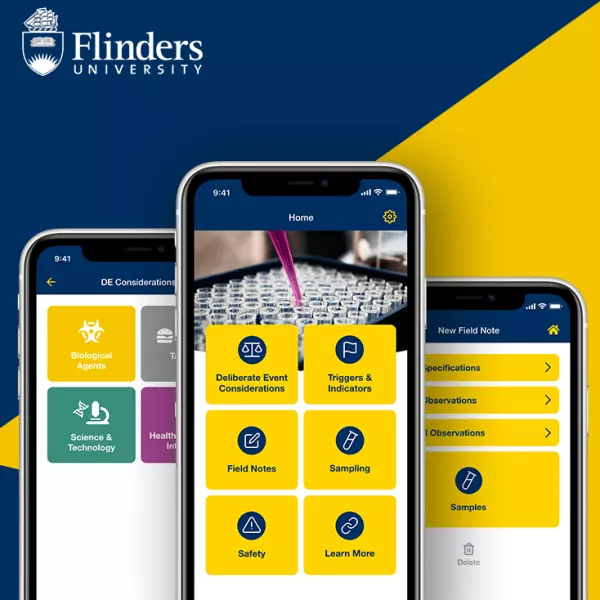
Android is the platform where a product meets the widest possible range of hardware, network conditions and operating system versions, and that is exactly where the engineering shows. PixelForce is an Android app development company in Australia that has shipped for consumer scale, for a rescued platform under load, and for frontline field work with no connectivity at all. SWEAT went from launch to a $400M acquisition by iFIT, with 30 million subscribers across 155 countries, and passed Big 4 due diligence at exit. Move With Us came to us as a platform in trouble: we cut crash rates by 50 percent across 200,000+ users, improved app performance by 40 percent and lifted user satisfaction 30 percent, with zero business interruption while the fix was underway. SuspectED, built for Flinders University, gives frontline responders forensic-grade chain-of-custody for biological threat detection; it was built in 10 months, works fully offline, and has been deployed in developing countries including India, Pakistan and Indonesia. Three different problems, one common requirement: an Android app that behaves the same on a flagship handset and on a five-year-old budget device in a place with no signal.

Android at the scale of a $400M exit.

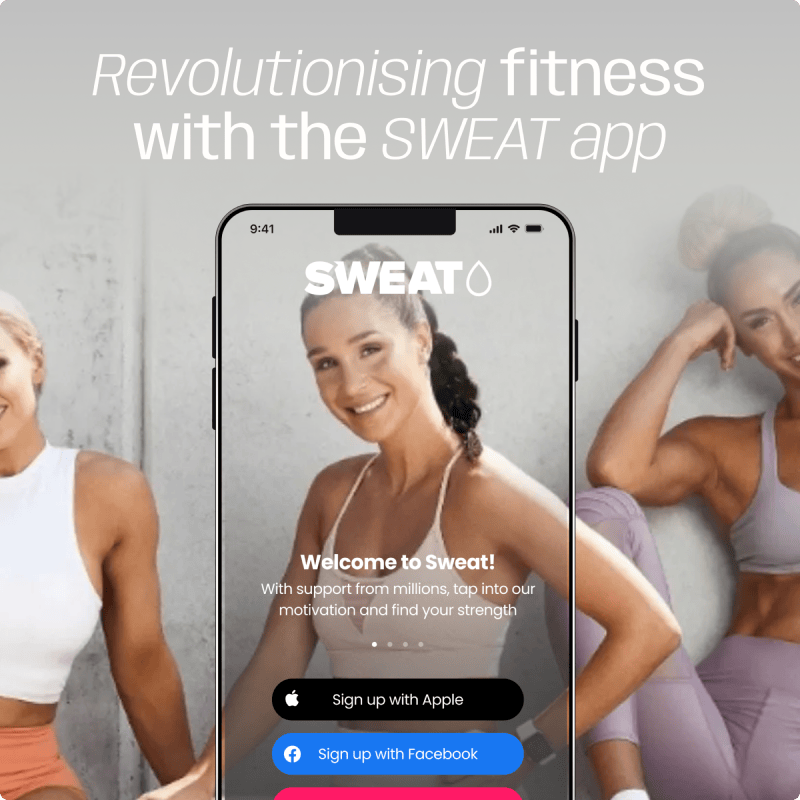
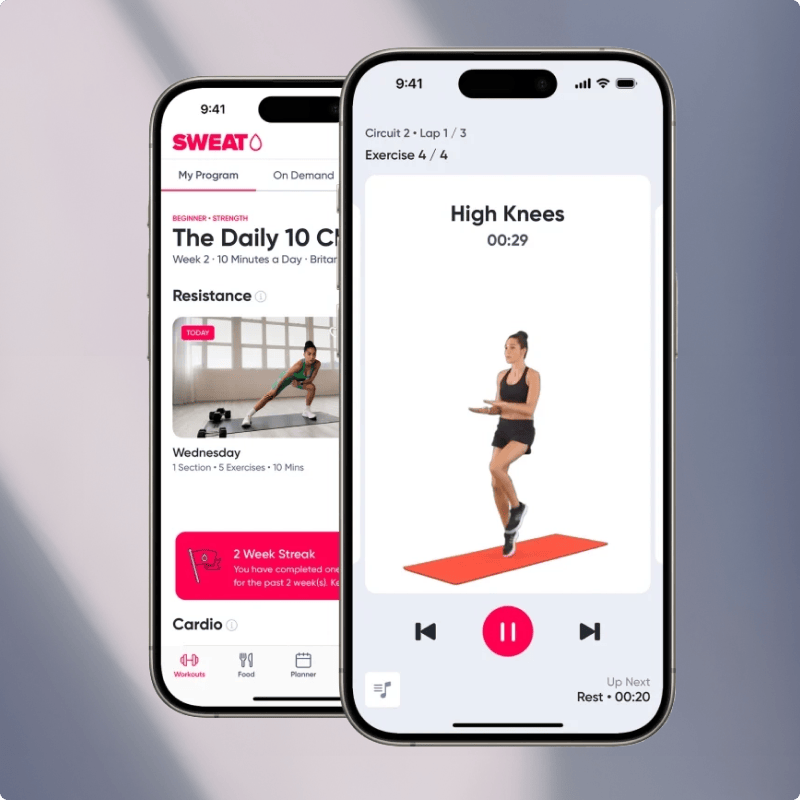
Kayla Itsines and Tobi Pearce came to PixelForce with an audience, a training method and no app. We built and scaled SWEAT from launch to a $400M acquisition by iFIT - 30 million subscribers across 155 countries, and a platform that passed Big 4 due diligence at exit. Android carried a large share of that audience, and at that size the platform stops forgiving shortcuts: a memory leak on one manufacturer skin, a background-execution assumption that a vendor quietly changed, or a payment edge case in Google Play Billing all become support queues rather than tickets. We later added multilingual support across eight languages, which produced a 25 percent increase in retention rates and a 40 percent boost in user engagement. Tobi Pearce is now a strategic investor and advisor to PixelForce. If you are choosing an Android app development company, ask each one to show you an Android product they still stand behind years after launch.

SWEAT Android app workout screen built by PixelForce SWEAT app progress tracking screen
Built by PixelForce $400M acquisition by iFIT · 155 countries

Top Clutch Android app development company, Australia 2026.

Independent recognition for the team behind SWEAT, Move With Us and SuspectED - Top Clutch Android App Development Company in Australia 2026, Top Clutch App Development Company, Apple Best of Developers, and Watch and TV App of the Year. PixelForce is an AWS Advanced Tier Partner with 15+ AWS-accredited engineers, holding a 99.99 percent uptime rate and a 98 percent first-time app store approval rate across 100+ shipped products. That approval rate matters more on Android than it looks on paper, because Google Play rejections cluster around exactly the things that are cheap to get right during the build and expensive to retrofit afterwards: the data safety declaration, sensitive permission justifications, target SDK level and billing compliance.

Apple Watch App of the Year
Clutch Top User Experience Company
Apple TV App of the Year
Apple Best of Developers
Clutch Top App Development Company
Clutch Top Software Developers
Australian Technology Services Achiever
Web Excellence Awards (Website)
Web Excellence Awards (App)
ACS Digital Disruptor Gold Award
Clutch Top Android App Development
Clutch Top iPhone App Development

Why product teams choose our Android app development company.

Four reasons founders, funded startups and enterprise product teams pick PixelForce as their Android app development agency rather than a generalist studio or an offshore build shop. Android is not iOS with a different button shape. The device matrix is enormous, the operating system version spread is wide, manufacturers change background behaviour underneath you, and Google Play raises the required target SDK level every year - so an Android app is a product with a maintenance floor built into it from day one. What separates a build that holds up from one that quietly rots is native depth, a real device and version strategy, an in-house team you can actually reach, and honest advice about whether Android should be your first platform at all. Android app development Australia wide runs from the same Adelaide headquarters, so the people who scope the build are the people who write the Kotlin.

Native Kotlin depth, not a wrapper

We write native Android in Kotlin with Jetpack Compose, which is Google's own recommended stack, and we use it because it is what the hard parts require. Foreground and background services, foreground location, Bluetooth and NFC hardware, on-device processing, biometric authentication, Wear OS and Android TV surfaces - these are the areas where a shared abstraction layer either does not reach or reaches through a plugin nobody maintains. SuspectED is the clearest example: a field app that works fully offline with forensic-grade chain-of-custody, deployed in developing countries including India, Pakistan and Indonesia. Where a shared codebase is genuinely the better economics, we will recommend that instead.

  • Kotlin and Jetpack Compose, Google's own stack
  • Background services, location, Bluetooth and NFC
  • Biometrics, on-device processing, Wear OS and Android TV
  • SuspectED: fully offline, deployed in 3+ countries

A real device and version strategy

Android device fragmentation is the thing that turns a demo into a support queue, so we treat the test matrix as a design decision rather than an afterthought. We test across the major manufacturers including Samsung, Google and Oppo, across screen sizes and densities, across Android versions from 8 through to the current release, and across the manufacturer skins layered on top - which is where the genuinely surprising defects live. Layouts are built responsively so one interface adapts from a compact phone to a tablet and a foldable, and hardware capability detection lets features degrade gracefully instead of crashing. Staged rollout on Google Play then catches whatever the matrix missed, on a small share of users.

  • Samsung, Google, Oppo and other manufacturer skins
  • Android 8 through to the current release
  • Responsive Compose layouts for phone, tablet and foldable
  • Staged rollout so regressions stop at a small share

100% in-house Adelaide team

The people who scope your Android app are the people who design it, build it and ship it. PixelForce runs 100% in-house development from an Adelaide headquarters, so there is no subcontracting chain between the conversation and the code and no timezone gap that turns a two-minute clarification into a two-day round trip. On Android that matters more than it sounds, because so many decisions are judgement calls about which devices, which API level and which trade-off - and those get made badly when they are made by a stranger against a ticket. Cadence is fixed and visible: squad sessions every 2 weeks, planning every 4 weeks, and sprint demos you attend.

  • 100% in-house development, Adelaide HQ
  • No subcontracting chain, no timezone gap
  • Squad every 2 weeks, planning every 4 weeks
  • Sprint demos you attend, not a status email

Honest advice before an invoice

We never scope something a client cannot afford to build, and budget alignment happens at the first consultation rather than after a proposal lands. If your audience is concentrated somewhere iOS dominates, we will say so and point you at iOS app development. If both platforms have to launch together on a budget that will not carry two native builds, we will point you at Flutter. If the honest number sits above your runway, we will tell you that too. Declining a project, or recommending against building, is a valid outcome here. That is also why the development quote comes after the blueprint, never before it.

  • Budget aligned at the first consultation
  • 1-3-1: one problem, three options, one recommendation
  • No development quote without a completed Phase 1
  • Recommending against a build is a valid answer

Android app development services we deliver.

Six Android app development services we have shipped repeatedly - from native Kotlin builds and Material Design systems through to Java to Kotlin migration, Wear OS and Android TV, Google Play release, and the post-launch support that keeps an Android app compliant as the platform moves. Most engagements combine three or four of the six rather than buying all of them at once, and which combination you need is settled in Phase 1 Scoping & Design rather than guessed at now. Custom Android app development for enterprise fleets, regulated workflows and field operations sits inside the same six; the difference is the device inventory and the compliance surface, not the process.

Native Android app development in Kotlin

Ground-up Android apps written in Kotlin with Jetpack Compose, architected so the first release can carry the second and third without a rewrite. That means a clean separation between interface, domain logic and data, dependency injection that makes the app testable, coroutines and Flow for concurrency that does not leak, and an offline-capable data layer where the product needs one. Built on your own AWS account with the intellectual property transferring to you, and instrumented from day one so the first week of real usage produces evidence rather than anecdotes.

  • Kotlin and Jetpack Compose from the ground up
  • Testable architecture, coroutines and Flow
  • Offline-capable data layer where the product needs one
  • Your own AWS account, IP transfers to you

Android UX/UI and Material Design systems

An enterprise-grade design system - colour, typography, accessibility, iconography, components - built on Material Design so the app feels native to an Android user rather than like an iOS layout that was resized. Bottom navigation, the floating action button, Material You dynamic colour, predictive back and the platform gesture conventions all behave the way an Android user already expects. Delivered development-ready with the full user journey mapped end to end. Deeper detail sits on our app design and UX/UI page.

  • Material Design system with accessible tokens
  • Material You dynamic colour and platform gestures
  • Every consumer screen plus key admin screens
  • Development-ready, full journey mapped

Java to Kotlin migration and modernisation

Older Android apps written in Java can be migrated to Kotlin with Jetpack Compose without a big-bang rewrite, because the two languages interoperate. We convert module by module while the app stays shippable, usually starting where it changes most often or crashes most often. Move With Us is the proof at the harder end: crash rates cut 50 percent across 200,000+ users, performance improved 40 percent and user satisfaction up 30 percent, with zero business interruption. If the platform needs more than a language migration, our app rescue and modernisation service covers that.

  • Module-by-module migration, app stays shippable
  • Compose adopted incrementally alongside existing views
  • Move With Us: crashes down 50%, performance up 40%
  • Zero business interruption during the work

Wear OS, Android TV and Google ecosystem

The surfaces beyond the handset, built as part of the same product rather than bolted on later. Wear OS companion experiences for glanceable and workout-style use, Android TV and large-screen layouts for lean-back content, home-screen widgets, and Google ecosystem integration where it earns its place - Google Sign-In, Google Maps, Health Connect, Firebase. We scope these deliberately in Phase 1, because a watch or television surface is a second product with its own design language and its own review criteria, not a checkbox on the phone build.

  • Wear OS companion apps and glanceable surfaces
  • Android TV and large-screen layouts
  • Home-screen widgets and quick actions
  • Google Sign-In, Maps, Health Connect and Firebase

Google Play release and store compliance

Submission is a build-time discipline, which is how PixelForce holds a 98 percent first-time app store approval rate across 100+ submissions. We prepare the compliance surface while the app is being written: a target SDK level that meets Google's current requirement, a data safety declaration that matches what the app actually collects, justified sensitive permissions, account deletion where it is required, and Play Billing wherever digital goods are sold. Release goes out as a signed Android App Bundle with Play App Signing, through internal and closed testing tracks, then staged rollout to production.

  • 98% first-time approval across 100+ submissions
  • Data safety declaration and permission justifications
  • Signed Android App Bundle with Play App Signing
  • Internal and closed testing tracks, then staged rollout

Android monitoring and post-launch support

Android has a maintenance floor that iOS does not, because Google raises the required target SDK level every year and manufacturers change background behaviour between releases. Phase 3 covers it two ways: Warranty, Monitoring & Support at $4,000 per month for the critical-bug warranty, 24/7 infrastructure monitoring, business-hours incident response and a monthly Platform Health Report, or the Product Retainer, which includes all of that and adds a roadmap workshop, continuous sprints and quarterly business reviews from $10,000 per four-week cycle. Cloud and pipeline work sits on our cloud infrastructure and DevOps page.

  • Warranty, Monitoring & Support from $4,000 per month
  • Product Retainer from $10,000 per four-week cycle
  • Annual target SDK upgrades handled before the deadline
  • Crash and performance monitoring with proactive alerts

Crash rates down 50% across 200,000+ users.

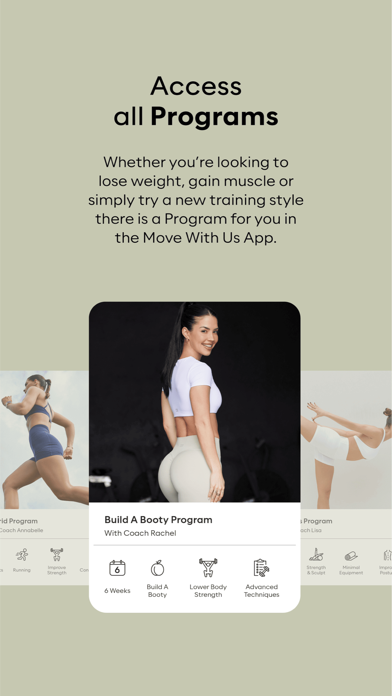
Move With Us arrived as a platform in trouble rather than a blank page. We rescued it and the numbers moved in the right direction: crash rates reduced 50 percent, app performance improved 40 percent, user satisfaction up 30 percent, and zero business interruption while the work happened - which is the constraint that makes a rescue hard, because the app has to keep serving 200,000+ users during the repair. The deepest fix was architectural rather than cosmetic. We refactored the user program engine from duplicated per-user data to templates: the core workout table shrank from 42GB to 0.9GB, a 98 percent reduction, database CPU peaks fell from 40 percent to under 5 percent, and programming changes now reach users instantly with no workout reboot. On Android that kind of work is felt immediately, because the cheapest device on the oldest supported version is the one that was failing first.

Move With Us app rescued and rebuilt by PixelForce Move With Us Android app training screen
Built by PixelForce 98% smaller core workout table · 42GB to 0.9GB

How an Android build is scoped and priced.

Three engagement models, in the order they normally run. Every figure below is an envelope shaped by scope, never a fixed quote off a rate card - which is exactly why Scoping & Design comes first and why no development quote is issued without it. Android app development cost is driven by what is actually being built: a phone app alone or phone and tablet, whether a Wear OS or Android TV surface is in scope, how wide the supported device and version range has to be, how many integrations sit underneath, and whether payments or regulated logic are involved. Read the two build numbers together, because a real first release needs both phases. Android costs about the same as the equivalent iOS build, so the platform choice is a question about your users rather than your budget.

Phase 1 · Scoping & Design

$35,000 to $65,000

The mandatory first phase of every Android build, and a standalone commitment. Preliminaries and two strategic workshops produce the Business Requirements Document, a complete enterprise-grade UX/UI design covering every consumer screen and the key admin screens, a Product Requirements Document and a fixed-cost Statement of Work for the build. For Android this is also where the decisions that quietly set the budget get made: the minimum and target SDK levels, the supported device matrix, whether Wear OS or Android TV is in version one, and whether native Kotlin or a shared codebase is the right answer. You can stop here if the evidence says stop. No Blueprint, no Build.

  • Two strategic workshops, priorities locked
  • BRD, PRD and full Material Design UX/UI
  • Device matrix and SDK levels settled here
  • Fixed-cost SoW for development

Phase 3 · Post Launch Support

From $10,000 per 4 weeks

Two ways to engage after launch, and on Android one of them is not really optional, because Google raises the required target SDK level every year. Option 1, Warranty, Monitoring & Support, is $4,000 per month and covers the critical-bug warranty, 24/7 infrastructure monitoring, business-hours incident response, notification of required third-party updates with cost implications upfront and a monthly Platform Health Report, with technical support capped at seven hours per month. Option 2, the Product Retainer, includes everything in Option 1 and adds a roadmap workshop in month one, continuous sprints shipping features into production and quarterly business reviews, priced per four-week cycle against a committed story-point capacity: Steady $10,000, Growth $20,000, Scale $30,000, Velocity $40,000, Momentum $50,000, Enterprise on application.

  • Option 1 - Warranty, Monitoring & Support, $4,000 per month
  • Option 2 - Product Retainer, from $10,000 per four-week cycle
  • Annual target SDK upgrades handled inside the cycle
  • Quarterly business reviews

What goes into an Android app that holds up.

Six modules that appear in nearly every Android app we build, whatever the market. This is the part worth looking hardest at when comparing Android app developers, because the difference between an app that survives its second year and one that does not lives in the plumbing - whether the data layer works without a network, whether notifications still arrive on a manufacturer skin that aggressively kills background work, whether a bad release can be halted before it reaches everyone. Each module below is built to be extended, because the annual platform upgrade cycle means an Android app is never finished.

Authentication and accounts

The shortest credible path from install to first value, instrumented at every step so drop-off is visible rather than guessed at. Android users expect Google Sign-In and biometric unlock, so both are built in rather than retrofitted.

  • Google Sign-In, email and passwordless sign-in
  • Biometric unlock through the Android BiometricPrompt
  • Secure token storage and session refresh
  • Profile, account management and account deletion
  • Drop-off instrumented across onboarding

Offline-first data and sync

Android runs where the network does not, so the data layer is designed for a dropped connection rather than surprised by one. SuspectED works fully offline in the field, then reconciles when connectivity returns without losing chain-of-custody.

  • Local persistence with a single source of truth
  • Background sync and conflict resolution
  • Queued writes that survive an app kill
  • Graceful behaviour on slow and metered networks
  • Full offline operation where the product needs it

Push notifications and messaging

Firebase Cloud Messaging for delivery, plus the Android-specific work that decides whether a notification actually arrives: notification channels, runtime permission, and the battery optimisation behaviour that individual manufacturers change without telling anyone.

  • Firebase Cloud Messaging integration
  • Notification channels and per-channel user control
  • Android 13+ runtime notification permission handled
  • Tested against manufacturer battery optimisation
  • Deep links that open the right screen

Payments and Google Play Billing

Included when revenue is part of what the release has to prove. Digital goods and subscriptions go through Google Play Billing, physical goods and services through your chosen gateway. Processor fees change, so check each provider's current pricing.

  • Google Play Billing for subscriptions and digital goods
  • Card payments through your chosen gateway
  • Entitlement, trial and renewal logic
  • Server-side purchase verification
  • Revenue events fed into analytics

Analytics, Crashlytics and monitoring

An Android app without instrumentation is an expensive opinion, and the device matrix makes that worse - a crash affecting one manufacturer is invisible in aggregate. Success metrics are defined during Scoping & Design, then the tracking that measures them is built.

  • Crashlytics with crash-free rate by device and version
  • Activation, retention and cohort tracking
  • Funnel events across the core journey
  • Android vitals and performance monitoring
  • Dashboards the product owner can actually read

CI/CD, app bundles and rollout

Cloud infrastructure, pipelines and release tooling on your own AWS account, so shipping a fix takes hours rather than a fortnight. This is the layer that decides whether a bad Android release is an incident or a footnote.

  • Your own AWS account, IP transfers to you
  • CI/CD pipelines and staging environments
  • Signed Android App Bundles with Play App Signing
  • Internal, closed and open testing tracks
  • Staged rollout with the ability to halt a release

One conversation.
Three phases.
Built to grow.

The same canonical PixelForce engagement model behind 100+ shipped products and $1.5B+ in combined client revenue, applied to your Android app. The 1-3-1 method runs through every conversation - one problem, three options with honest trade-offs across budget, timeline and scope, one recommendation. No Blueprint, no Build.

  1. 0
    Free

    Discovery call

    A free, no-obligation conversation to find the right path for your Android app before you commit a dollar.

    • Mutual NDA signed up front
    • 1-3-1 method: one problem, three options, one recommendation
    • Honest trade-offs across budget, timeline and scope
    • A straight answer on what a credible build looks like
  2. 1
    4-8 weeks

    Scoping & Design

    Everything you need to build with total confidence - a fully costed, designed plan with no scope surprises.

    • Strategic workshops and BRD
    • Full UX/UI design system, every screen built
    • PRD and a fixed-cost Statement of Work
    • No Blueprint, no Build - Phase 1 before any Phase 2 quote
  3. 2
    3-6 months

    Development, QA and Release

    From approved designs to your live Android app, built and tested at a steady sprint cadence.

    • Sprint cadence with regular demos
    • QA across iOS, Android and the edge cases
    • End-to-end App Store and Google Play submission
    • Built to scale from 1,000 to 1,000,000 users
  4. 3
    Ongoing

    Post Launch Support

    We do not disappear at launch - monitoring, warranty, and an optional retainer keep your Android app growing.

    • 24/7 monitoring and a critical-defect warranty
    • Ongoing technical support
    • Optional Product Retainer: four-week sprints and quarterly reviews
    • The model that grew SWEAT to a $400M platform

Android app development case studies.

Selected Android work, built by a 100% in-house Adelaide team you would actually work with on your product. Read these for the decisions rather than the screenshots - what was in the first release, which devices and Android versions were in scope, and what the first month of real usage changed. Between them they cover the two Android profiles we see most: a consumer platform that had to keep serving hundreds of thousands of users while being repaired underneath them, and a field application that had to work with no connectivity at all in places where a failed capture cannot be repeated.

Android app development questions.

The questions product teams ask before committing to an Android build - what Android app development costs in Australia, which Android versions to support, how device fragmentation is handled, whether a Java codebase can be migrated to Kotlin, how long a build takes, whether Android or iOS should come first, how Google Play approval works, when native Kotlin beats a shared codebase, and what happens after launch. If your question is not here, ask it on a discovery call.

Android app development cost is an envelope shaped by scope, never a fixed quote off a rate card. Phase 1 Scoping & Design is typically $35,000 to $65,000 and produces the Business Requirements Document, the full UX/UI design, the Product Requirements Document and a fixed-cost Statement of Work. Phase 2 Development, QA and Release is typically $100,000 to $350,000, driven by what is actually being built: a single Android phone app, a phone and tablet build, a Wear OS or Android TV companion, how many integrations sit underneath, and whether payments or regulated logic are involved. The $350,000 figure is a recommendation rather than a ceiling. Even with a larger budget we advise capping version one near it and channelling the remainder into evidence-led iteration after launch. Android development typically costs about the same as the equivalent iOS build. No development quote is issued without a completed Phase 1 - no Blueprint, no Build.

We recommend targeting Android 8.0 (API 26) and above for most consumer products. That range covers the large majority of devices in active use while keeping the build and test matrix sensible. Supporting Android 6 or 7 adds very little reach and a great deal of testing complexity, because every additional API level multiplies the permutations of runtime permissions, background execution limits and notification behaviour that have to be verified. Enterprise and field applications are the common exception: fleets of managed or rugged devices are often several versions behind, so the minimum SDK is set by the actual device inventory rather than by market share. Google Play also enforces a rising target SDK level for new submissions and updates, so the target version moves every year even when the minimum does not. We settle both numbers in Phase 1 Scoping & Design, against your real audience rather than a default.

Android device fragmentation is handled by testing rather than by hope. We test across multiple device configurations covering the major manufacturers including Samsung, Google and Oppo, a range of screen sizes and densities, Android versions from 8 through to the current release, and the manufacturer skins layered on top of them - which is where most surprising defects actually live, because vendors change background execution, battery optimisation and notification behaviour. Layouts are built responsively with Jetpack Compose so a single interface adapts from a compact phone to a large tablet and a foldable. Hardware capability detection ensures features degrade gracefully rather than crashing when a sensor, camera capability or biometric method is missing. Crashlytics and release monitoring then close the loop after launch: staged rollout on Google Play means a device-specific regression is caught on a small percentage of users and halted before it reaches everyone.

PixelForce migrates existing Android apps from Java to modern Kotlin with Jetpack Compose, module by module while the app stays shippable, with the scope and cost settled in Phase 1 rather than quoted as a percentage.

Yes. Older Android apps written in Java can be migrated to modern Kotlin with Jetpack Compose. Kotlin is Google's preferred language for Android and the migration improves runtime safety, removes a large class of null-pointer defects, reduces code volume and unlocks current Android capabilities that the older toolchain cannot reach. Because Kotlin and Java interoperate, the migration does not have to be a big-bang rewrite: we can convert module by module while the app stays shippable, usually starting with the areas that change most often or crash most often. Migration is normally a fraction of the cost of rebuilding from scratch, because the business logic, integrations and infrastructure are preserved - but the honest number depends on the state of the existing codebase, so it is scoped in Phase 1 rather than quoted from a percentage. If the codebase is in worse shape than a migration can fix, we will tell you that too.

Android app development at PixelForce runs Phase 1 Scoping and Design as its own engagement, then a Phase 2 build to milestones fixed in the signed Statement of Work rather than promised before the scope exists.

Phase 1 Scoping & Design runs as its own engagement and produces a development-ready blueprint: preliminaries, two strategic workshops, the BRD, the complete UX/UI design, the PRD and a fixed-cost SoW. Phase 2 Development, QA and Release then runs to that signed scope. A typical Android build moves through foundation and authentication, backend services and cloud infrastructure, the app build itself, internal QA against the PRD acceptance criteria, client User Acceptance Testing, and finally Google Play submission and launch. Milestones are project-specific and set in the SoW rather than promised in advance, which is why we do not publish a timeline before scoping. Cadence during the build is fixed and visible: squad sessions every 2 weeks and planning every 4 weeks, with sprint demos you attend. Google Play review is the one step outside our control, though it is usually the fastest part of a launch.

Whether to build for Android or iOS first depends on where your users are and what the product needs, not on platform preference, and Android is usually right for global audiences and deep device access.

The honest answer depends on where your users are, not on which platform we prefer. Android is the right first platform when your audience is global rather than concentrated in Australia or North America, when your product depends on capabilities Android exposes more openly - background services, deep hardware access, sideloaded enterprise distribution, Google ecosystem integration - or when the addressable market on Android simply dwarfs the iOS one in your category. iOS is often first for premium consumer subscription products in markets where spend per user is higher; that trade-off is covered on our iOS app development page. If both platforms need to launch together and the budget will not stretch to two native builds, Flutter is usually the better answer. This is exactly the kind of decision the 1-3-1 method exists for: one problem, three options with their consequences, one recommendation.

Google Play submission is a build-time discipline, not a final step. PixelForce holds a 98 percent first-time app store approval rate across 100+ submissions, and that comes from preparing the compliance surface while the app is being built rather than the week before release. In practice that means a target SDK level that meets Google's current requirement, a data safety declaration that matches what the app genuinely collects, a privacy policy that survives review, correctly declared sensitive permissions with a justification for each, account deletion available where it is required, and Play Billing used wherever digital goods are sold. We publish through a signed Android App Bundle with Play App Signing, run internal and closed testing tracks before production, then use staged rollout so a release reaches a small share of users first. If a submission is rejected, the fix and the resubmission are handled by us.

PixelForce builds both native Kotlin and cross-platform Android applications, and recommends one over the other in Phase 1 based on how much the product depends on platform capability rather than on house preference.

Both, and the recommendation is made in Phase 1 with the trade-offs written down rather than sold to you up front. Native Kotlin with Jetpack Compose is the right call when the product leans on platform capability - background services, foreground location, Bluetooth or NFC hardware, on-device processing, tight Google ecosystem integration, Wear OS or Android TV surfaces - or when Android is the primary platform and interface fidelity matters commercially. A single cross-platform codebase is usually the better economics when iOS and Android have to launch together with one team iterating rather than two drifting apart, which is covered on our Flutter app development page. We will not sell you two native builds when one codebase answers the same question, and we will not sell you a shared codebase when the product genuinely needs native.

After an Android app launches, PixelForce supports it through Phase 3 Post Launch Support, either Warranty, Monitoring and Support at $4,000 per month or a Product Retainer priced per four-week cycle from Steady at $10,000.

Phase 3 Post Launch Support has two options. Option 1, Warranty, Monitoring & Support, is $4,000 per month: critical bugs fixed under warranty terms, 24/7 infrastructure monitoring with proactive alerts, business-hours critical incident response, clear notification of required third-party updates with cost implications upfront, and a monthly Platform Health Report, with technical support capped at seven hours per month across a 3-month warranty term. Option 2, the Product Retainer, includes everything in Option 1 and adds a product roadmap workshop in month one, continuous sprints shipping designed features into production, sprint planning and quarterly business reviews. It is priced per four-week cycle against a committed story-point capacity: Steady $10,000, Growth $20,000, Scale $30,000, Velocity $40,000, Momentum $50,000, with Enterprise on application. Android specifically needs the ongoing engagement, because Google raises the required target SDK level every year and devices change underneath you.

Choosing an Android app development company turns on five things: Kotlin and Jetpack Compose depth, how they test across real devices, their Google Play compliance record, who holds the code and the signing keys, and the post-launch model.

Language and toolchain. Ask whether new work is written in Kotlin with Jetpack Compose or in legacy Java with XML layouts, and ask them to justify the answer. Kotlin is Google's preferred language for Android, and a firm still defaulting to Java on greenfield work should have a reason beyond habit.

Real-device testing. Android fragmentation is a testing problem before it is an engineering one. Ask which physical devices they test on, which manufacturer skins they cover, and how far back their minimum supported API level reaches. An answer that mentions only emulators is a warning sign, because vendor changes to background execution, battery optimisation and notification behaviour are where the surprising defects actually live.

Google Play compliance. Ask about their submission record, how they keep pace with the target SDK level Google raises every year, and how they handle data safety declarations, justifications for sensitive permissions, and the account deletion requirement. Ask explicitly who pays if a submission is rejected.

Ownership. The Google Play Console account, the app signing keys and the cloud infrastructure should all be in your name, and intellectual property should transfer to you. Signing keys held by an agency are one of the hardest dependencies to unwind later, because losing control of them can mean you cannot ship an update to your own users.

After launch. Ask for the maintenance model in writing with a price against it, and ask to see an Android product the firm built and still operates today. Android moves underneath a shipped app every year, so a build with no support arrangement behind it has a shorter life than it looks.

For reference, PixelForce builds Android in Kotlin with Jetpack Compose, tests on real devices across the major manufacturers, holds a 98 percent first-time app store approval rate across 100+ submissions, and runs 100% in-house development from an Adelaide headquarters with the intellectual property and infrastructure in the client's name.


Ship your Android app with the team behind SWEAT.

Tell us what you are building for Android and we will tell you honestly what it takes to ship it. A free consultation covers the idea, the users and the constraints, then ends with the 1-3-1 recommendation: one problem, three options with their trade-offs, one recommendation across budget, timeline and scope. If Android is not the right first platform for your product, we will say so before you spend anything on a build.

  • Top Clutch Android App Development Company · Australia 2026
  • AWS Advanced Tier Partner · 15+ AWS-accredited engineers
  • 100% in-house development · Adelaide HQ
  • 13+ years & 100+ products shipped