Bryony Deery had grown Pilates By Bryony from a Zoom class of ten people into a global membership, run on a Vimeo OTT app. That app did one thing well: it streamed a video library. It could not become the daily practice Bryony wanted - planning, playlists, progress and a single home for movement, nutrition and mindfulness - because the product belonged to the platform, not to her. Leaving meant moving a paying membership and more than a thousand classes to a new platform without losing anyone on the way.

How we moved Pilates By Bryony off Vimeo OTT and onto its own platform, with every member carried across
From Rented App to Owned Platform
PixelForce replaced Pilates By Bryony's Vimeo OTT app with a custom wellness platform - new iOS, Android and web apps - and moved every member and the full class library across in a single, planned release-day cut-over, with zero data loss.
Members migrated 100%
Custom build 4 months
Platforms iOS + Android + Web
The Problem
The Solution
PixelForce designed and built a custom platform - iOS and Android apps and a web app - and ran the move off Vimeo OTT as an engineered migration, not a relaunch. Content was loaded and verified well ahead of launch, so release day only had to move members and their subscriptions, in one controlled sequence.
The Outcome
The new Pilates By Bryony app launched in September 2026 after a four-month build, on the same App Store and Google Play listings members already had. 100% of members were migrated with zero data loss, and the product now does what the old one could not: members plan and schedule workouts, build playlists, track their consistency and see their whole practice in one place.
A studio that outgrew its platform
Bryony Deery came to Pilates after a serious car accident at seventeen, and used it to recover from the chronic pain that followed. She built her method on the principles of classical Pilates - control, precision, breath and flow - and began teaching online over Zoom, first to ten people, then a hundred, then five hundred. In 2022 she launched Pilates By Bryony as an app, and the membership grew into a worldwide community training together each week.
That app ran on Vimeo OTT, a white-label video platform. It was a quick way to put a class library in the App Store, but the product roadmap was Vimeo's, not Bryony's. The opportunity was to own the platform outright and build it around how her members actually practise. The constraint was the migration itself: a live, paying membership had to move off a platform the business did not control, and Vimeo OTT's own customer export carries member records but not passwords.
No passwords in the export
Vimeo OTT's customer export carries member records but not passwords. Any move off the platform has to plan for how members will sign in to the new app from the first day.
Paid access with no gaps
Members were part-way through paid subscriptions across the App Store, Google Play and the web. Each one had to continue on the new platform without a missing day and without being charged twice.
One listing to keep
Members already had the app installed. Keeping the existing App Store and Google Play listings meant they could update the app they knew, rather than find and trust a new one.
More than a video library
Bryony wanted a daily practice across movement, nutrition and mindfulness, not a catalogue of streams. That meant designing a product the white-label platform could never have become.



The build ran between PixelForce in Australia and Bryony's team in the United Kingdom, working on opposite sides of the clock. A shared cut-over plan set out who did what and when - content freeze, acceptance testing, store approval, the notice to Vimeo OTT and member communications - so both teams moved through launch in lockstep.
Hinney Lo Founder & CEO, PixelForce
How we plan a buildA platform migration is decided long before release day. Scoping and design is where we map exactly what the old platform will and will not let you take, so the risks are designed out on paper and release day becomes the execution of a plan everyone has already agreed.
Swipe to explore
A migration engineered, not improvised
The engagement followed the PixelForce path: Phase 1 Scoping & Design agreed the product and a product requirements document before any code was written, then a four-month build in Phase 2 Development, QA and Release. Scoping and design always precedes development, and on a migration that matters twice over, because the risks have to be found on paper rather than on release day.
We ran the migration as its own workstream. Vimeo OTT's customer export includes member records but no passwords, so the plan was built around that constraint rather than discovering it at launch. The full class library was loaded and checked before user acceptance testing, so Bryony's team signed off on the real content, and the old platform was frozen so nothing could drift. Video was re-hosted away from the platform being retired before anything was switched off, and the new app shipped on the existing App Store and Google Play listings, so members updated the app they already had.
Release day then ran as a fixed sequence: switch the old app off, move members and subscriptions across from the final data, validate the counts, and only then release. Each subscription was rebuilt from the member's remaining paid days, so nobody lost access they had paid for and nobody was charged twice. Members set a new password through the app's own reset flow, guided by clear instructions sent before and at launch - instructions rather than reset links, which expire and get flagged as phishing. The team stayed on call through launch week, watching logins, resets and payments, and every member was carried across with zero data loss.
Owned, not rented
iOS • Android • Web App
100% of members migrated. Zero data lost.
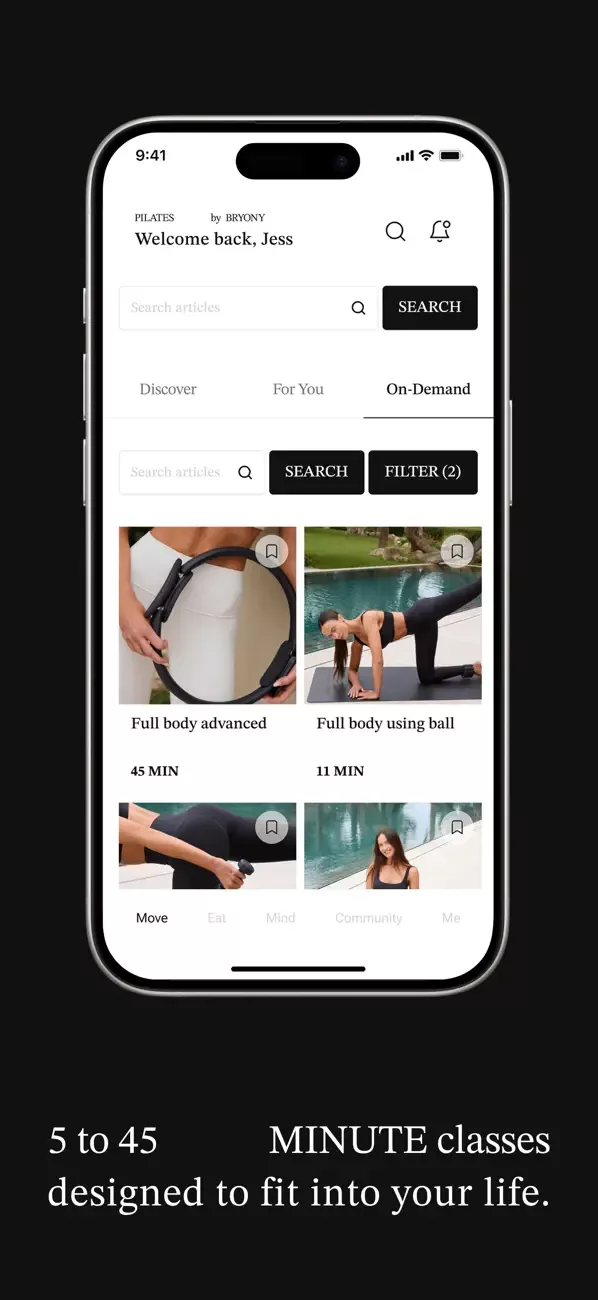
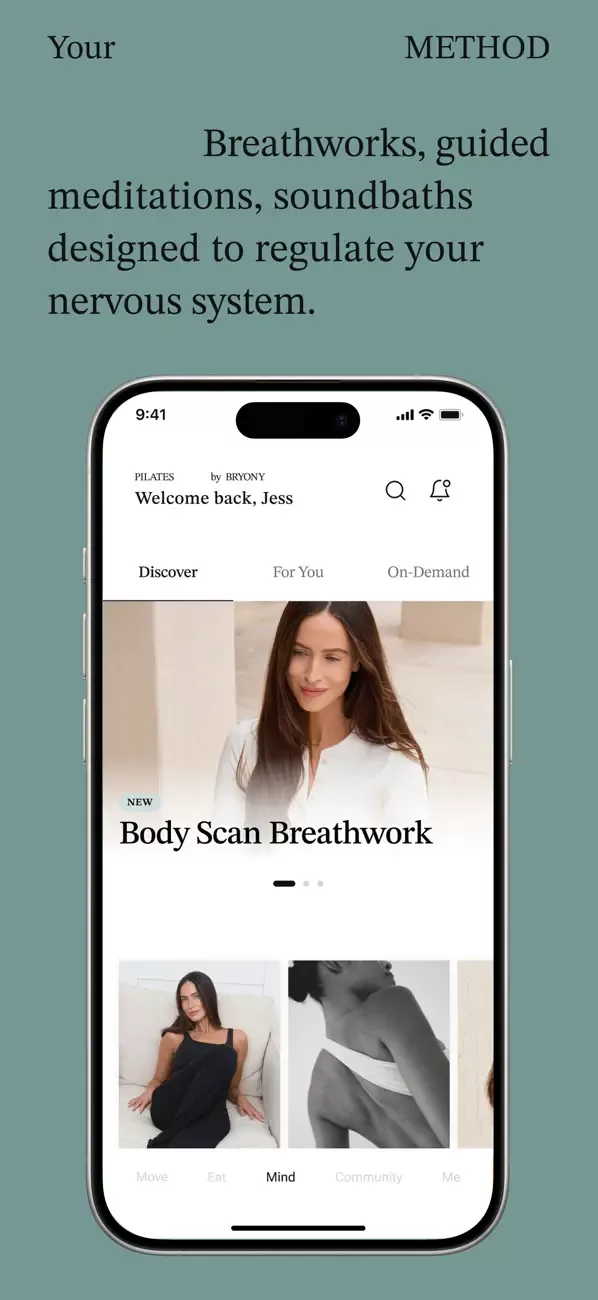
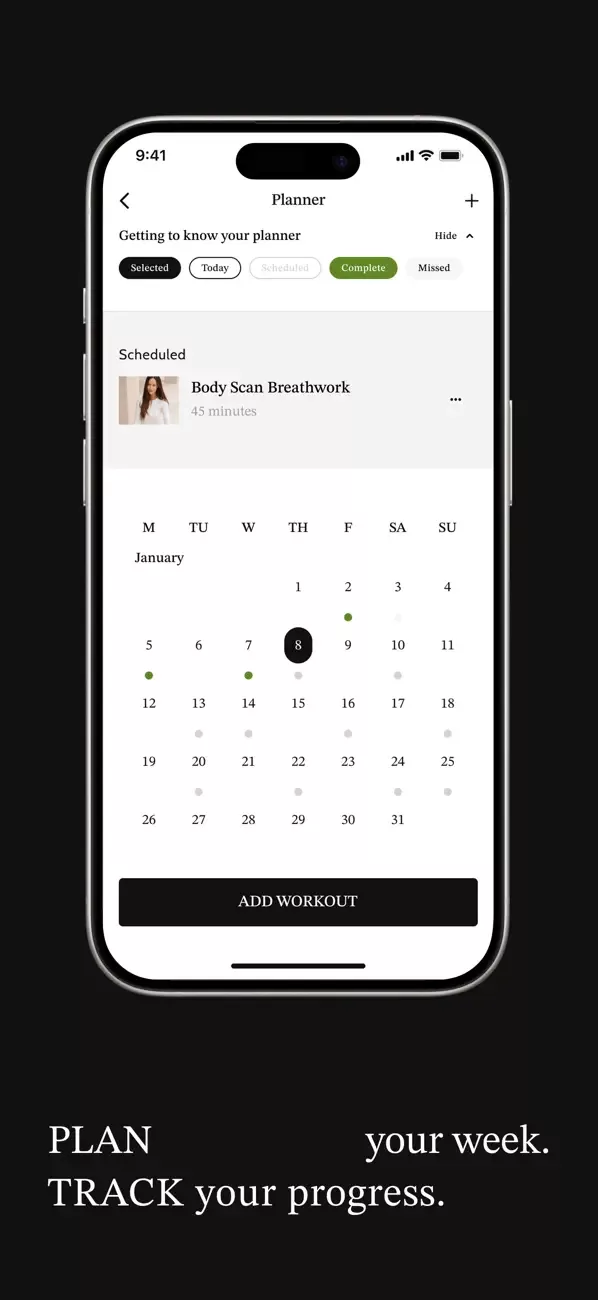
Move, Eat, Mind - one practice
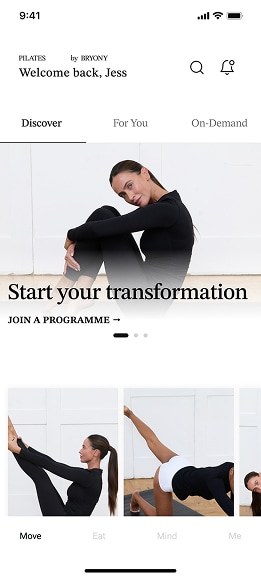
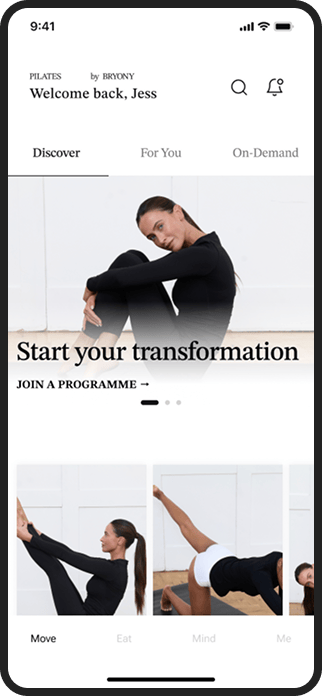
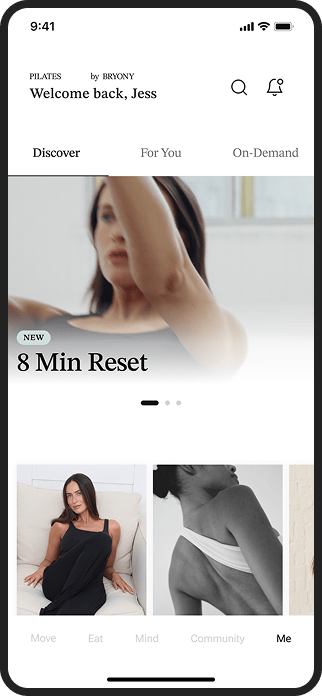
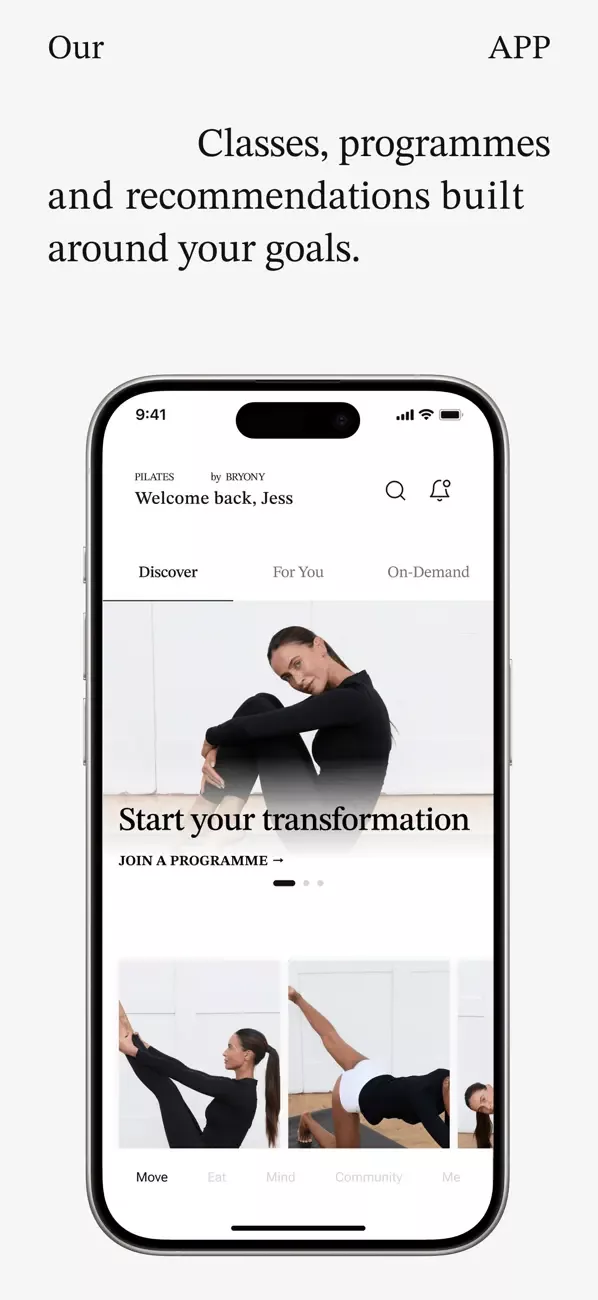
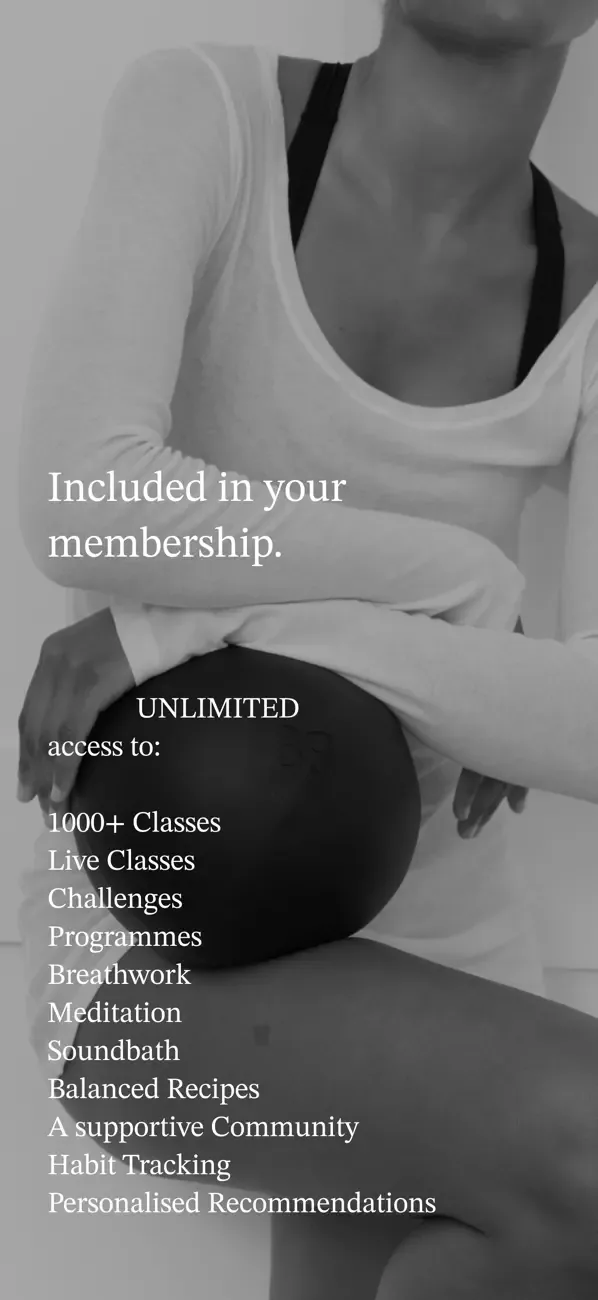
The app is organised around three pillars: Move for Pilates classes, programs and challenges, Eat for recipes, and Mind for breathwork, sound baths, meditation and journalling - with a planner, playlists and a consistency tracker tying them together into a daily practice.
- Plan the week
- Playlists and progress
- Move, Eat and Mind
- Live with Bryony
- Phone, tablet and web
- Sign in your way
01 06
Plan the week
A planner lets members schedule both workouts and meditations in advance, so consistency becomes something they plan rather than hope for.
02 06
Playlists and progress
Members save their favourite classes into personalised playlists, and a consistency tracker keeps them motivated. They can see their whole Pilates By Bryony journey at a glance - classes completed, meditation sessions and journal entries.
03 06
Move, Eat and Mind
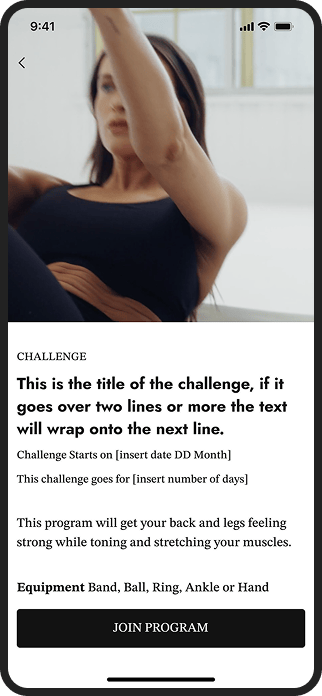
The library of more than a thousand Pilates classes sits alongside programs and challenges under Move. Eat holds Bryony's recipes, and Mind gathers breathwork, sound baths, meditation and a daily journal, so every part of the method lives in one app.
04 06
Live with Bryony
Weekly live classes and new releases every week keep the practice current, and the community gives members a space to share their journey and celebrate progress with others training the same method around the world.
05 06
Phone, tablet and web
Alongside the iOS and Android apps, PixelForce built a web app, so members can train from a computer too. Classes can be cast to a compatible TV or downloaded for offline use when travelling, and subscriptions can be taken through the App Store, Google Play or the website.
06 06
Sign in your way
Members sign in with email, Apple or Google, and can reset a password from inside the app, so getting back into an account never depends on a support ticket. Good authentication is invisible when it works, and it matters most on the day members move to a new app.
The services behind the Pilates By Bryony migration
Frequently Asked Questions
Yes. PixelForce moved Pilates By Bryony off Vimeo OTT onto a custom iOS, Android and web platform, migrating 100% of members with zero data loss. A migration like this is planned as its own workstream, with content, customers, subscriptions and video hosting each needing a route across.
No. Vimeo OTT's customer export includes member details such as email, name and subscription status, but not passwords, so every member sets a new one after the move. Build a simple reset flow into the new app, and send members clear instructions before and at launch - instructions rather than reset links, which expire and are often flagged as phishing.
Not necessarily. Pilates By Bryony's new app was released on its existing App Store and Google Play listings, so members updated the app they already had. Keeping the listing also keeps its history and reviews.
They have to be moved deliberately, because billing is tied to the platform that took the payment. For Pilates By Bryony, each member's subscription was rebuilt on the new platform from their remaining paid days, so nobody lost access they had paid for and nobody was charged twice. In-app purchases through Apple and Google need their own agreed approach.
The Pilates By Bryony build took four months. We loaded the content before acceptance testing, so release day only had to move members and subscriptions. Timelines depend on the size of the content library, the features you add beyond video and the platforms you need.
A white-label app is a fast way to start, but its roadmap belongs to the vendor. Owning the platform lets you build the features your members need - for Pilates By Bryony, a planner, playlists, a consistency tracker and dedicated nutrition and mindfulness sections - and keeps your product and data in your hands.
The main drivers are the size of the content library, how many platforms you launch on, the features you add beyond streaming, how subscriptions are billed across the App Store, Google Play and the web, and how much of the content and customer data has to be transformed on the way. The figure comes out of Scoping & Design, once those are known.
Up next
More products we have designed, built and launched end to end.
Move With Us From Technical Debt to a Platform Built to Scale
A faster, more stable Move With Us, rebuilt on solid foundations without disrupting a single member.
Jones Radiology Proving the product before committing to it
A working prototype first, so the hard decisions were made before the expensive ones.