
Crop Shop Boutique
Fashion ecommerce · Brisbane
100%alerts automated
2wkbuild cycle
PixelForce is an Australian ecommerce app development company. We build custom ecommerce apps, Shopify stores and order-tracking automation that convert - the team behind littlegren, whose online store sales grew 300 percent year on year. From storefront to checkout to fulfilment, we ship commerce that sells.
We do not just launch stores - we build ecommerce that grows. As an Australian ecommerce development company, our ecommerce app development and custom ecommerce development portfolio spans Shopify storefronts, custom checkouts, order-tracking automation and two-sided marketplaces. After we rebuilt littlegren's online store, sales grew 300 percent year on year; Schnuzzle saw 200 percent ROI at launch and expanded from Australia to the USA; and for Crop Shop Boutique we automated 100 percent of pre-shipment notifications in a two-week cycle. Every build is engineered for the parts that decide whether a store converts - fast storefronts, frictionless checkout, reliable payments and fulfilment that runs itself.

Shopify store · Adelaide

Shopify ecommerce · Adelaide
Fashion ecommerce · Brisbane
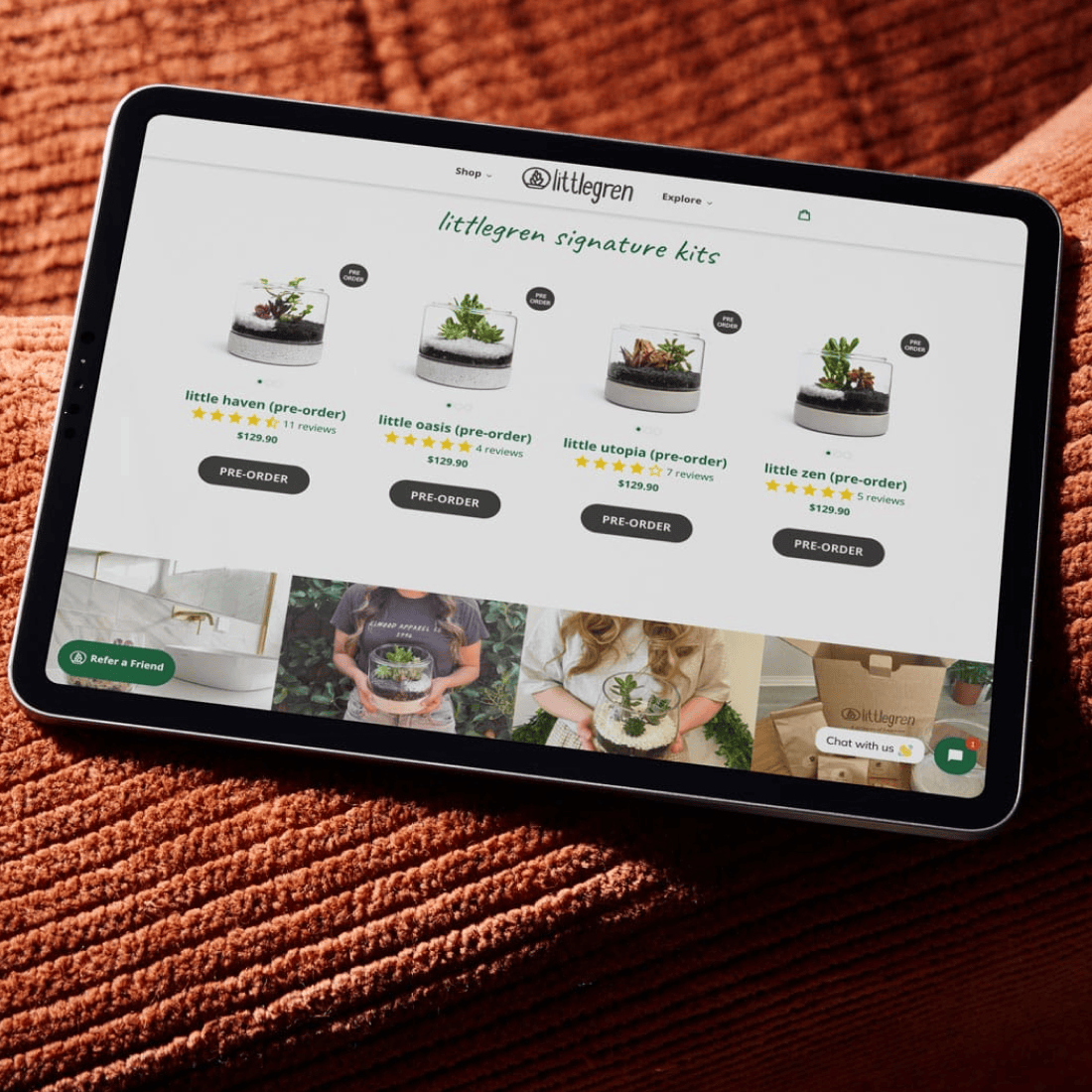
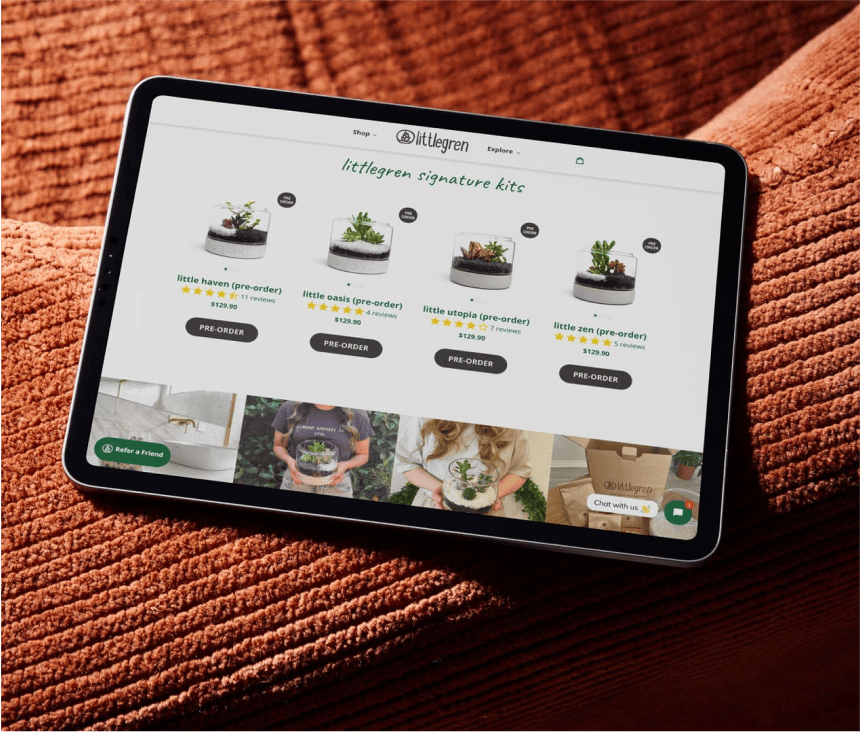
After PixelForce rebuilt littlegren's online store, sales increased 300 percent year on year. Ecommerce app development is unforgiving: a slow storefront, an awkward checkout, or a mobile experience that fights the shopper quietly bleeds revenue on every visit. We rebuilt littlegren's Shopify store around speed, a frictionless mobile checkout, and merchandising that guides the terrarium buyer from first tap to paid order. The same ecommerce app developers are available for your Shopify app development, custom ecommerce development or ecommerce mobile app development build - read the full story, or book a consultation to map yours.
Independent recognition for the team behind littlegren, Schnuzzle, Crop Shop Boutique and Designerex - Apple Best of Developers, Watch and TV App of the Year, and Top Clutch App Development and Software Development Company in Australia 2026. As an AWS Advanced Tier Partner with 15+ AWS-accredited engineers, PixelForce holds a 99.99 percent uptime rate and a 98 percent first-time app-store approval rate across 100+ shipped products - the reliability record an ecommerce store needs when a checkout outage costs real orders.





Four reasons retail founders, Shopify merchants and ecommerce brands choose PixelForce as their ecommerce app development and custom ecommerce development partner. An online store is not a brochure - it is a revenue engine, and it fails on the parts customers never see: a checkout that stalls, a fulfilment step done by hand, an integration that drops an order. Conversion-first design, real Shopify and headless depth, order-tracking automation, and enterprise-grade reliability are the four things that decide whether your store converts, scales, and keeps selling while you sleep.
Every screen we build has one job - move the shopper toward a paid order. We design storefronts, product pages and checkout flows around conversion, not decoration: fast load times, a mobile-first checkout, clear merchandising, and the trust cues that turn browsers into buyers. It is the discipline that lifted littlegren 300 percent year on year and returned 200 percent ROI for Schnuzzle at launch. We instrument the funnel so every release is measured against real customer behaviour, then iterate on what actually sells.
We work fluently across Shopify, Shopify Plus and headless commerce, so the platform fits the business rather than the other way around. Shopify app development covers custom themes, private and public apps, checkout extensions, and third-party integrations for the merchants who need more than the theme store offers. When a brand outgrows the templated path, we move it to a headless or custom ecommerce build without losing the tooling their team already runs. littlegren and Schnuzzle are both Shopify stores we designed, built and shipped.
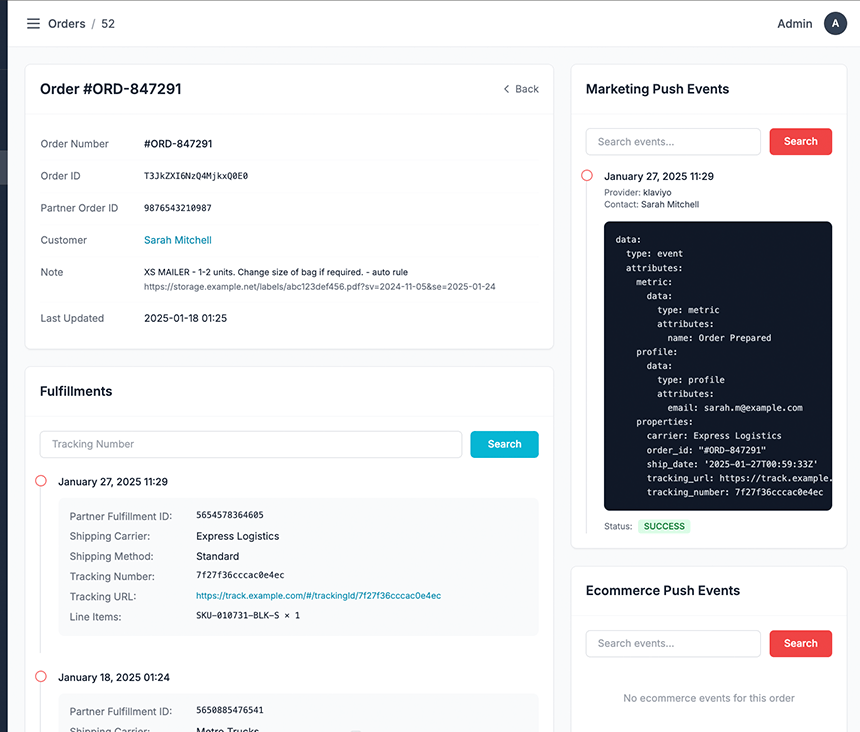
The work that decides whether a store scales happens after checkout. We automate the flow between your store, your third-party logistics provider and your marketing tools so orders, tracking updates and customer messages move without manual effort. For Crop Shop Boutique we connected ShipBob, Klaviyo and Shopify in a two-week development cycle, automating 100 percent of pre-shipment customer notifications and eliminating a manual CSV export workflow entirely. That is time your team gets back, and orders that never fall through a spreadsheet crack.
In ecommerce, downtime is lost revenue, and a checkout that fails at peak is the most expensive bug there is. PixelForce is an AWS Advanced Tier Partner with 15+ AWS-accredited engineers, and we hold a 99.99 percent uptime rate across 100+ shipped products with a 98 percent first-time app-store approval rate. Every store runs on your own AWS account with monitoring, alerting and auto-scaling, so a sale-day traffic spike is a good day - not an outage. You own the IP, the account, and the roadmap.
Six ecommerce development services we have shipped repeatedly - from Shopify app development and custom ecommerce development to ecommerce mobile app development, order-tracking automation and marketplace development. The technical building blocks repeat (secure checkout, payment gateways, inventory sync, fulfilment integration, customer accounts). What changes is the storefront, the platform, and how the store makes money. Whether you need retail app development for a single brand or an ecommerce development company to build a whole platform, we scope it in Phase 1. Pick a service, or combine them into a single ecommerce platform.
End-to-end ecommerce app development - storefront, cart, checkout, payments, order management and customer accounts - built for web, mobile, or both. We design the whole shopping journey around conversion and ship it on a secure, scalable foundation. Best for retail and ecommerce brands who want a store engineered to sell, not a template stretched to fit. This is the work behind littlegren and Schnuzzle.
Shopify app development for merchants who need more than the theme store - custom themes, private and public apps, checkout extensions, and the third-party integrations that connect Shopify to your logistics, ERP and marketing stack. We build on Shopify and Shopify Plus, and move brands to headless when they outgrow the templated path. littlegren and Schnuzzle are Shopify stores we designed, built and launched.
Custom ecommerce development for the workflows off-the-shelf platforms cannot express - complex pricing and bundling, B2B ordering, subscriptions, bespoke checkout logic, or a storefront that has to talk to legacy systems. We build the frontend, the backend and the admin, so operations and merchandising teams run the whole platform from one place. The right path when Shopify would mean fighting the platform on every feature.
eCommerce mobile app development for native iOS and Android shopping apps that go beyond a mobile website - push notifications, saved carts, one-tap re-order, loyalty, and Apple Pay and Google Pay checkout. Mobile is where most ecommerce traffic and impulse purchases now happen, so we build the app experience as a first-class channel, synced to the same catalogue, inventory and orders as your web store.
Order-tracking automation is where we made Crop Shop Boutique's back office run itself - connecting ShipBob, Klaviyo and Shopify in a two-week cycle to automate 100 percent of pre-shipment notifications and remove a manual CSV workflow. We integrate your store, your third-party logistics, your inventory and your marketing tools so every order, tracking update and customer message flows automatically. Built for brands whose growth is capped by manual operations, not demand.
Marketplace development for two-sided platforms where buyers and sellers meet - vendor onboarding, split payments, commission logic, ratings and trust, on top of a normal storefront. It is where we grew Designerex 650 percent into the number one designer dress-sharing platform with $40M+ in retail value listed. We build the buyer app, the seller tools and the admin platform as one system, and model the take-rate economics before development starts.
For Crop Shop Boutique we connected ShipBob, Klaviyo and Shopify in a two-week development cycle - automating 100 percent of pre-shipment customer notifications and eliminating a manual CSV export workflow entirely. Fast-growing ecommerce brands hit the same wall: demand scales, but the back office is still run by hand, and every order becomes a spreadsheet task. Retail software development is how you break that ceiling - the integrations between store, fulfilment and marketing that let orders, tracking and customer messages flow without anyone touching them. The same team builds ecommerce app development, Shopify development and marketplace platforms - read the story, or book a consultation.

Three ecommerce revenue models we have built and operated. The right path depends on how your business makes money - selling your own products, connecting buyers and sellers, or earning recurring revenue. Direct-to-consumer is the default for brands with their own catalogue. Marketplace commission suits platforms where value is created between two sides. Subscription and memberships fit replenishable products and communities. We model the economics during Scoping and Design.
The default for brands selling their own products. You own the catalogue, the customer relationship and the full margin on every order, so the store is a pure revenue engine. Best when the priority is conversion rate, average order value and repeat purchase - exactly the levers we moved for littlegren (+300% sales) and Schnuzzle (200% ROI at launch). Works on Shopify for speed, or a custom build when the catalogue and workflows demand it.
A commission on each transaction between buyers and sellers. Best for two-sided platforms where you provide the marketplace, the trust and the payments rather than the inventory - the model behind Designerex, which grew 650 percent into the number one designer dress-sharing platform. Revenue scales with volume, and the take rate is set by the value you add. Onboarding sellers is low-friction because they only pay when they earn, so liquidity builds on both sides.
Recurring revenue from subscriptions, replenishment and paid memberships. Best for consumable and replenishable products, curated boxes, and brands with a community worth a membership. Predictable monthly revenue and a higher lifetime value make this the most durable ecommerce model when the product suits it. We build the billing, the subscription management, the churn-reducing flows, and the member experience - often blended with one-off purchases so customers can buy either way.
Six modules we build into almost every ecommerce app development project. The depth here is where stores quietly lose money - a product page that loads slowly, a checkout with one field too many, an inventory count that goes stale, an order that stalls in fulfilment. Each is engineered for conversion, reliability and security, because in ecommerce the invisible plumbing behind the store is what turns a visit into a paid order.
The storefront is the shop window, so it has to be fast, searchable and merchandised to sell. We build catalogues that stay quick at scale, with the filtering, search and product detail that guide shoppers to the right item.
Checkout is where sales are won or lost, so we cut every field that does not need to be there. Saved carts, guest checkout, address auto-complete and a one-page flow remove the friction that abandons orders.
Getting paid has to be reliable and gateway-agnostic. We integrate the payment methods your customers trust and design for the failure cases - declined cards, retries and refunds - that quietly cost stores revenue. Fees change, so we point to each provider's current pricing.
Order tracking is where the customer experience continues after checkout. We connect your store to your third-party logistics and marketing tools so orders, tracking updates and notifications flow automatically - the CSB pattern that automated 100 percent of pre-shipment alerts.
Stale stock counts sell products you cannot ship and hide products you can. We keep inventory in sync across your store, warehouse and channels in real time, so the number a shopper sees is the number on the shelf, and oversells stop.
Repeat customers are the cheapest revenue there is, so we build the account, loyalty and re-order features that bring them back. Order history, saved details, wishlists, loyalty points and personalised recommendations turn a first order into a habit.
The same canonical PixelForce engagement model behind 100+ shipped products and $1.5B+ in combined client revenue, applied to your ecommerce app. The 1-3-1 method runs through every conversation - one problem, three options with honest trade-offs across budget, timeline and scope, one recommendation. No Blueprint, no Build.
A free, no-obligation conversation to find the right path for your ecommerce app before you commit a dollar.
Everything you need to build with total confidence - a fully costed, designed plan with no scope surprises.
From approved designs to your live ecommerce app, built and tested at a steady sprint cadence.
We do not disappear at launch - monitoring, warranty, and an optional retainer keep your ecommerce app growing.
Selected ecommerce app development and custom ecommerce development work - built by a 100% in-house Adelaide team you would actually work with on your store. Shipped across Shopify storefronts, order-tracking automation and two-sided marketplaces, each engineered to convert and to scale. Every build reflects a deliberate choice about platform, storefront and revenue model - never a generic template.

ShipBob, Klaviyo and Shopify connected in a two-week development cycle, and a spreadsheet removed from the middle of the customer experience.

One destination website carrying a whole region's operators, events and trails.
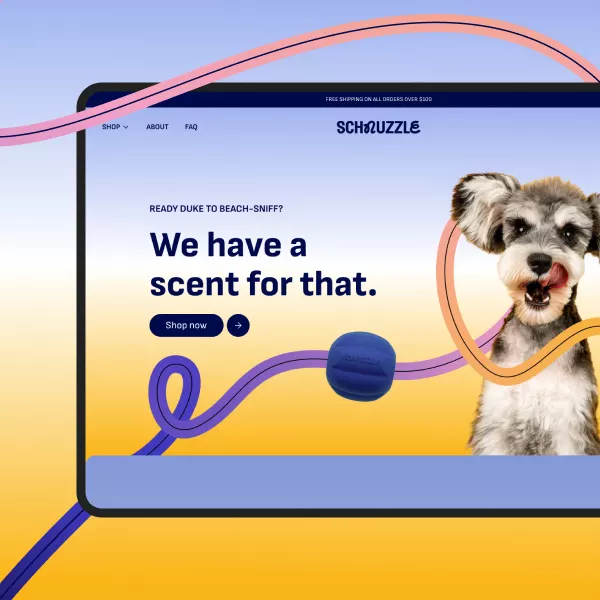
A store built to sell a product nobody can smell through a screen, with a 200 percent return on investment within the launch period.
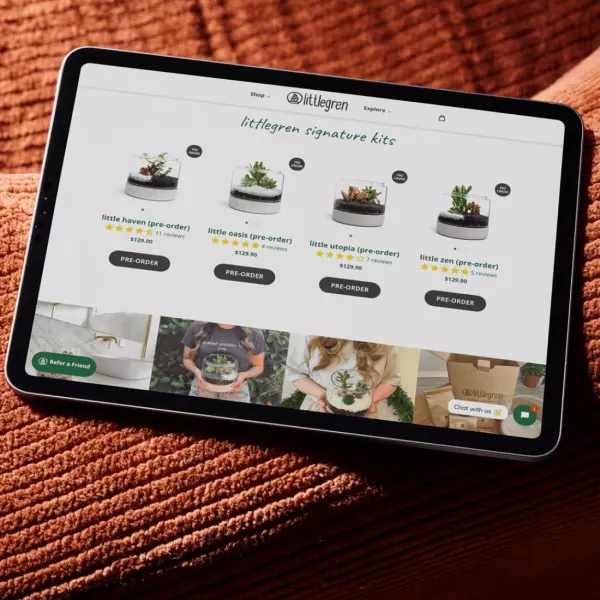
A Shopify store built for a product people buy with their eyes, and sales that increased 300 percent year on year.
Common questions from retail founders, Shopify merchants and ecommerce brands choosing an ecommerce app development company. Cost and timelines, Shopify versus custom, order-tracking automation, payment gateways and marketplace builds - the questions every founder asks before committing to a store. Answers below come from shipping ecommerce that sells.
Most ecommerce app development projects at PixelForce begin with a Scoping and Design phase, followed by a build quoted against the fixed-cost Statement of Work it produces. The price is set by what you are building - a Shopify storefront, a custom ecommerce app, or a multi-vendor marketplace - and whether it is web, mobile, or both. We scope the economics before any code is written, so you get a fixed cost for the build rather than an open-ended quote. A simpler Shopify build like littlegren costs considerably less than a custom multi-vendor marketplace, which carries vendor onboarding, split payments, commission logic and trust and safety on top of a normal storefront.
Shopify is the fastest, lowest-risk path for most direct-to-consumer brands, and it is where we built littlegren (+300% sales year on year) and Schnuzzle (200% ROI at launch). Choose custom ecommerce development when you need workflows Shopify cannot express - complex pricing, a two-sided marketplace, deep ERP or fulfilment integration, or a bespoke mobile app experience. In our Scoping and Design phase we give you one clear recommendation across cost, timeline and scope, so you do not over-build or out-grow the platform in year one.
A focused Shopify build or ecommerce app MVP typically launches in 8 to 16 weeks, while a custom ecommerce platform or marketplace runs longer. Timeline is driven by the number of integrations - payments, shipping, inventory, ERP - and whether you need iOS, Android, or both. We work in two-week sprints so you see working software early and often, and we recommend launching a lean version first, then iterating on real customer behaviour rather than guesses.
Yes - order-tracking and fulfilment automation is one of our core ecommerce services. For Crop Shop Boutique we connected ShipBob, Klaviyo and Shopify in a two-week development cycle, automating 100 percent of pre-shipment customer notifications and eliminating a manual CSV export workflow. We build the integrations between your store, your third-party logistics provider, and your marketing tools so orders, tracking updates and customer messages flow without anyone touching a spreadsheet.
We integrate the payment gateways your customers already trust - Stripe, PayPal, Apple Pay, Google Pay, Afterpay and Shopify Payments among them. Fees change often, so we design a gateway-agnostic checkout and point you to each provider current pricing rather than hardcoding a rate. Every checkout we build is PCI-aware, tokenised, and tested for the failure cases - declined cards, retries, and refunds - that quietly cost stores revenue.
Yes - marketplace development is a core capability, and it is where we grew Designerex 650 percent into the number one designer dress-sharing platform with $40M+ in retail value listed. Marketplaces add two-sided complexity - vendor onboarding, split payments, commission logic, ratings and trust - on top of a normal storefront. We scope the economics and the take-rate model in Scoping and Design, then build the buyer app, the seller tools, and the admin platform as one system.
Book a free consultation with our ecommerce app development team. We will map your store, your integrations and your revenue model, then give you one clear recommendation across cost, timeline and scope - the same approach that grew littlegren 300 percent and took Schnuzzle from Australia to the USA.


