Schnuzzle was invented in Adelaide by Justin Daley of My Clever Dog, after his fourteen-year-old labrador Oscar became ill and was put on a restricted diet, removing the food-based enrichment the dog had relied on. The answer was a chewable toy with a replaceable scent disc, using micro-encapsulation so that scent releases as the dog plays. It is a real innovation with real intellectual property behind it, and it is also close to unsellable through a screen. The entire value of the product is an experience the buyer cannot have and cannot see - they cannot smell the disc, and they cannot watch their own dog react to it until after they have paid.

A store built to sell a product nobody can smell through a screen, with a 200 percent return on investment within the launch period.
Selling a sense you cannot photograph
Schnuzzle is an Adelaide invention: a chewable dog toy with a replaceable scent disc, so the same ball becomes a new experience every time. PixelForce built the Shopify store that took it to market. Schnuzzle saw a 200 percent return on investment within the launch period and expanded from Australia to the USA.
Return on investment 200%
Market expansion AU to USA
Repeat purchase model Scent discs
The Problem
The Solution
PixelForce built Schnuzzle's Shopify store as a market-entry product rather than a catalogue. Because the proposition had to be explained before it could be sold, the UX/UI put the mechanism first: what a scent disc is, how it goes into the toy, and why scent is the sense that matters to a dog. The store was then built around the commercial shape of the product, which is a durable toy plus a consumable, with subscription and refill purchasing for scent discs and multi-currency selling so the same storefront could serve Australia and the United States.
The Outcome
Schnuzzle saw a 200 percent return on investment within the launch period and expanded from Australia to the USA. The store gave a patent-protected physical product a direct channel and a repeat-purchase model, rather than leaving it dependent on retail shelf space.
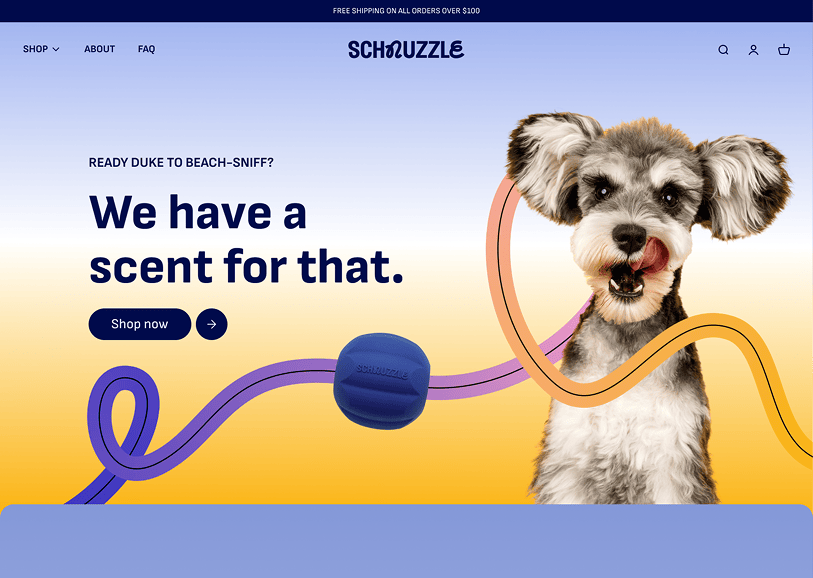
An invention that had to be explained before it could be sold
Schnuzzle came out of a specific problem rather than a market study. Justin Daley, director of the Adelaide company My Clever Dog, had a fourteen-year-old labrador named Oscar who fell ill and was placed on a restricted diet, which removed the treat-based enrichment the dog had always had. The product that resulted is a durable, chewable toy holding a replaceable scent disc made with micro-encapsulation, so a single toy delivers a different experience each time the disc is changed. It reached the public through a Kickstarter campaign in 2014, after more than twelve months of research and prototyping. The company has since built the technology out as its S.M.A.R.T. Scent system, working with CSIRO, the School of Animal and Veterinary Sciences at the University of Adelaide, the College of Scent Dogs and Animal Behaviour Matters.
The commercial problem was never the product. Dog toys are a crowded, low-consideration category where buyers scan photographs and pick something that looks fun, and Schnuzzle only makes sense once someone understands that dogs experience the world primarily through smell and that almost every other toy on the shelf ignores that. That is an argument, not a product shot. Schnuzzle needed a store that could carry the argument, convert on it, sell a consumable refill on repeat, and reach the United States without becoming a separate business to operate.
The value cannot be photographed
Scent is the whole product and it does not survive a screen. The store had to substitute explanation, demonstration and other owners' evidence for an experience the buyer could not have before purchase.
A toy plus a consumable
The commercial model is a durable toy and a stream of scent discs after it. The store had to handle starter kits, bundles, refill packs and subscriptions without turning the range into a wall of options.
Two markets, one storefront
Australia was the proving market and the United States was the growth market. Currency, pricing and shipping had to work for both without the client operating two separate stores.
Premium pricing in a cheap category
Schnuzzle costs more than a supermarket ball because there is engineering and protected intellectual property inside it. The store had to justify that on value rather than defend it on price.




Schnuzzle and PixelForce are both Adelaide businesses, which made the working relationship close and quick. The client brought deep knowledge of canine behaviour and the product itself, and the useful sessions were the ones where that knowledge was translated into what a page has to say and in what order. Being able to see the product, and to watch a dog use it, changed decisions that would have been guesses from a specification document.
Hinney Lo Founder & CEO, PixelForce
Book a consultationWhen the product is genuinely new, the store is not a catalogue, it is an argument. The scoping question is not what the range is - it is what somebody has to believe before the price means anything. Get that order wrong and you have built a beautiful shop for a product nobody has understood yet.
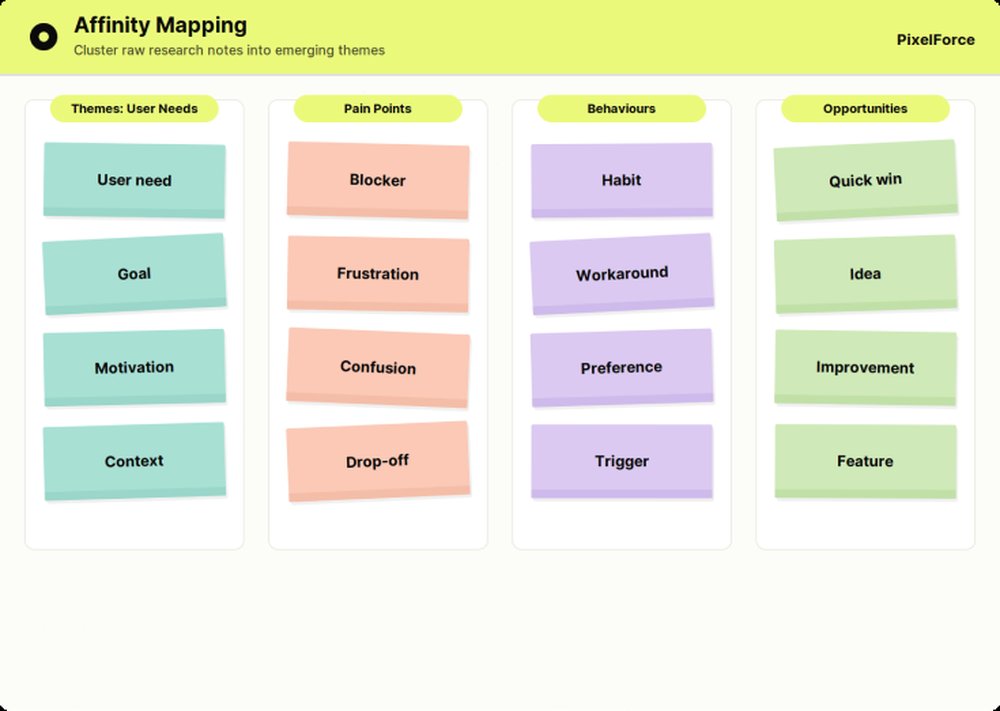
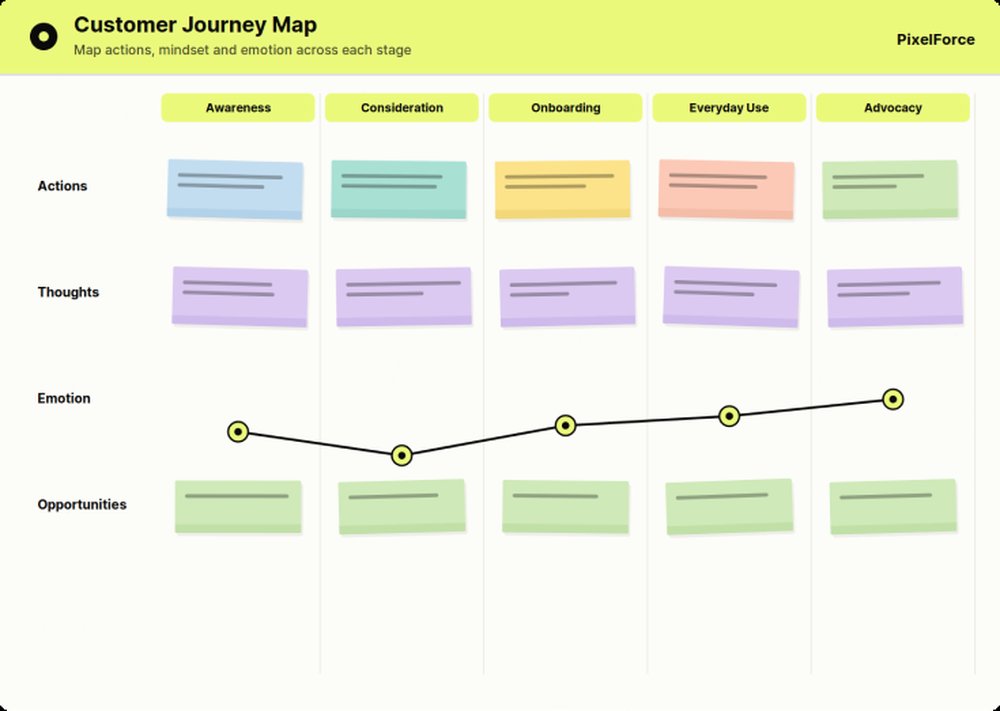
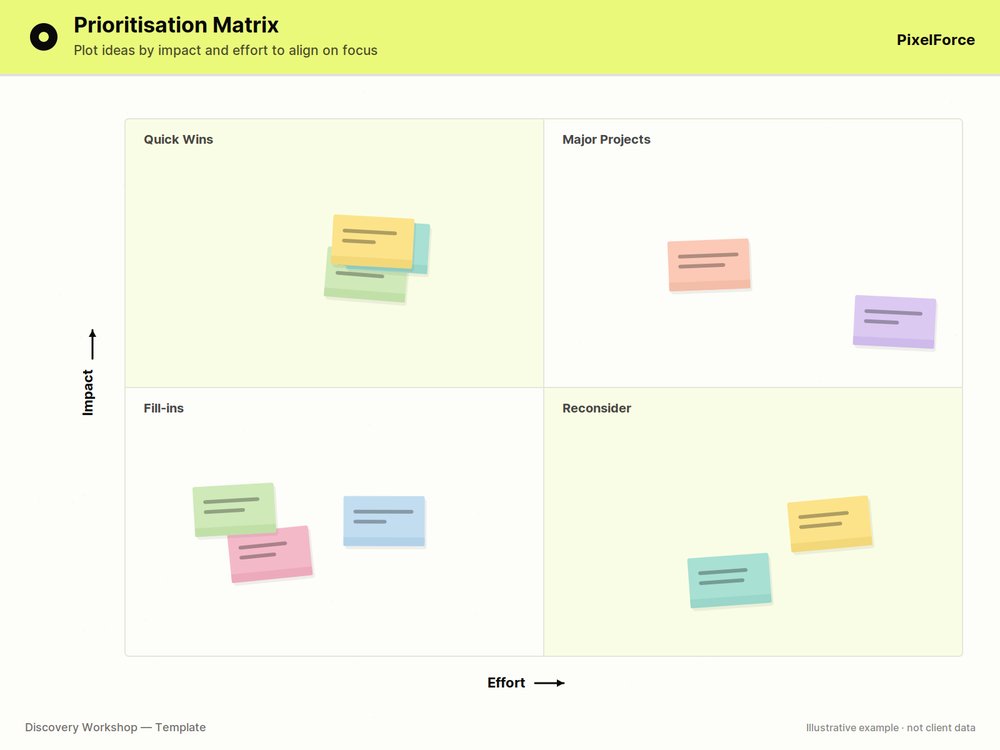
Swipe to explore
How we took it to market
Scoping and design always precedes development at PixelForce, and here Phase 1 Scoping and Design was doing go-to-market work as much as design work. The questions that mattered were about sequence: what a first-time visitor has to understand before a price is worth showing them, how a starter kit differs from a refill in the customer's mind, and what the second purchase looks like. Those decisions set the catalogue structure and the UX/UI before a page was built, and they are why the store reads as an explanation rather than as a shelf.
Shopify was the platform, chosen so that payments, tax, multi-currency and shipping sat on tested foundations and the budget could go into what was specific to Schnuzzle. That mattered because the product is physical and modular. Toys, disc variants, starter kits, bundles and refill packs were modelled as a coherent range with stock tracked properly beneath it, so the customer sees a simple choice while the business keeps the detail it needs to buy and pack components. Multi-currency selling let one storefront serve Australian and United States customers at local prices, which made the expansion an operational change rather than a second business.
The rest of the build was aimed at the conversion problem. Product pages lead with how the mechanism works - open the packet, insert the disc, let the dog play - because a buyer who understands the mechanism has already accepted the premise. Video and owner reviews carry the evidence photography cannot, since the only convincing proof that a scent toy works is another dog visibly reacting to one. Educational content about scent enrichment was published as part of the store, giving the site standing in search for the questions owners ask before they know the brand exists. Underneath it, the refill and subscription path was treated as a first-class flow, because a consumable is where the margin in this model lives, and a checkout that makes reordering harder than the first purchase quietly caps the business.
Open · Insert · Play
A new scent turns the same toy into a new toy
A store that had to explain a sense before it could sell one.
- Mechanism-first product pages
- Demonstration and owner evidence
- Starter kits and bundles
- Scent disc refills and subscriptions
- Australia and the United States
- Content that finds the buyer first
01 06
Mechanism-first product pages
Product pages lead with how the toy actually works: open the disc packet, push the disc into the ball, and the dog plays. A buyer who understands the mechanism has already accepted the premise, which is why the explanation sits above the specification rather than below it.
02 06
Demonstration and owner evidence
Scent does not survive a photograph, so the store carries video of dogs using the toy and reviews from owners describing what they saw. In a category where every competitor posts a product shot on a white background, another dog visibly reacting is the only proof that lands.
03 06
Starter kits and bundles
The range was structured so a new customer has one obvious way in. Starter kits pair a toy with discs at a better price than buying separately, which removes the decision paralysis that stops first purchases in a modular product range and sets the customer up for the refill purchase that follows.
04 06
Scent disc refills and subscriptions
The discs are the consumable, and the consumable is where a business like this compounds. Refill packs and subscription purchasing were built as a first-class path rather than a hidden option, so restocking is easier than the original purchase was.
05 06
Australia and the United States
Multi-currency selling lets one storefront serve Australian and United States customers at local prices, with shipping handled per market. Expanding into a much larger pet market therefore became an operational change rather than the launch of a second business with a second store to maintain.
06 06
Content that finds the buyer first
Owners search for how to stop a dog getting bored, or what enrichment means, long before they search for a brand of scent toy. Publishing that material as part of the store puts Schnuzzle in front of the question, which is how a new category gets discovered without buying every click.
Services on the Schnuzzle build
Frequently Asked Questions
Schnuzzle is an Adelaide-invented dog toy: a durable, chewable ball holding a replaceable scent disc made using micro-encapsulation, so the same toy delivers a new scent experience each time the disc is changed. It was created by Justin Daley of My Clever Dog and is built on the company's S.M.A.R.T. Scent technology and protected intellectual property. PixelForce built the Shopify store that took it to market. Schnuzzle saw a 200 percent return on investment within the launch period and expanded from Australia to the USA.
PixelForce designed and built Schnuzzle's e-commerce store on Shopify. The work covered the UX/UI and a customised theme, mechanism-led product pages with video demonstration and owner reviews, a modular range of toys, discs, starter kits and bundles with component-level stock, scent disc refill and subscription purchasing, multi-currency selling for Australia and the United States, and educational content built into the store for search visibility.
You replace the missing experience with mechanism, demonstration and other people's evidence. For Schnuzzle the benefit is scent, which no screen can deliver, so the product page explains how the disc works before it sells the toy, video shows dogs reacting to it, and owner reviews carry the proof. The rule generalises: when a buyer cannot experience a product before purchase, the page has to make them confident about what will happen rather than impressed by what it looks like.
By treating the second purchase as seriously as the first. The range needs one obvious entry point, usually a starter kit bundling the durable item with the consumable, then a refill and subscription path that is easier to complete than the original order. Stock has to be tracked at component level so bundles and refills draw from the same real inventory. The durable product acquires the customer and the consumable is where the business compounds, so a clumsy reorder flow quietly caps growth.
Scoping and development are priced separately at PixelForce. Phase 1 Scoping and Design comes first, and Phase 2 Development, QA and Release is quoted against the blueprint it produces. A single-market launch store is the least expensive form this takes, and complexity such as subscriptions, configurable ranges or multiple markets moves the cost up. The cost is fixed in a Statement of Work before development starts - no development quote is issued without a completed blueprint.
Yes. Multi-currency selling lets a single storefront present local prices in each market, with shipping and tax handled per region. That keeps expansion as an operational change rather than the launch of a second business, which matters for a small brand because a duplicate store means duplicate catalogues, content and maintenance. Schnuzzle expanded from Australia to the USA on this basis.
Yes. Phase 3 Post Launch Support is a standing part of every PixelForce engagement, available either as a monitoring, warranty and support arrangement or as a full product retainer for clients who want continuous development. For a product brand the work after launch is rarely the platform itself - it is the range changing, a new market opening, or a conversion problem that only becomes visible once real customers move through the store.
Up next
More products we have designed, built and launched end to end.
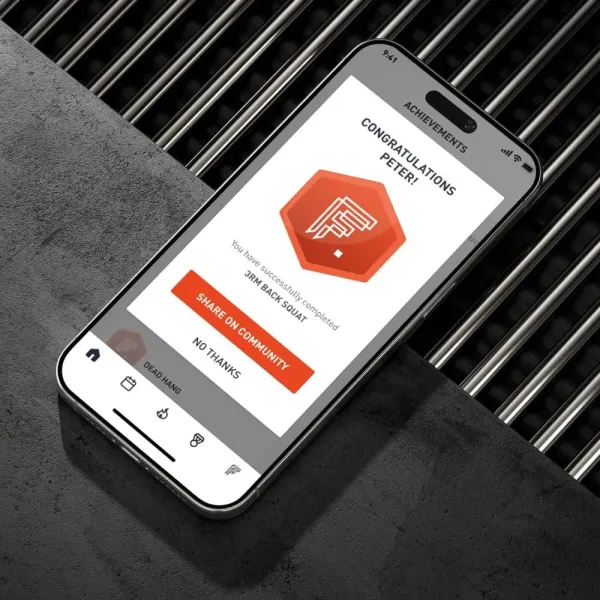
Fitstop From a Queensland garage to a four-country franchise
One member app and one franchisee operations portal, running across 100+ gyms and 50,000+ active members.

The EzLicence Handbook Seven years of decisions, in one place
An AI knowledge system that consolidated seven years of product evolution, shipped in 4 weeks.