A regional tourism organisation does not own the product it markets. Wineries, restaurants, breweries, distilleries, accommodation providers, attractions and event organisers across the Adelaide Hills each need to be represented accurately, and the same business legitimately belongs in several places at once - a cellar door is a thing to do, a food and drink listing, and a stop on a trail. Content also has a shelf life: events pass, seasonal guides rotate, and bushfire and accessibility information has to be correct when somebody needs it. A site built as a set of hand-built pages cannot hold that shape for long without drifting out of date.
Adelaide Hills Tourism
One destination website carrying a whole region's operators, events and trails.
A region, not a brochure
Adelaide Hills Tourism is the official regional tourism organisation for the Adelaide Hills. Its website has to do something harder than a normal brand site: represent hundreds of independent businesses fairly, stay accurate as events and seasons turn over, and still send a visitor away with a plan. PixelForce built it as a custom headless platform so the content model, not the page templates, carries that load.
Architecture Headless
Content types Operators, events, trails
Editorial control Client-managed
The Problem
The Solution
PixelForce built visitadelaidehills.com.au as a custom headless CMS platform. Operators, events, trails and stories are modelled as structured content rather than pages, so one operator record can surface across categories, itineraries and seasonal guides without being duplicated. A headless architecture keeps that content separate from its presentation, which is what allows the same records to be assembled into different journeys for different visitors.
The Outcome
The result is a destination site that behaves like a planning tool. A visitor can move from a broad interest such as hiking, wellness or cycling into specific operators, then into a trail or itinerary that strings them together, and out to practical information about maps, climate, accessibility and bushfire safety. Because the content is structured, adding a new trail or seasonal campaign is a content task for the Adelaide Hills Tourism team rather than a development request.
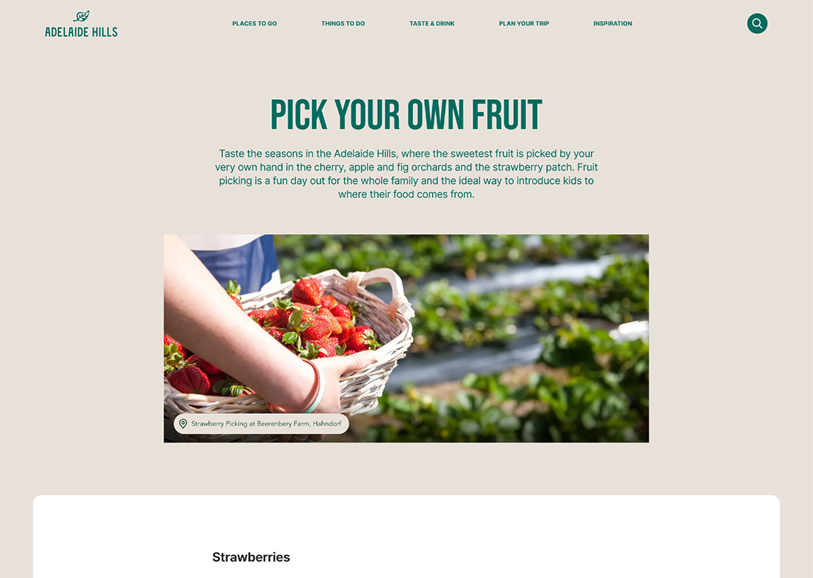
What a regional tourism site actually has to do
Adelaide Hills Tourism is the official regional tourism organisation for the Adelaide Hills, the wine, food and nature region on Adelaide's doorstep. Its job is to bring visitors into the region and distribute them across it, which means the website is not marketing a single product but acting as the shopfront for hundreds of independent operators - cellar doors, restaurants, breweries and distilleries, accommodation, galleries, walking and cycling trails, and a rolling calendar of festivals and seasonal experiences.
That creates a content problem before it creates a design problem. The same business needs to appear in several contexts without being maintained several times. Categories such as nature and wildlife, arts and culture, wellness, cycling, hiking, shopping and family activities all draw from an overlapping pool of operators. Trails and curated itineraries need to reference those operators as stops. Seasonal guides need to reassemble them by time of year. And practical visitor information, including accessibility and bushfire safety, has to be findable and current. PixelForce was engaged to build the site as a custom platform where the content model did that work.
Hundreds of operators, not one brand
The site represents independent wineries, restaurants, breweries, distilleries, accommodation providers and attractions across the region, each needing accurate representation.
One business, many contexts
A cellar door is a thing to do, a food and drink listing and a stop on a trail at the same time. It needed to be maintained once and appear everywhere it belongs.
Content with a shelf life
Events pass, seasonal guides rotate, and accessibility and bushfire information has to be correct at the moment a visitor needs it.
Visitors arrive on phones
Much of the audience is already in the region, on a mobile, sometimes on a patchy regional connection. Performance and responsiveness were requirements, not refinements.
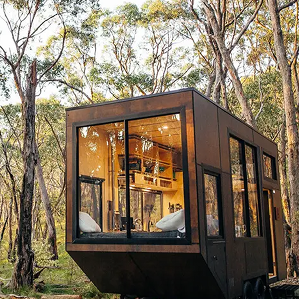

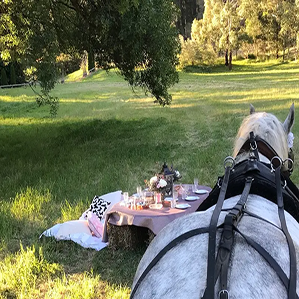
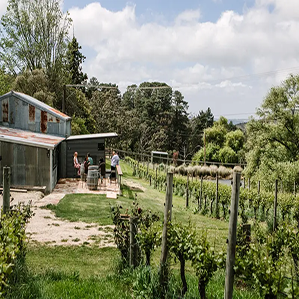
Adelaide Hills Tourism sits between its member operators, local councils and the wider South Australian tourism sector, so the site has more stakeholders than its size suggests. PixelForce worked directly with the organisation's team, both parties being South Australian, and built the content model around how they actually gather and update operator information rather than around an idealised workflow. The measure of success is whether the team can run the site without us, which is a design decision made early rather than a training exercise at the end.
Hinney Lo Founder & CEO, PixelForce
On a content-heavy site the content model is the architecture. If you decide what an operator, an event and a trail are before you design a single page, the site stays maintainable. If you decide it afterwards, you have built a very attractive thing that nobody can keep accurate.
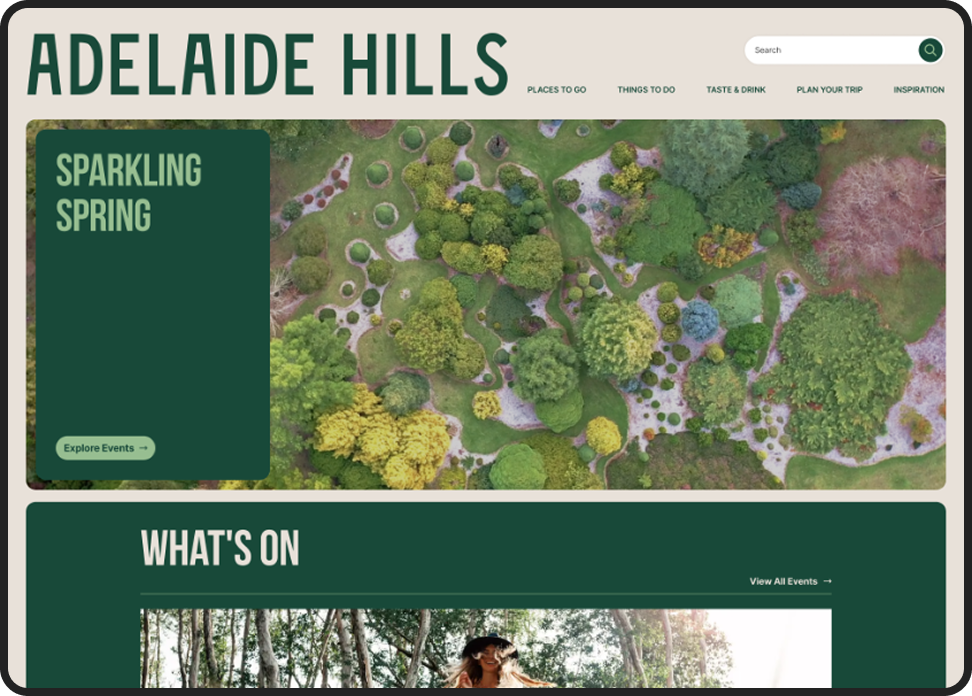
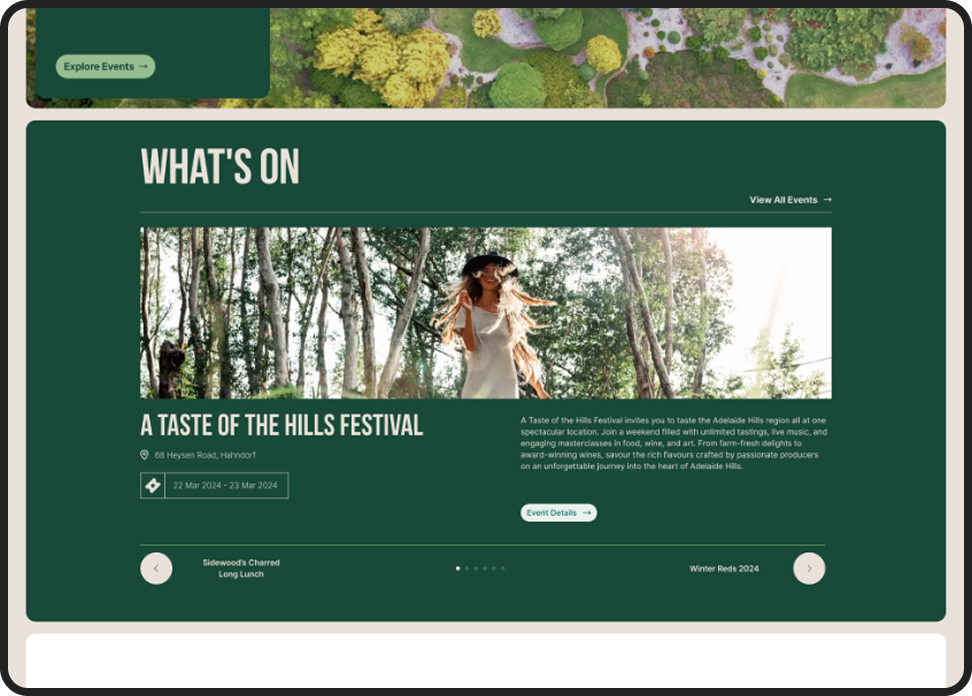
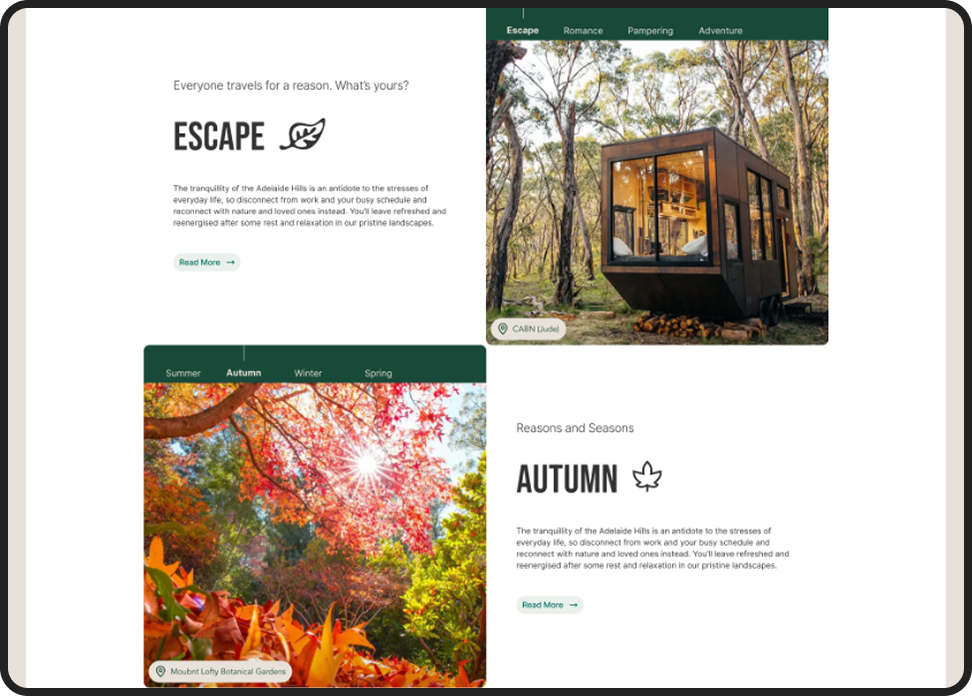
Swipe to explore
How it was built
The engagement began with scoping and design, which for a content-heavy destination site means the information architecture is the real deliverable. Before any templates were designed, the work was to decide what a content type is - an operator, an event, a trail, an itinerary, a story - what fields each one carries, and how they relate. Getting that right is what determines whether the site can still be maintained in three years. Scoping and design always precedes development at PixelForce, and on a project like this the content model is the blueprint.
The build is a custom headless CMS implementation rather than an off-the-shelf theme. Content is authored once and delivered through an API to the front end, which means a single operator record can be composed into a category listing, a trail stop, a seasonal guide and a search result without duplication. The separation also means the presentation layer can be changed - a new campaign landing experience, a reworked trail page - without touching the content or asking the client to re-enter anything.
Because the audience arrives on phones, often while already in the region and often on patchy regional connections, the front end was built responsively with performance treated as a requirement rather than a later optimisation. Editorial control sits with the Adelaide Hills Tourism team: publishing a new event, opening a seasonal guide or adding an operator is a content operation, not a deployment, which is the practical difference between a site that stays current and one that quietly ages.
Content model first
Structured content, not hand-built pages.
One operator record, many places it needs to appear.
- Content model
- Headless build
- Trails and itineraries
- Seasonal guides
- Visitor information
- Client editorial control
01 06
Content model
Operators, events, trails, itineraries and stories are modelled as structured content types with defined fields and relationships, decided before any page was designed. That model is what lets the same record appear in a category, a trail and a seasonal guide without being duplicated.
02 06
Headless build
Content is authored once and delivered to the front end through an API. Separating content from presentation means the look of a page can change, or a new campaign experience can be added, without touching the underlying records.
03 06
Trails and itineraries
Curated routes assemble existing operator records into a journey rather than restating them. A trail references its stops, so when an operator updates their details the trail is correct automatically.
04 06
Seasonal guides
The region reads differently in autumn than in summer. Seasonal guides reframe the same operator pool by time of year, which is a content composition rather than a separate microsite.
05 06
Visitor information
Maps, climate, accessibility guidance and bushfire safety information are treated as first-class content rather than footer pages, because they are what a visitor needs at the point of actually travelling.
06 06
Client editorial control
The Adelaide Hills Tourism team publishes events, opens seasonal guides and maintains operator records themselves. Nothing routine requires a developer, which is what keeps a destination site accurate over years.
Services in the Adelaide Hills Tourism build
Frequently Asked Questions
The Adelaide Hills Tourism website at visitadelaidehills.com.au, built as a custom headless CMS platform. It carries operator listings, an events calendar, accommodation and food and drink, trails and curated itineraries, seasonal guides, stories, and practical visitor information including maps, accessibility and bushfire safety.
A headless CMS stores content as structured records and delivers them to the front end through an API, instead of tying content to fixed page templates. For a destination site that matters because one operator legitimately belongs in several places - a category, a trail, a seasonal guide - and a headless model lets it be maintained once and composed anywhere.
Yes, and that was a design goal rather than an afterthought. Adding an operator, publishing an event or opening a seasonal guide is a content operation performed by the client team. Routine change does not require a developer or a deployment.
It depends far more on the content model than the page count. Scoping and design comes first, and on a content-heavy site that stage is where the content types and their relationships are decided. PixelForce does not issue a development estimate before that blueprint is complete, because on this kind of project the model is the majority of the risk.
Yes. Alongside mobile and web product development, PixelForce builds content-managed websites where the difficulty is the content architecture rather than the interface - destination sites, member organisations and regulated bodies among them.
A template imposes its own content model, and a regional tourism organisation has a specific one: overlapping operator categories, trails that reference operators as stops, and guides that reassemble the same pool seasonally. Building the model to fit the organisation, rather than reshaping the organisation to fit a theme, is what keeps the site usable as the region's offering changes.
Up next
More products we have designed, built and launched end to end.
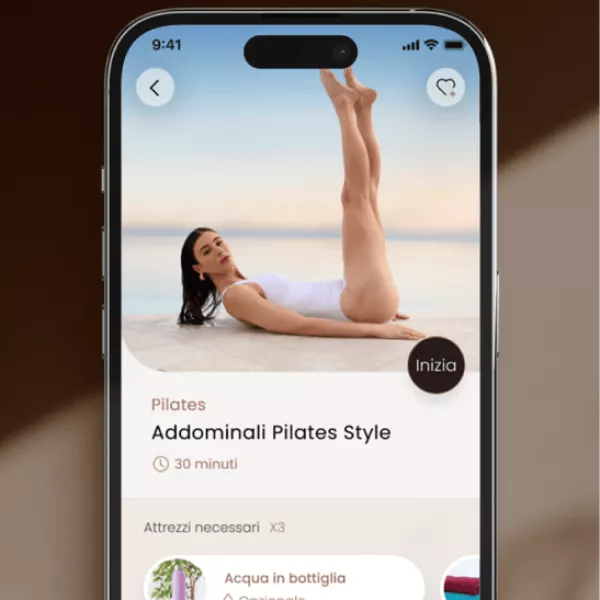
Traininpink Italy's number one, built for women
How we built Traininpink into the number one female-focused Pilates and fitness app in Italy.

CSB The gap between paid and delivered
ShipBob, Klaviyo and Shopify connected in a two-week development cycle, and a spreadsheet removed from the middle of the customer experience.