Kayla Itsines was an Adelaide personal trainer whose Bikini Body Guide had done something unusual for a self-published PDF. The first two guides were released in January 2014 and had been downloaded more than a million times by that October, and the Bikini Body Training Company she had co-founded with Tobi Pearce in March 2013 was already a real business. The format was the constraint. A PDF sets out a 12-week program of 28-minute sessions and then stops: it cannot show a movement, cannot remember what somebody lifted last Tuesday, cannot tell them what comes next, and cannot hold a customer past week twelve. The demand had been proven. The medium had run out.

How we turned Kayla Itsines' Bikini Body Guide into the 2015 app that became Sweat.
From eBook to App, 2015
In 2015 PixelForce built the first Sweat with Kayla app for Kayla Itsines and Tobi Pearce, taking a 12-week training guide that had sold as a PDF and rebuilding it as a mobile product with structured sessions, video demonstration, progress tracking and recurring billing. Sweat with Kayla generated $17 million in revenue in its first year after launch in 2015.
First-year revenue $17m
Highest-grossing fitness app 2016
Launch platforms iOS + Android
The Problem
The Solution
PixelForce built the first Sweat with Kayla app as an MVP, scoped deliberately down to the smallest product that could carry the whole method rather than the largest feature list the budget allowed. That meant the session structure, video demonstration of every movement, progress that persisted between sessions, and recurring billing in the first release, and it meant leaving out everything that could be added once real members were using it. The app shipped to iOS and Android from a shared cross-platform build, which was the only way a small team reached both stores at once in 2015.
The Outcome
Sweat with Kayla generated $17 million in revenue in its first year after launch in 2015, and in 2016 it generated more revenue than any other fitness app. The product it started went on to serve 30 million users across 155 countries.
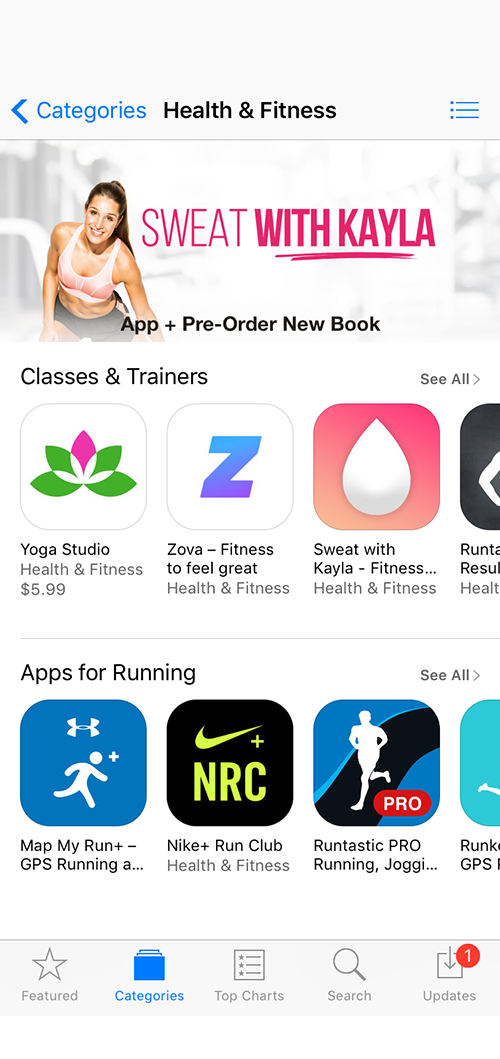
From a 12-week PDF to a product
By 2015 Kayla Itsines had built one of the largest audiences in fitness from Adelaide, on the strength of a training method rather than a facility. The Bikini Body Guide was a 12-week program of 28-minute high-intensity sessions, sold as an eBook, and it had spread by word of mouth and social media across markets Itsines had never marketed into. In March 2016 Time named her one of the thirty most influential people on the internet. Tobi Pearce ran the company as chief executive. The business was profitable and growing, and it was built on a file.
A file is a poor place to keep a customer. Everything the method depended on - watching a movement performed correctly, knowing which session comes next, seeing that the last four weeks actually happened - has to be reconstructed by the reader every time they open the PDF, and most people stop reconstructing it. The brief PixelForce took on was to move the method into software without losing what made it work: the same 28-minute sessions, the same progression, the same voice, delivered as a fitness app that could hold somebody well past the twelve weeks the guide covered.
A method proven on paper
The eBook had already validated demand across dozens of markets. The app could not reinterpret the program, only deliver it better. The training structure was fixed before a line of code was written.
A category that did not exist yet
In 2015 there were workout apps, but almost none built around a named trainer's own system with a subscription behind it. There was no reference product to copy and no established pattern to follow.
Revenue had to change shape
The business had been selling a guide once. The app had to earn its place every month instead, which meant billing, renewals and cancellations were launch features rather than later additions.
Built to be outgrown
An MVP that cannot be extended is a rewrite waiting to happen. The first release had to be small, but its data model and its content structure had to survive the growth everybody expected.
PixelForce and the Bikini Body Training Company were both Adelaide businesses, and on a first product that mattered more than it sounds. Decisions that would otherwise have taken a week of email took an afternoon in a room, and Itsines could demonstrate what she meant rather than describe it, which is a meaningful difference when the thing being specified is how a movement should be shown on a phone. The founding team stayed close to the product throughout, and the scope stayed honest because the people defending it were in the same conversation as the people building it.
Hinney Lo Founder & CEO, PixelForce
Book a consultationAn MVP is not a cheap version of the product. It is the smallest thing that can carry the whole idea, and working out what that is takes more judgement than building the rest of it. With Sweat with Kayla the method was already proven, so the job was to protect it and cut everything else. What we cut is the reason the first release shipped, and how we cut it is the reason it was still standing years later.
Swipe to explore
Scoping an MVP that could survive its own success
The work started where every PixelForce engagement starts, with scoping and design ahead of development. Requirements were settled in workshops and written down as a Business Requirements Document, a full UX/UI design and a Product Requirements Document before build began. No blueprint, no build. On an MVP that discipline is worth more than anywhere else, because the whole value of an MVP is in what you leave out, and leaving the right things out is a decision made on paper by people who agree, not a decision made in code by people who have run out of time.
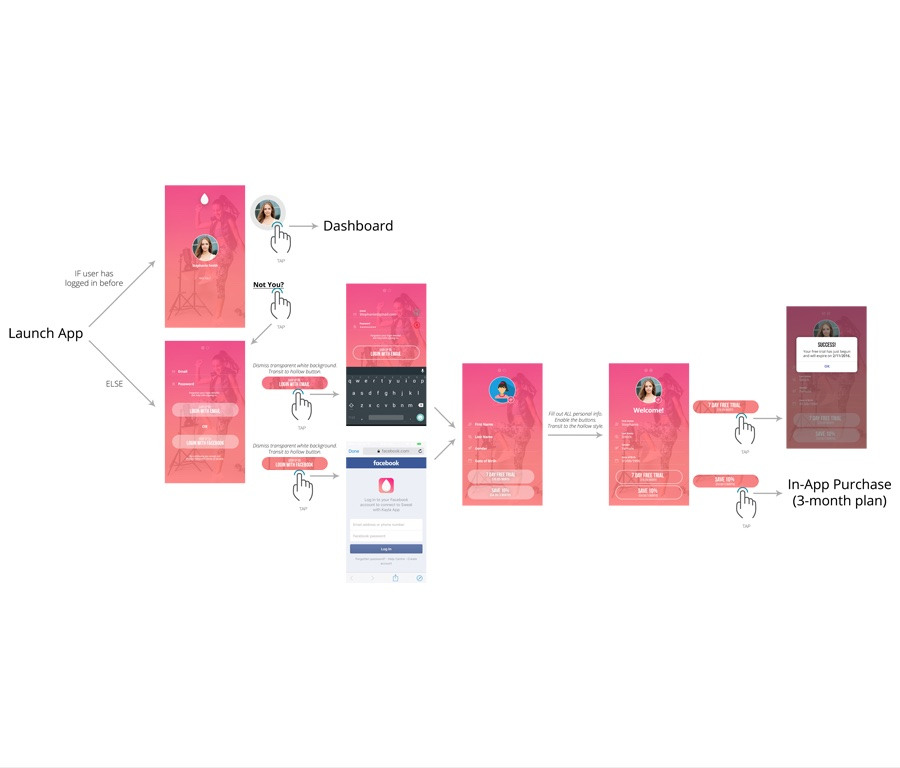
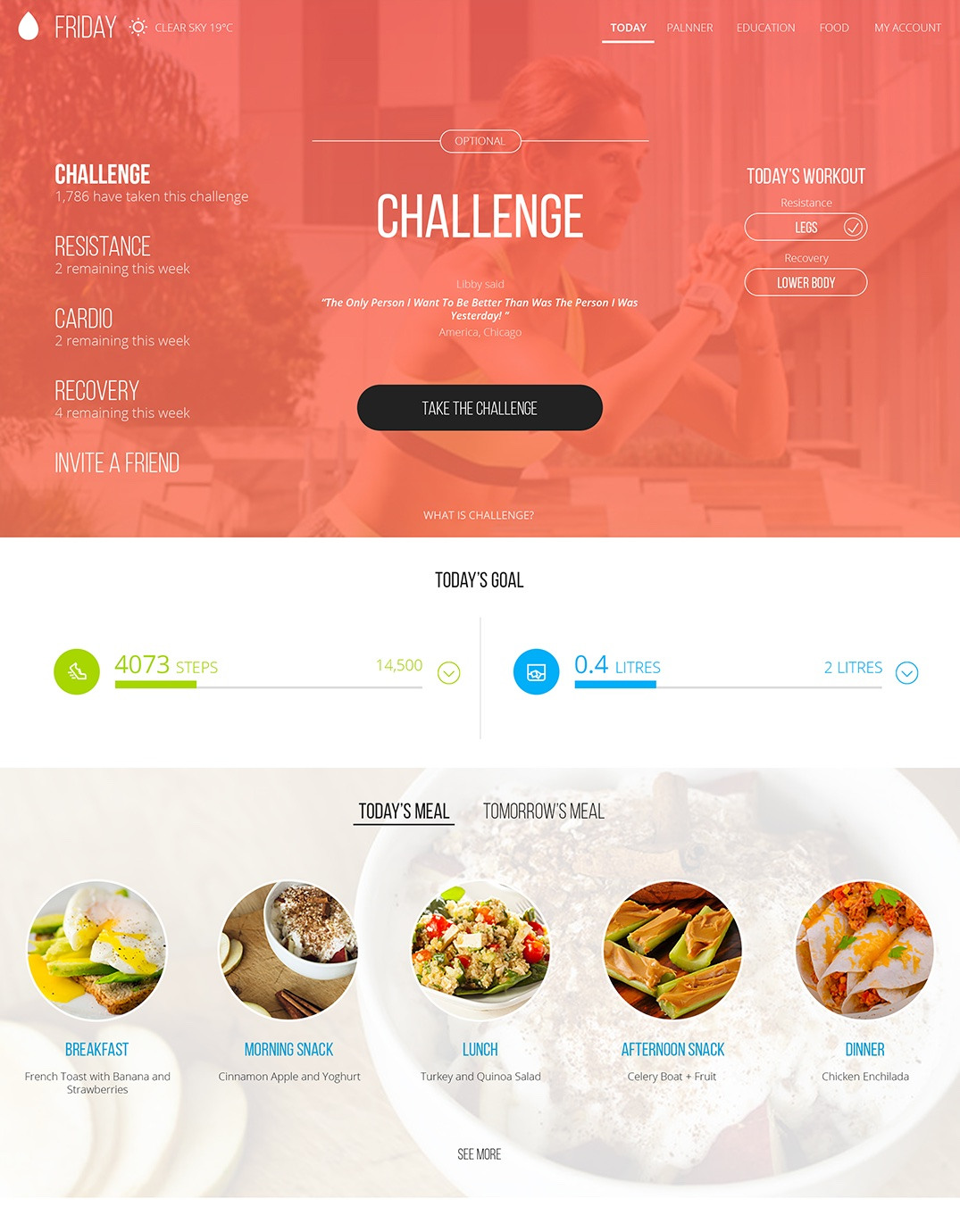
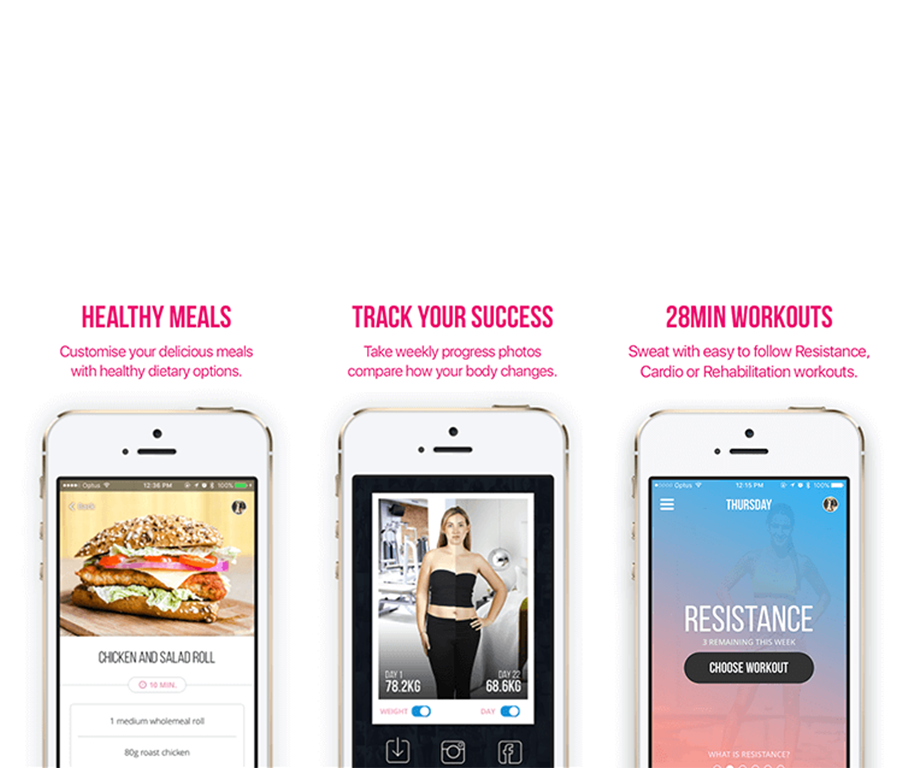
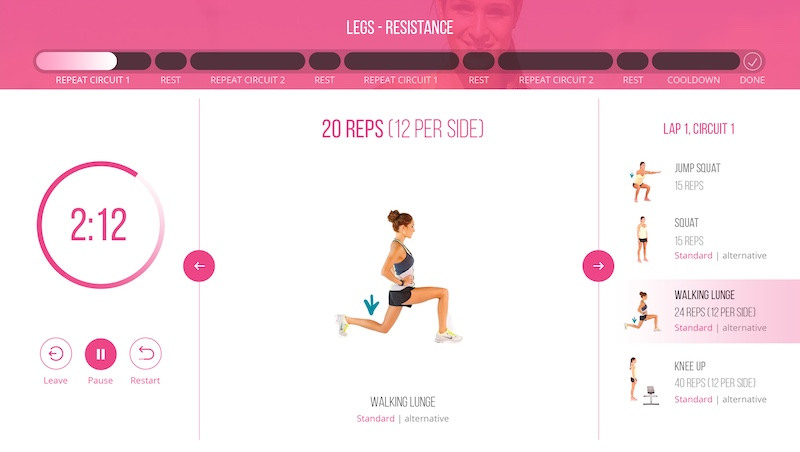
The product itself was organised around the session. A member opened the app, saw the session they were due to do, watched each movement demonstrated rather than reading a description of it, worked through the 28 minutes, and finished with a record that persisted. Video was the hard part in 2015: connections were slower, phones were weaker, and a workout video that buffers halfway through a circuit is a workout somebody abandons. Delivery was built for the conditions members actually trained in rather than the conditions in the office. Billing went in at launch through the two app stores, with in-app purchases handling subscription and renewal, because a subscription product that adds payments later ends up rebuilding its account model twice.
Everything else was deliberately deferred. Community, challenges, additional trainers, meal planning and the wider platform came after launch, once there were real members generating real behaviour to design against. The first build shipped to iOS and Android from one shared codebase, moved through structured quality assurance before release, and left a content structure that later programs could be poured into without touching the app. That is the part of an MVP that decides whether it becomes a foundation or a false start, and on this one it held: the same product grew into a platform serving tens of millions of women.
eBook · App · Platform
$17 million in year one
A 12-week training guide, rebuilt as a product people could stay in.
- The 28-minute session
- Video on a 2015 network
- Progress that persists
- Recurring billing from day one
- One build, two stores
- Content the team could extend
01 06
The 28-minute session
The whole app was organised around one unit: the session a member was due to do next. Opening the app answered that question immediately rather than presenting a library to search. The Bikini Body Guide worked because it removed the decision about what to train, and the app had to preserve that rather than reintroduce it as a menu.
02 06
Video on a 2015 network
Every movement was demonstrated rather than described, which made video the load-bearing part of the product. Delivery was tuned for the connections and devices members actually had in 2015, because a demonstration that stalls mid-circuit does not get rewound, it gets closed.
03 06
Progress that persists
The app remembered what had been completed and where somebody was in the program. That single capability is the clearest thing software adds to a printed guide: the reader no longer has to hold the program in their head, and a run of completed weeks becomes visible evidence that turns into a reason to keep going.
04 06
Recurring billing from day one
Moving from a one-off eBook sale to a subscription changes the product, not just the invoice. Subscription, renewal and cancellation were handled through both app stores in the first release, so the account model was built once around recurring access rather than retrofitted onto a product that assumed a single purchase.
05 06
One build, two stores
The app reached iOS and Android from a shared codebase. For a small company in 2015 that was the difference between launching on both platforms and choosing one, and choosing one would have meant walking away from roughly half of the audience the eBook had already reached.
06 06
Content the team could extend
Programs, sessions and movements were structured as content rather than hard-coded into the app, so new training material could be published without a release. It is the least visible decision in the build and the one that let the product keep growing long after the first version shipped.
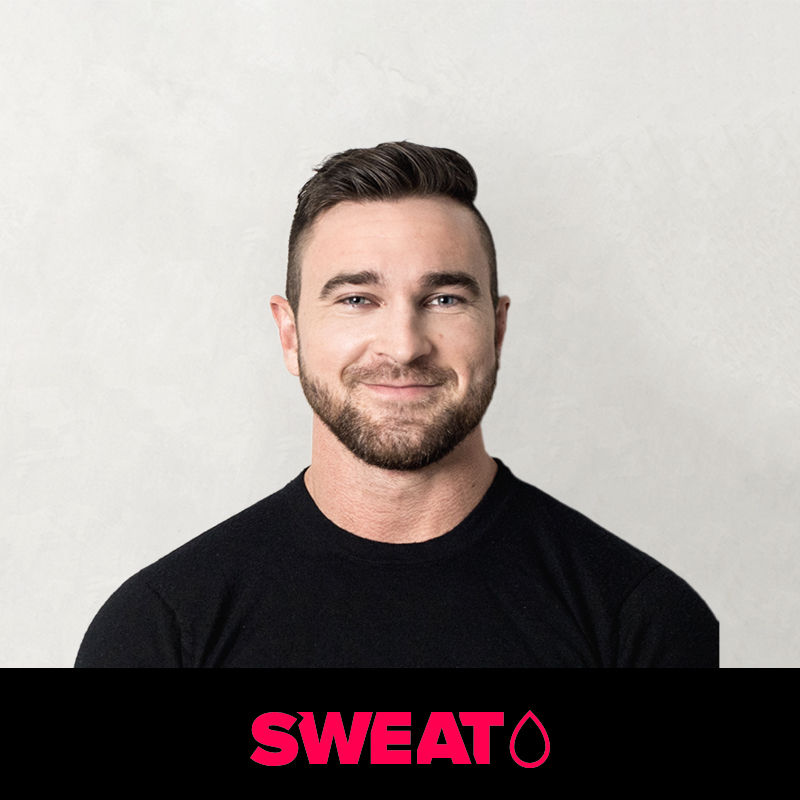
Tobi Pearce Founder & CEO, SWEAT
PixelForce delivered our app on time and within budget, helping us acquire over 30 million users. Their ability to provide quality and speed at a reasonable price has been impressive. They have been instrumental in establishing SWEAT as a leading global fitness brand.Kayla Itsines
Services on the Sweat with Kayla build
Frequently Asked Questions
Sweat with Kayla was the 2015 mobile app that turned Kayla Itsines' Bikini Body Guide into software. It delivered her 12-week program of 28-minute high-intensity sessions with video demonstration of every movement, progress tracking that persisted between sessions, and a subscription in place of the one-off eBook purchase. PixelForce designed and built it for Itsines and Tobi Pearce. It generated $17 million in revenue in its first year.
PixelForce, an Australian digital product agency, built the original Sweat with Kayla app in 2015, working with Kayla Itsines and Tobi Pearce of the Bikini Body Training Company. Both companies were based in Adelaide at the time. PixelForce built the first release for iOS and Android from a shared cross-platform codebase and continued to work on the platform as it grew.
The program itself is the easy part, because it is already written. The work is in what a PDF cannot do: showing each movement on video, remembering what somebody has completed, telling them what comes next, and charging for continued access rather than a single download. Programs, sessions and movements are modelled as structured content so new material can be published without shipping a new app version.
Long enough to scope it properly and short enough to learn something from real members. PixelForce runs every engagement in the same sequence: a free consultation, then Phase 1 Scoping and Design producing a Business Requirements Document, UX/UI design, a Product Requirements Document and a fixed-cost Statement of Work, then Phase 2 Development, QA and Release. The timeline is fixed at the end of Phase 1, once the feature set is agreed, rather than guessed at before the product is defined.
Scoping and development are quoted separately. At PixelForce, Phase 1 Scoping and Design comes first and produces the requirements, design and a fixed-cost Statement of Work. Phase 2 Development, QA and Release is quoted against that Statement of Work. An MVP is deliberately the smallest version of that build, because the point of an MVP is to reach real users with the smallest product that carries the idea.
Everything that can wait for evidence. On Sweat with Kayla the first release carried the session structure, video demonstration, persistent progress and subscription billing, and deferred community features, challenges, additional trainers and meal planning until real members were generating real behaviour to design against. Deciding what to leave out takes more judgement than building what stays, which is why it is settled in scoping and design rather than during development.
Yes. Phase 3 Post Launch Support is a standing part of every PixelForce engagement, offered either as a warranty, monitoring and support arrangement on a flat monthly fee, or as a product retainer for clients who want continuous development, priced per four-week cycle against a committed story-point capacity in tiers named Steady, Growth, Scale, Velocity and Momentum, with Enterprise on application. An MVP is the start of a product rather than the end of a project, so the support model matters as much as the build.
Up next
More products we have designed, built and launched end to end.