SWEAT began in Adelaide as a women's fitness app built around Kayla Itsines' training method. Early traction was extraordinary, and that success became the challenge: the platform had to grow from a regional app into a global service supporting millions of users across scores of countries, without losing the performance, reliability or supportive community that made it work.

How we helped build SWEAT, from an Adelaide startup to a global fitness platform
The World's #1 Female Fitness App
PixelForce built and scaled SWEAT alongside Kayla Itsines and Tobi Pearce - the women's fitness platform that grew from an Adelaide startup to 30 million users across 155 countries, and a reported $400 million exit.
Reported exit $400M
Users 30M+
Due diligence Passed
The Problem
The Solution
PixelForce built and scaled the SWEAT platform with a service-oriented architecture - workout delivery, authentication, social features and payments as independently scalable components - with multi-layer caching and a content delivery network for fast video worldwide, and payment support tuned for every regional market.
The Outcome
SWEAT became the world's number-one women's fitness app, reaching 30 million users across 155 countries. In 2021 it was acquired by iFIT in a deal reported at $400 million - one of the largest outcomes in Australian app history. Its co-founder, Tobi Pearce, is now a strategic investor in PixelForce.

From Adelaide startup to global platform
SWEAT was founded in Adelaide by Kayla Itsines and Tobi Pearce, built around the training method that had already made Itsines one of the most recognised names in women's fitness. The app turned that method into structured, guided programs, and it grew fast.
That growth was the brief. A platform designed for early traction now had to serve millions of women in scores of countries at once: streaming workout video reliably around the world, processing payments in every market, and holding up the supportive community that set SWEAT apart - all without the performance cracks that usually appear when a product scales this quickly. PixelForce built and scaled the platform to meet that moment.
Success as a scaling problem
SWEAT's early traction meant the real challenge was growth: taking a platform built for a regional audience and making it perform for millions of users across scores of countries at once.
Video, delivered worldwide
Fitness is video-heavy. Streaming workouts smoothly to users on every continent and connection meant multi-layer caching and a global content delivery network, not a single origin.
Payments in every market
Operating in 155 countries meant supporting local payment methods, wallets and bank transfers, and handling the tax and currency complexity behind them.
Community at scale
The supportive community was central to SWEAT. Systems had to let millions of women take part in global challenges while keeping the experience personal.


Hinney Lo Founder & CEO, PixelForce
SWEAT is the clearest proof of what we mean by building for scale. The decisions made early - how the services were split, how video was delivered - are exactly what let it grow to tens of millions of users without breaking. That is judgement you only earn by living through it.


Swipe to explore
Engineering for global scale
PixelForce built and scaled SWEAT with an architecture designed to grow. Rather than a single monolith, the platform used a service-oriented architecture where workout delivery, authentication, social features and payments each scaled independently, so a surge in one area never dragged down the rest.
Performance was engineered for a global audience: multi-layer caching and a content delivery network kept workout video fast wherever a member trained, and payment support was extended to local methods across 155 markets. Systematic A/B testing across markets refined program recommendations, progression and notifications, while sophisticated monitoring held performance to defined budgets across user segments and network conditions.
Built in Adelaide, the platform went on to serve tens of millions of users worldwide - and to pass the due-diligence scrutiny of a nine-figure acquisition.
Built in Adelaide · Scaled to the world
30M+ users • 155 countries • $400M reported exit
From an Adelaide startup to the world's #1 women's fitness app.

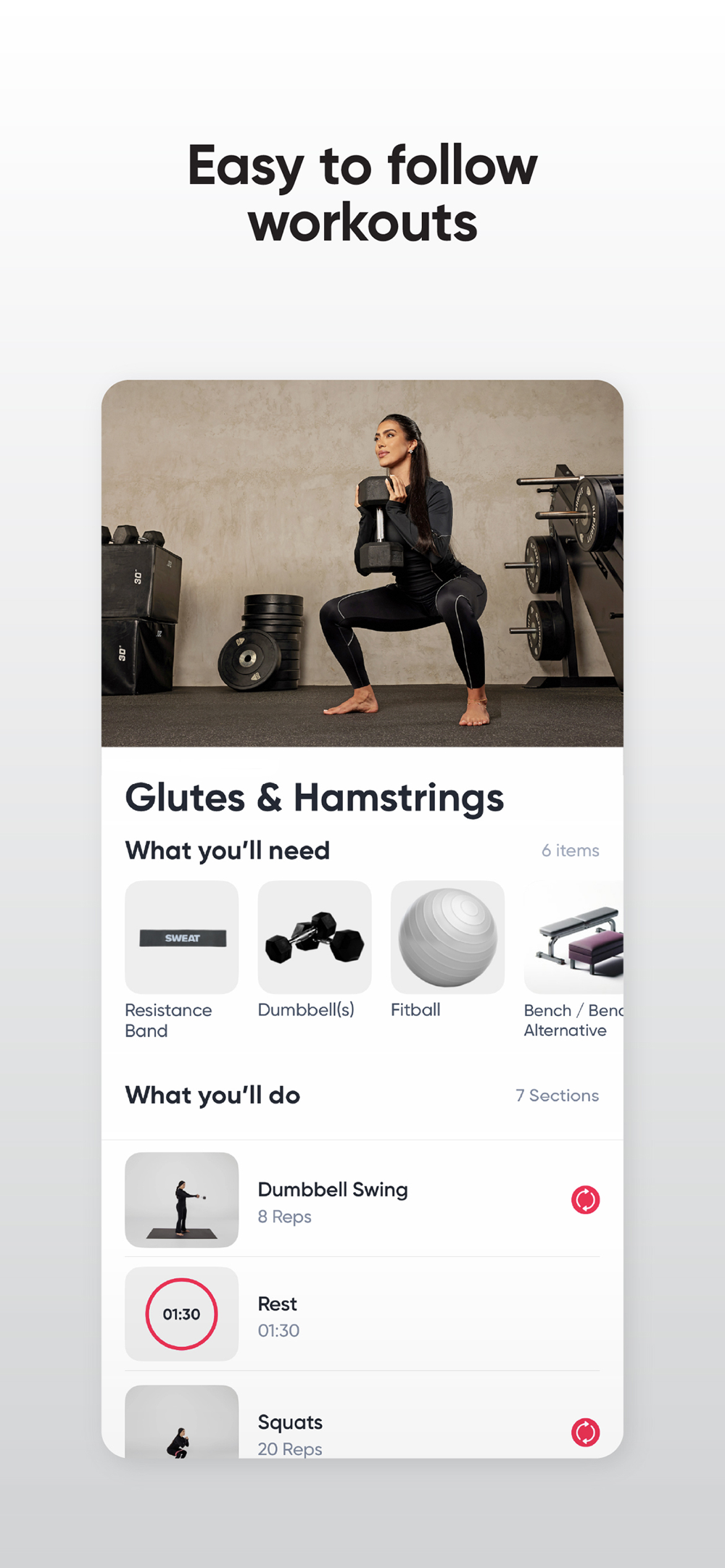

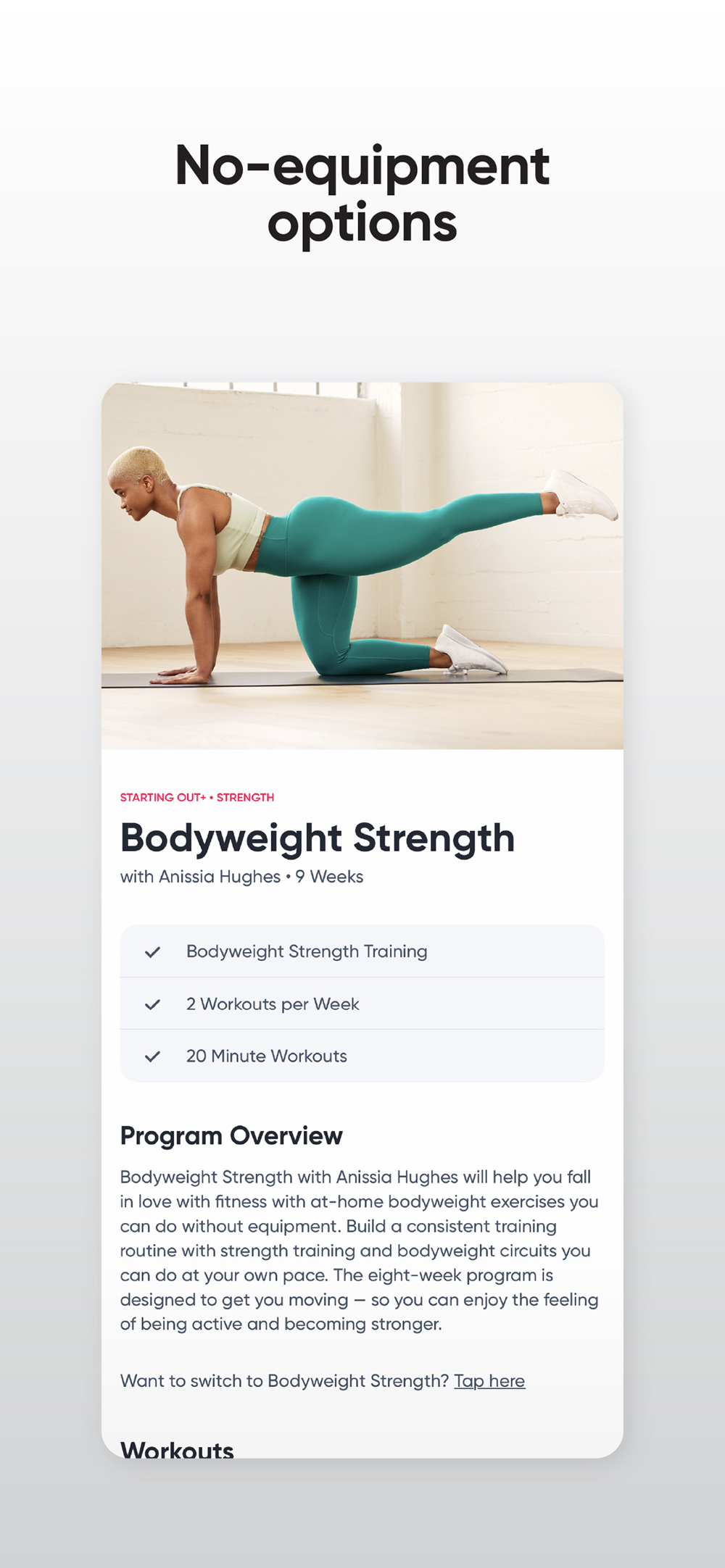


Inside the SWEAT experience
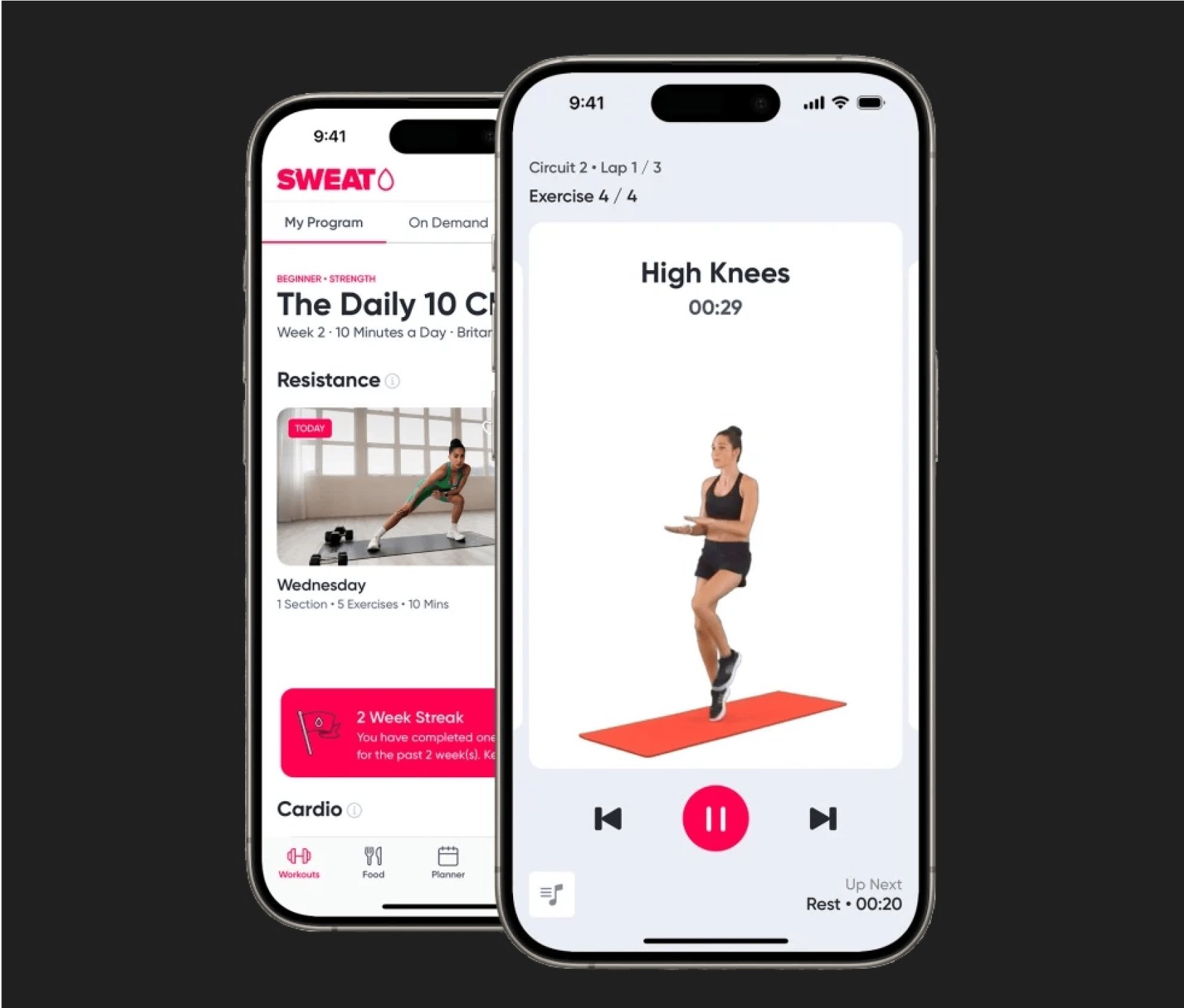
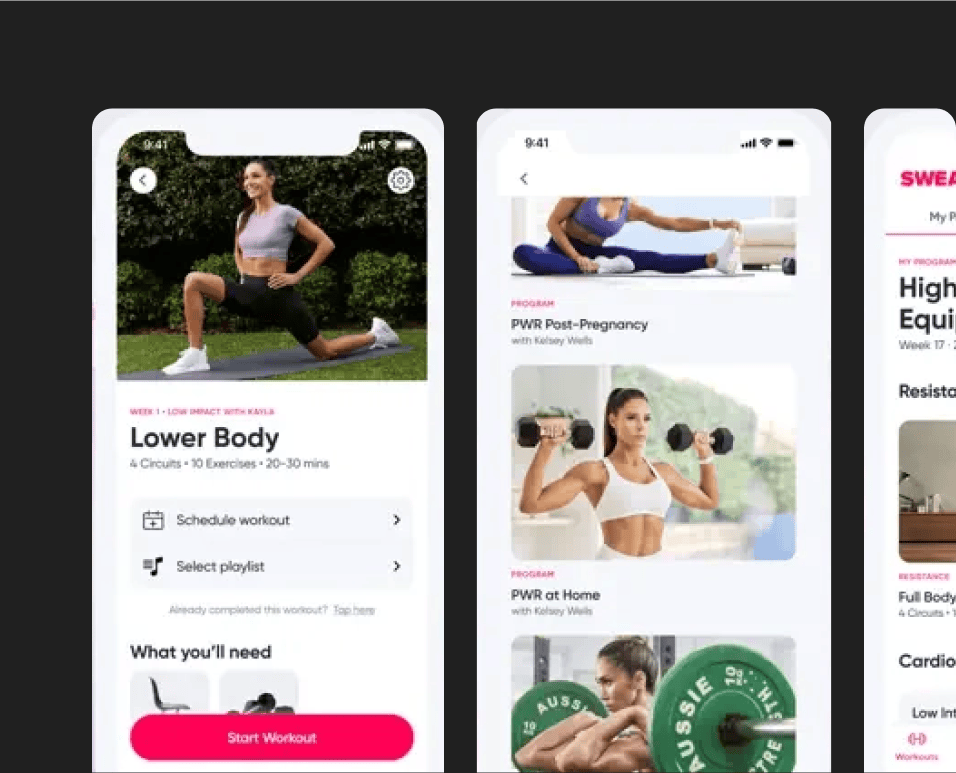
Guided programs from Kayla Itsines and a roster of expert trainers, structured week by week, with workout video that streams smoothly wherever a member trains. Progress tracking, flexible planning and a global community kept millions of women coming back.
- Architecture built to scale
- Video, fast everywhere
- Payments in every market
- Community at global scale
- Tested, measured, tuned
01 05
Architecture built to scale
Workout delivery, authentication, social features and payments ran as independently scalable services, so growth in one area never degraded the others.
02 05
Video, fast everywhere
Multi-layer caching and a global content delivery network kept workout streaming fast for members on any continent and connection.
03 05
Payments in every market
Support for local payment methods, wallets and bank transfers across 155 countries, with the tax and currency handling behind them.
04 05
Community at global scale
Systems let millions of women join global challenges and social features while keeping the experience personal and supportive.
05 05
Tested, measured, tuned
Systematic A/B testing across markets refined recommendations and progression, and monitoring held performance to defined budgets across segments and networks.
Tobi Pearce Founder & CEO, SWEAT
PixelForce delivered our app on time and within budget, helping us acquire over 30 million users. Their ability to provide quality and speed at a reasonable price has been impressive. They have been instrumental in establishing SWEAT as a leading global fitness brand.Sweat

The services behind SWEAT
Frequently Asked Questions
SWEAT is a women's fitness app founded in Adelaide by Kayla Itsines and Tobi Pearce. PixelForce built and scaled the platform, which grew to the world's number-one women's fitness app.
SWEAT reached 30 million users across 155 countries. It was acquired by iFIT for $400M, and the platform passed Big 4 due diligence at exit.
With an architecture where each service scales independently, a global content delivery network and caching for fast video, market-specific payments, and monitoring that holds performance to defined budgets.
Yes. SWEAT's platform supported tens of millions of users and passed the scrutiny of a nine-figure acquisition.
Yes. SWEAT co-founder Tobi Pearce is a strategic investor in PixelForce.
Up next
More products we have designed, built and launched end to end.