Sweat had grown into a platform serving 30 million users across 155 countries, and it was still an English-first product. That gap is easy to underestimate. A member in Milan or Guangzhou could already download the app, pay for it and train with it, but every instruction, every notification, every nutrition plan and every community exchange arrived in a second language, and a training habit is exactly the kind of thing that does not survive a small daily friction. The platform did not need translating so much as it needed to stop being a foreign product in eight of its largest markets.

How we localised Sweat into eight languages without forking the product.
Eight languages, one codebase
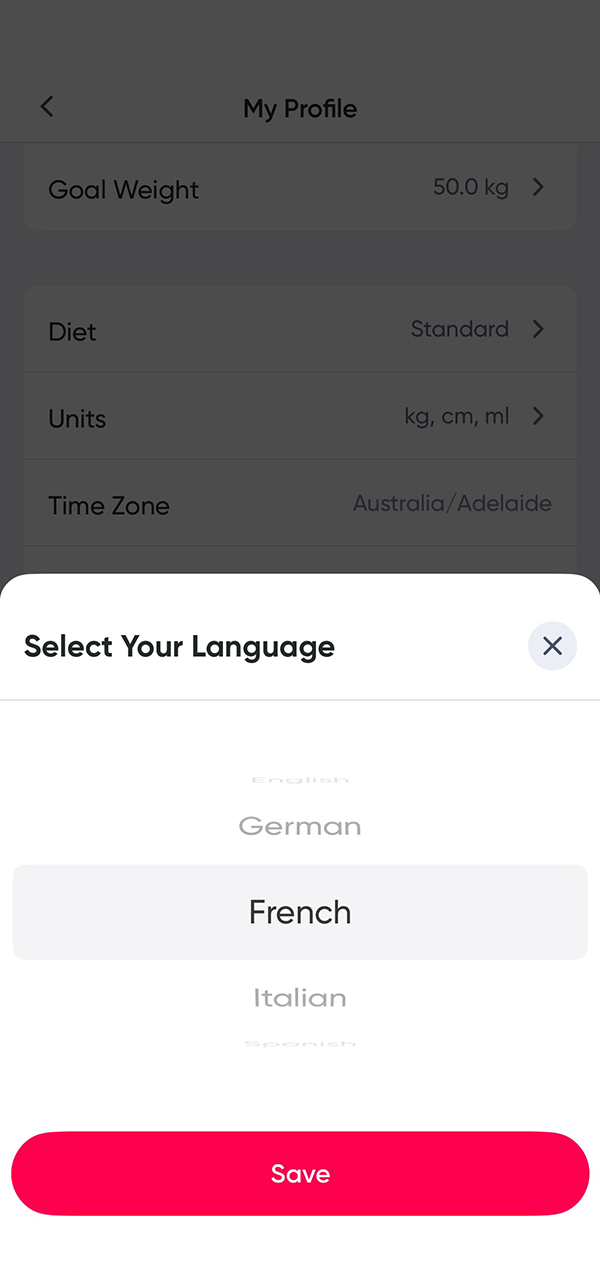
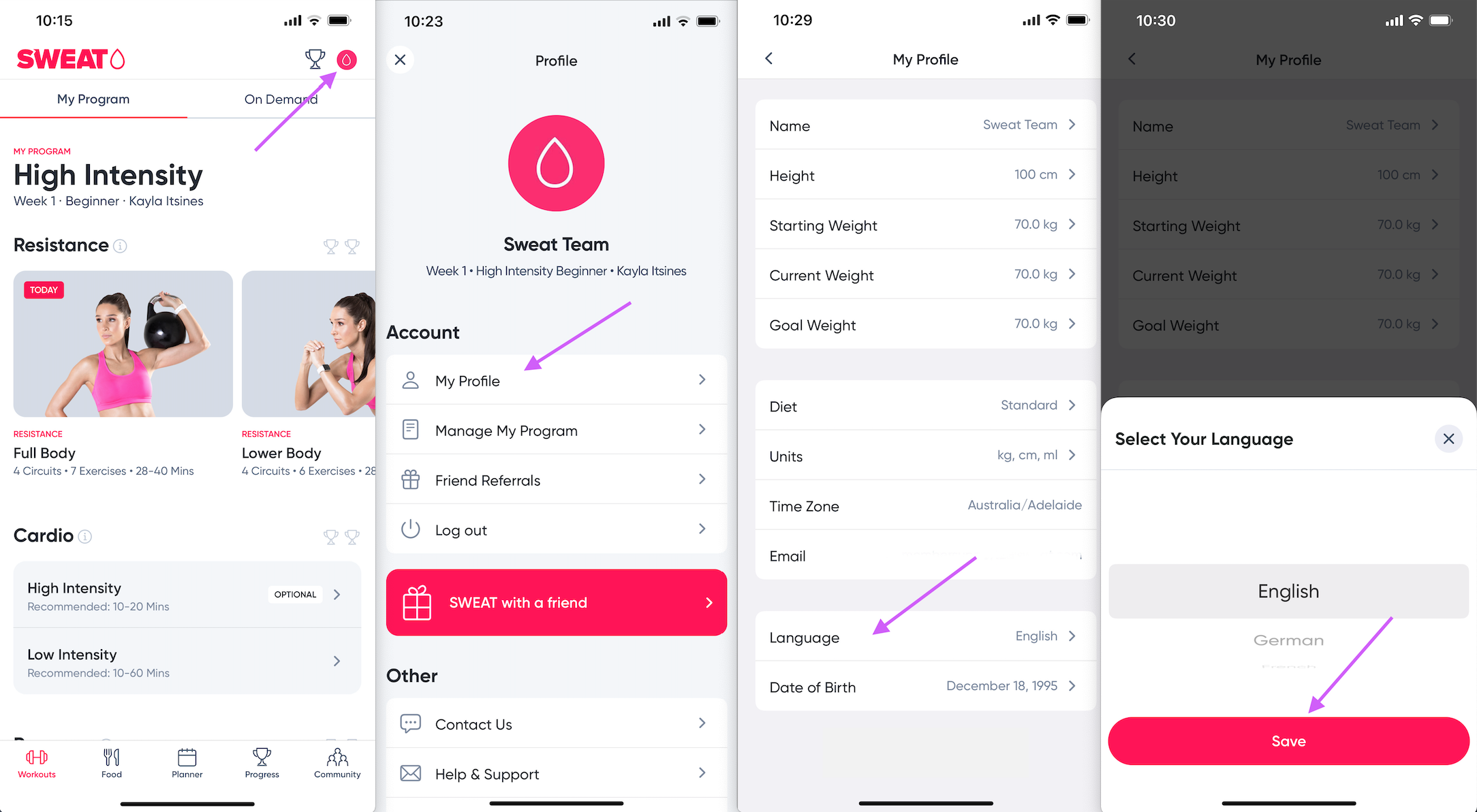
PixelForce added multilingual support to the Sweat app across eight languages, improving global accessibility with a 25 percent increase in retention rates and a 40 percent boost in user engagement. English, German, French, Italian, Spanish, Portuguese, Dutch and Simplified Chinese are still the eight languages listed on the app's App Store page today.
Languages supported 8
Retention increase 25%
Engagement boost 40%
The Problem
The Solution
PixelForce localised the platform without forking it. Rather than standing up a separate instance for each market, the team built a single backend that resolved language at request time and served locale-specific content through a content management layer, so one bug fix and one feature release reached every language at once. Exercise terminology was reviewed by native-speaking fitness professionals rather than general translators, nutrition guidance was adapted per market, and units, currency and date formats were resolved from the member's locale rather than assumed.
The Outcome
Multilingual support shipped across eight languages, improving global accessibility with a 25 percent increase in retention rates and a 40 percent boost in user engagement. English, German, French, Italian, Spanish, Portuguese, Dutch and Simplified Chinese remain the eight languages the app lists today.
One product, eight languages
Sweat had reached the point most global products reach eventually, where the next tranche of growth is not in finding new users but in serving the ones already there properly. The platform had 30 million users across 155 countries and a product experience written for English speakers. Every market outside that group was being asked to do a small amount of translation work on every screen, every day, indefinitely - and in a subscription business that friction shows up as churn rather than as complaints.
The brief was multilingual support across an initial eight languages: English, German, French, Italian, Spanish, Portuguese, Dutch and Simplified Chinese. What made it a platform project rather than a translation project is that a fitness app is not mostly interface text. It is video instruction, written exercise descriptions, nutrition plans, progress feedback, push notifications and a community talking to itself. Each of those has its own rules about what can be translated, what has to be adapted, and what has to be rebuilt for the market it is going into.
Translation was the smallest part
Interface strings are the easy layer. Video, nutrition guidance, notifications and community content each needed a different treatment, and none of them are solved by a string table.
Exercise terminology is local
Resistance movements have established names in each language's own fitness culture, and they are not literal translations of the English. Getting them wrong makes an instruction ambiguous at the exact moment a member is holding a weight.
Nutrition does not travel
Ingredient availability, portion conventions, measurement units and dietary norms differ market to market. A meal plan translated word for word is often a meal plan nobody in that country can shop for.
One codebase, not eight forks
Maintaining a separate build per language would have multiplied every release, every bug fix and every regression by eight. The architecture had to serve every locale from one product.
Localisation is not a project a development team can finish on its own, because most of what is being localised is content somebody else owns. The engagement was structured around that: PixelForce built the systems and the release process, Sweat's content team and its reviewers owned the meaning, and the workflow between them was designed so that a new program written in English could reach eight languages without a developer in the loop. That handover is the difference between a localisation project and a localised product - the first one ships once, the second one keeps working after everybody has moved on.
Hinney Lo Founder & CEO, PixelForce
Book a consultationTeams treat localisation as a translation cost and then wonder why retention barely moves. The cost is architectural. If language is a property of the platform rather than a property of a build, you ship once to eight markets forever. If it is not, you have just signed up to do every release eight times, and eventually you stop doing some of them.
Swipe to explore
How we localised the platform
The engagement started with scoping and design rather than with a translation brief. Workshops established which content types existed, who owned each one, and what "correct" meant for each in a second language, and that was written down before any development started. No blueprint, no build. On a localisation programme that step is what prevents the common failure mode, which is discovering three months in that the nutrition content and the video subtitles have completely different rules and completely different owners.
Architecturally, the decision that shaped everything else was to resolve language at the platform level rather than at the product level. One backend, one cross-platform client, one release train: the member's locale selects which content stream is served, and core functionality is identical everywhere. Translation memory tracked previously approved terms so the same movement was never named two different ways in the same language, and native-speaking fitness professionals reviewed every exercise instruction rather than general-purpose translators. Video was subtitled in all eight languages, with the subtitle layer designed so that longer languages did not creep up the frame and obscure the demonstration underneath - which is the whole reason the video is there.
Around the content, the operational layer had to follow. Push notifications were localised alongside the in-app copy, because a motivational message that arrives in the wrong language is worse than one that does not arrive. Units, currency and date formats resolved automatically from locale. Community moderation was extended to cover each language, since moderation rules written for one culture do not transfer cleanly and health and fitness claims are regulated differently market to market. Analytics were segmented by language so the team could see which markets were engaging with which programs, and every release moved through structured quality assurance in all eight locales rather than in English with the others assumed.
Translate · Adapt · Verify
25% retention · 40% engagement
One product, spoken in eight languages.
- One backend, many locales
- Terminology reviewed locally
- Nutrition adapted per market
- Units, currency and formats
- Subtitles that stay out of the way
- Analytics by language
01 06
One backend, many locales
Language is resolved at the platform level, not by shipping a separate build per market. A single backend serves locale-specific content through a shared content layer, so a fix or a feature reaches all eight languages in the same release rather than in eight staggered ones.
02 06
Terminology reviewed locally
Exercise names were reviewed by native-speaking fitness professionals in each language rather than by general translators. Resistance movements have established names inside each country's own fitness culture, and those names are frequently not the literal translation of the English term.
03 06
Nutrition adapted per market
Meal guidance was adapted with nutrition professionals in each market rather than translated. Ingredient availability, portion conventions and dietary norms differ enough that a literal translation often produces a plan that cannot be shopped for locally, which is a fast way to lose a member.
04 06
Units, currency and formats
Weights, measurements, dates and currency resolve from the member's locale automatically. It reads as a detail until a member is asked to convert a load in their head between sets, at which point it becomes the reason they stop following the plan as written.
05 06
Subtitles that stay out of the way
Video instruction was subtitled in all eight languages, with the subtitle layer designed to absorb the length differences between languages without creeping up the frame. The demonstration is the content, and a subtitle that covers it defeats the purpose of subtitling it.
06 06
Analytics by language
Engagement was segmented by language so the team could see which programs and which content worked in which markets, rather than reading one global average that hides every regional difference underneath it.
Tobi Pearce Founder & CEO, SWEAT
PixelForce delivered our app on time and within budget, helping us acquire over 30 million users. Their ability to provide quality and speed at a reasonable price has been impressive. They have been instrumental in establishing SWEAT as a leading global fitness brand.Sweat

Services on the Sweat localisation programme
Frequently Asked Questions
PixelForce, an Australian digital product agency, added multilingual support to the Sweat fitness app across eight languages. The work improved global accessibility with a 25 percent increase in retention rates and a 40 percent boost in user engagement. The eight languages listed on the app's App Store page are English, German, French, Italian, Spanish, Portuguese, Dutch and Simplified Chinese.
Localisation means adapting the whole product to a market, not translating its interface. In a fitness app that covers exercise terminology reviewed by native-speaking fitness professionals, nutrition guidance adapted to local ingredients and conventions, subtitled video instruction, notifications written in the member's language, units and currency resolved from locale, and community moderation that works under local norms and local health-claim regulation.
By making language a property of the platform rather than of the build. One backend resolves the member's locale at request time and serves locale-specific content through a shared content management layer, while the client application stays identical everywhere. Core functionality, bug fixes and new features then apply uniformly across every language in a single release, instead of being repeated once per market.
It can, and on Sweat it did: multilingual support across eight languages produced a 25 percent increase in retention rates and a 40 percent boost in user engagement. The mechanism is unremarkable. A daily habit product asks the member to act on an instruction every single day, and doing that in a second language is a small tax that compounds until they stop paying it.
It depends far more on how many content types the product has than on how many languages are being added. PixelForce runs the work in the standard sequence: a free consultation, then Phase 1 Scoping and Design, which inventories every content type, establishes who owns it and defines what correct means in a second language, then Phase 2 Development, QA and Release. The timeline is fixed at the end of Phase 1, once that inventory is agreed.
Scoping and development are quoted separately. At PixelForce, Phase 1 Scoping and Design comes first, and Phase 2 Development, QA and Release is quoted against the fixed-cost Statement of Work it produces. What decides the cost of a localisation programme is how much of the product is content rather than interface, since content is where the real work is. The cost is fixed in that Statement of Work before development starts.
Phase 3 Post Launch Support covers it, either as a warranty, monitoring and support arrangement on a flat monthly fee, or as a product retainer priced per four-week cycle against a committed story-point capacity, in tiers named Steady, Growth, Scale, Velocity and Momentum, with Enterprise on application. Ongoing support matters more on a multilingual product than a single-language one, because every new piece of content is a recurring obligation in every locale rather than a one-off task.
Up next
More products we have designed, built and launched end to end.