Anaesthesia is one of the few clinical disciplines where a single unfilled shift stops an entire surgical list. In the United States the work of matching anaesthesiologists and certified registered nurse anaesthetists to hospitals and surgical centres ran almost entirely through locum tenens agencies and staffing firms. That model functioned, but it put an intermediary between the only two parties who had to agree on the terms, and the things each side most needed to see - a provider's real availability and rate, a facility's actual conditions and dates - arrived second-hand or not at all.

How we built a two-sided marketplace where anaesthesia providers and United States healthcare facilities deal with each other directly.
A direct line into anaesthesia coverage
PixelForce designed and built the 1MAC platform: a two-sided marketplace where anaesthesia providers publish verified professional profiles and United States healthcare facilities post the coverage they need. It shipped on iOS, Android and web, and has been on the App Store since 18 February 2023.
Platforms delivered iOS, Android, web
On the App Store since Feb 2023
Cost for a provider to join No fee
The Problem
The Solution
PixelForce designed and built 1MAC as a two-sided marketplace rather than a job board. Providers hold one professional profile carrying their credentials, specialisation and availability. Facilities post the coverage they need with dates, location, contract type and pay, and the platform puts the two in front of each other with a messaging channel between them. Because it is healthcare software, credential and identity data sat under United States healthcare privacy law from the first design session, not as a late addition.
The Outcome
The platform shipped on iOS, Android and web from one product definition. The iOS app has been on the App Store since 18 February 2023 and 1MAC has continued to develop the product since, broadening the business from a pure marketplace into marketplace plus staffing services. This study covers the platform PixelForce designed and built; later feature work is not ours to claim.
A staffing model with an intermediary in the middle
1MAC Anesthesia is a United States company built around a specific workforce: anaesthesiologists, certified registered nurse anaesthetists and anaesthesia assistants. Some of that workforce is permanently employed, but a large share of it works flexibly - W-2 placements at one facility, 1099 contracts, or the locum tenens pattern of moving between sites. Facilities need those people at short notice and at predictable quality. Providers need to know what work exists, where, and on what terms.
1MAC wanted to run that exchange the other way around from the agency model, and its commercial design says so plainly: providers join without a registration fee, and facilities pay to post work. That inverts who the platform has to attract first. PixelForce was engaged to build the software that model depends on - a marketplace where a provider establishes their credentials once, a facility can act on them without starting a verification process from scratch, and the two sides can settle terms between themselves.
Two sides, one product
A marketplace is only useful when both sides are present, and the two sides wanted different things from the same screens. Providers wanted relevant work filtered down to a short list. Facilities wanted qualified applicants rather than volume.
The credential is the trust
In anaesthesia a profile means nothing without the licence behind it. Credentials, licences and insurance had to be captured, held and presented in a form a facility administrator could act on rather than re-verify.
Coverage is urgent by nature
An unfilled anaesthesia slot cancels operations. The platform had to move at the speed of a facility discovering a gap on a Friday for a list running on Monday.
Healthcare data shapes the build
Licence numbers, identity documents and professional records sit under United States healthcare privacy law. Access control and data handling were scoped before feature work, not retrofitted after it.




1MAC operates in the United States and PixelForce works from Adelaide and Sydney, with the working day of one team ending as the other begins. That is a constraint on meetings, not on progress, provided the product is defined in writing before development starts. Requirements were settled in concentrated workshops and captured in documents both sides could act on independently, so the overnight gap became build time rather than waiting time.
Hinney Lo Founder & CEO, PixelForce
Book a consultationOn a two-sided marketplace, the temptation is to build the side you understand best and bolt the other one on. It never works. You have to decide, before anyone writes code, which side each shared screen is really for - and then be honest that the other side is a guest on it.
Swipe to explore
How we built it
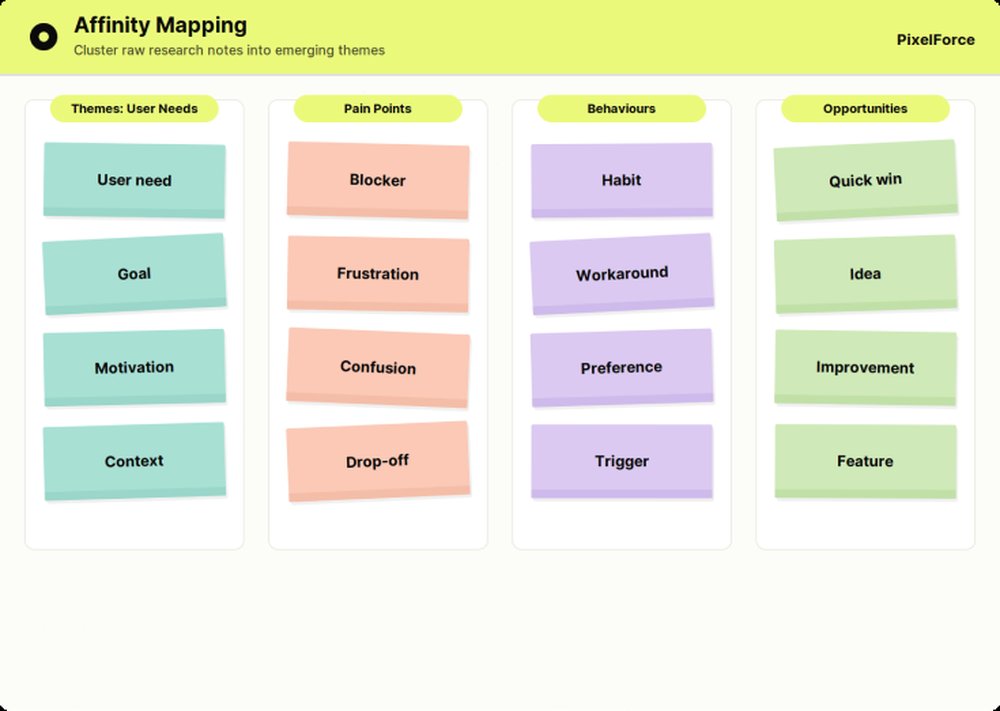
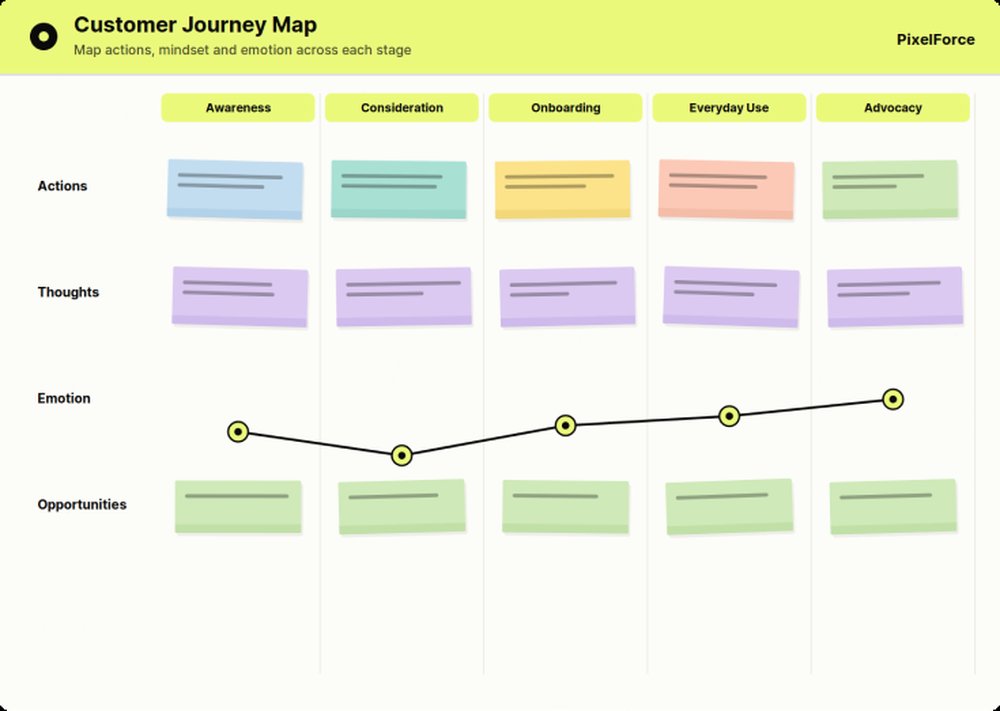
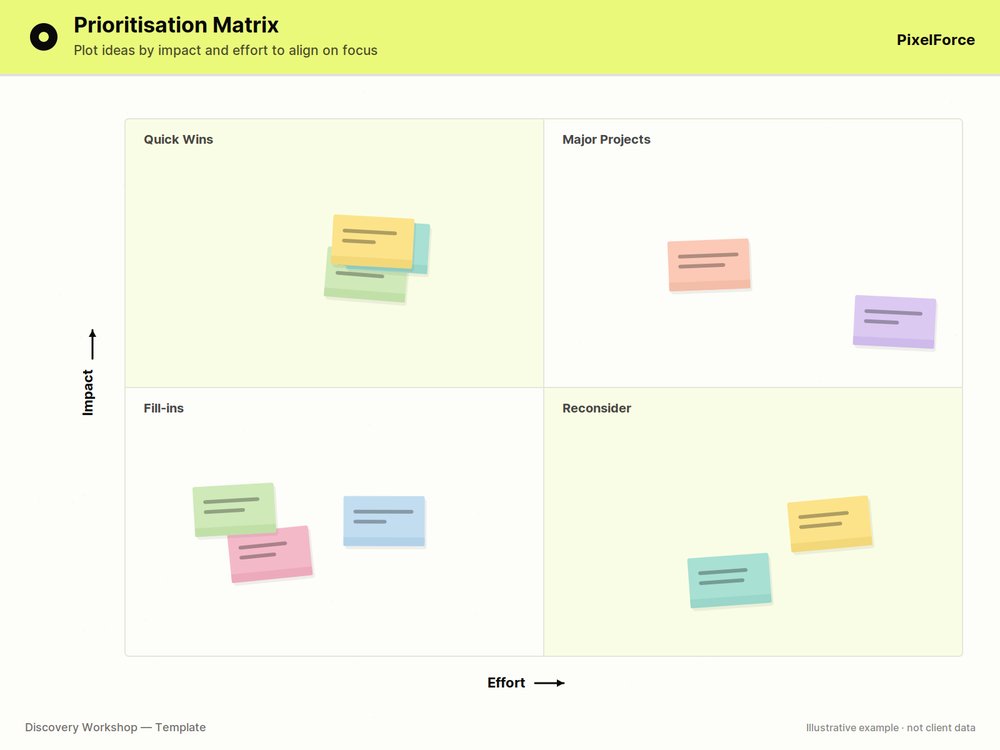
The engagement opened with Phase 1 Scoping and Design. Workshops turned the brief into a Business Requirements Document, a full UX/UI design, a Product Requirements Document and a fixed-cost Statement of Work. Scoping and design always precedes development at PixelForce, and on a two-sided product that discipline earns its cost immediately: almost every hard decision is about which side of the marketplace a shared screen serves first, and those decisions are cheap to change on paper and expensive to change in code.
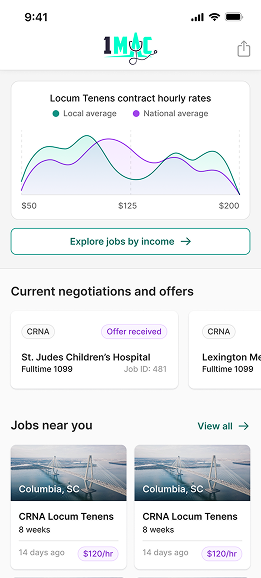
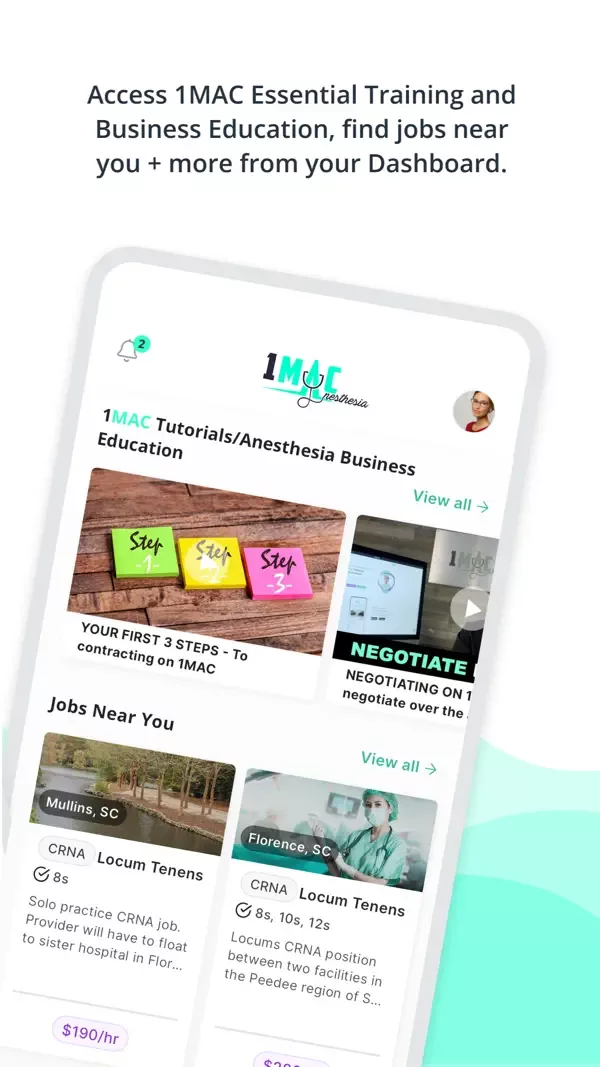
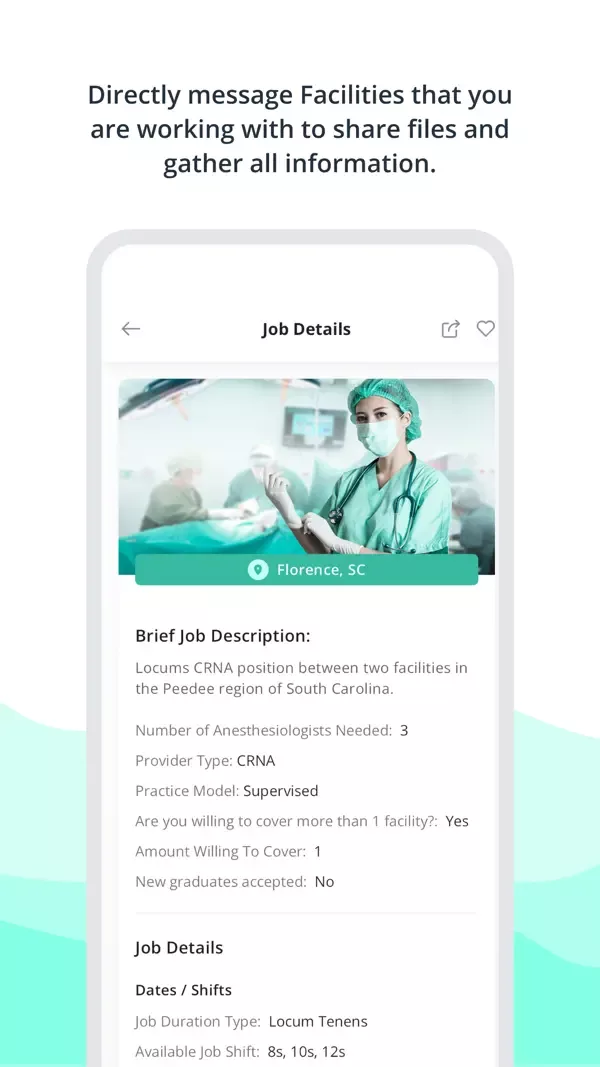
The build itself is organised around two objects and the conversation between them. A provider profile carries credentials, specialisation, contract preference and availability, and is the thing a provider maintains rather than re-enters for every application. A facility posting carries dates, location, required qualifications, contract type and pay. Filtering runs over both, so a provider sees work that matches their licence and preferences instead of an undifferentiated feed, and a facility sees applicants who already meet the requirement. Once there is interest, the two parties talk inside the platform and settle terms between themselves, with push notifications carrying the time-sensitive part - a new matching post, a new applicant, a change in status.
Handling professional and identity data for a United States healthcare marketplace set the security floor for the whole build. Access is role-scoped, so what a facility can see about a provider and what a provider can see about a facility are deliberate decisions rather than a side effect of the database schema, and privacy controls govern the credential documents themselves. The product ships on iOS, Android and web from one platform, which matters because the two sides use it differently: providers check work on a phone between cases, while facility administrators do their work at a desk. Every release moves through structured quality assurance before it reaches either audience.
Post · Match · Contract
Providers and facilities, dealing with each other.
A marketplace where the credential arrives before the conversation does.
- Provider profiles
- Facility job posts
- Credential handling
- Direct messaging
- Matching and filters
- Three surfaces, one platform
01 06
Provider profiles
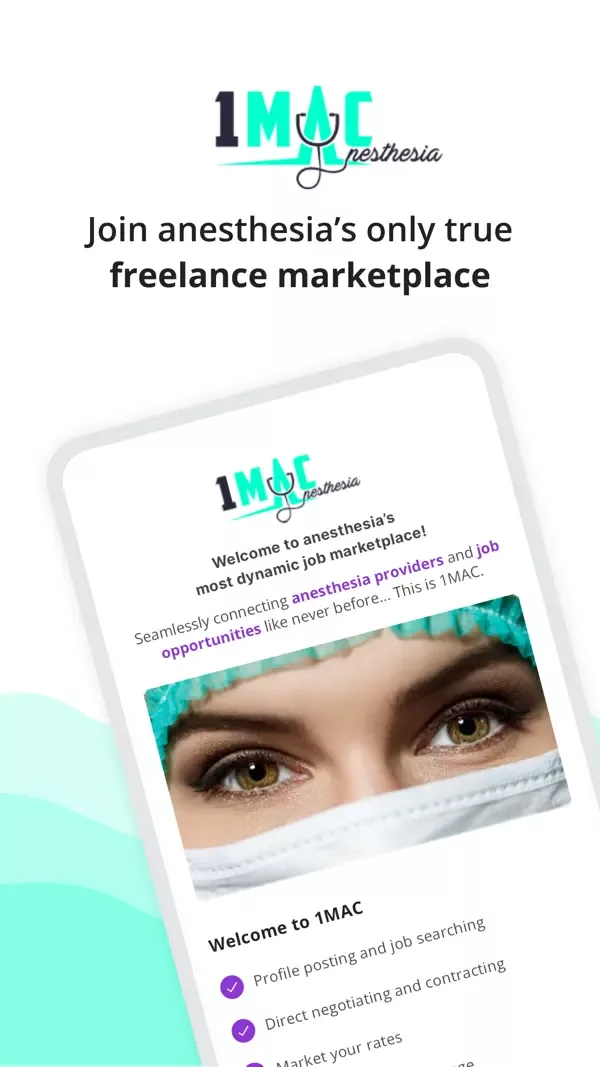
A provider builds one profile carrying credentials, specialisation, contract preference and availability, and maintains it rather than restating it for every opportunity. That single record is what makes the rest of the marketplace work: a facility reading a profile is reading something the provider keeps current, not a form filled in months ago for a different job.
02 06
Facility job posts
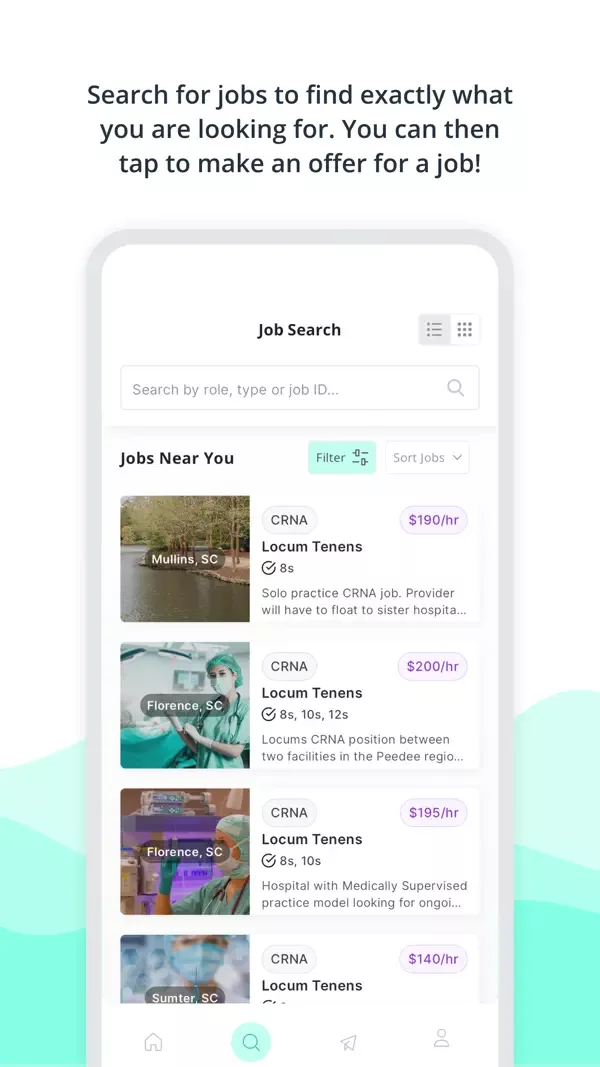
Facilities post coverage with the detail that actually decides whether a provider is interested - dates, location, required qualifications, contract type and pay. Publishing that up front removes the round of questions that used to happen through an agency, and it means the providers who respond have already accepted the terms.
03 06
Credential handling
Credentials, licences and insurance documents are captured and held against the provider profile so that a facility administrator can act on them rather than begin a verification exercise. In anaesthesia this is the difference between a marketplace and a noticeboard, because a facility cannot take a clinical risk on an unverified claim.
04 06
Direct messaging
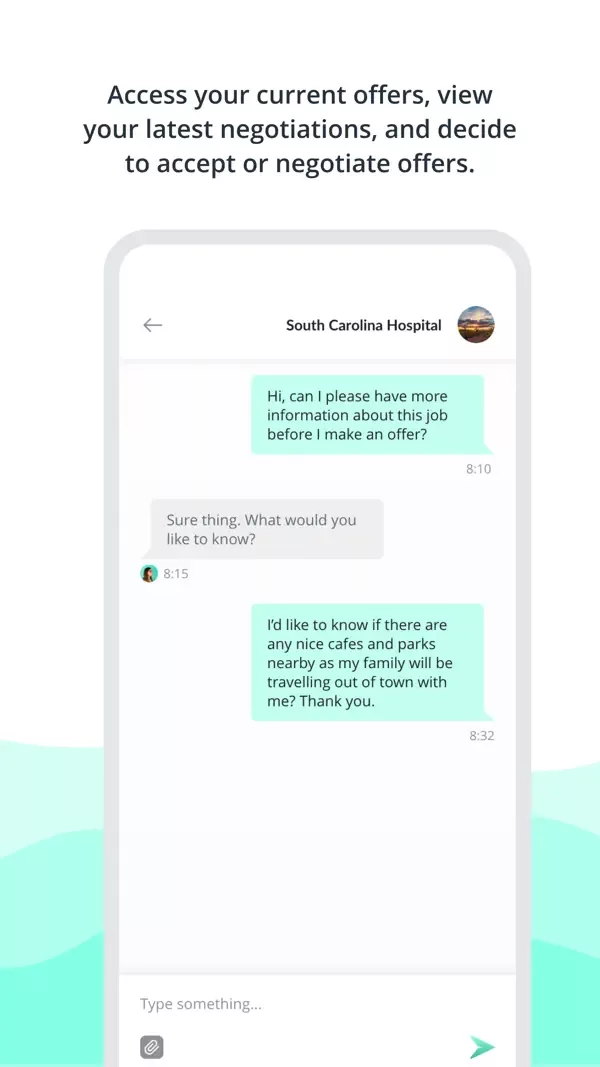
Once a facility and a provider are interested in each other, they talk inside the platform and settle terms between themselves. Removing the intermediary from that conversation is the point of the product: both sides see the same terms at the same time, rather than each hearing a version of them.
05 06
Matching and filters
Filtering runs across both sides so that neither is handed volume. A provider sees work matching their licence, location and contract preference. A facility sees applicants who already meet the requirement rather than a queue needing manual screening. On a marketplace, relevance is retention.
06 06
Three surfaces, one platform
The product runs on iOS, Android and web from one platform, because the two sides work differently. A provider checks new coverage on a phone between cases. A facility administrator posts work and reviews applicants at a desk. Both are reading and writing the same records.
Services in the 1MAC build
Frequently Asked Questions
1MAC Anesthesia is a United States marketplace for anaesthesia work. Anaesthesiologists and certified registered nurse anaesthetists hold professional profiles carrying their credentials and availability, and healthcare facilities post the coverage they need, with the two sides settling terms directly. PixelForce designed and built the platform, which runs on iOS, Android and web and has been on the App Store since February 2023.
PixelForce designed and built the 1MAC platform as a two-sided marketplace rather than a job board. That covered provider profiles carrying credentials and availability, facility job posts, matching and filtering across both sides, in-platform messaging so the two parties can settle terms directly, notifications for time-sensitive activity, and role-scoped access over professional and identity data. It shipped on iOS, Android and web.
Through the credential, not the interface. In a clinical marketplace a profile is worthless unless the licence and insurance behind it can be relied on, so the design question is how credentials are captured, held and presented in a form the other side can act on without starting verification again. The second half is access control: deciding deliberately what each side can see about the other, rather than letting the database decide it.
Longer than a single-audience product, because a marketplace is effectively two applications sharing one data model. PixelForce runs every engagement in the same sequence: a free consultation, then Phase 1 Scoping and Design producing a Business Requirements Document, UX/UI design, a Product Requirements Document and a fixed-cost SoW, then Phase 2 Development, QA and Release, then Phase 3 Post Launch Support. The timeline is fixed at the end of Phase 1, once the feature set is agreed.
Scoping and development are priced separately. Phase 1 Scoping and Design comes first, and Phase 2 Development, QA and Release is quoted against the fixed-cost Statement of Work that Phase 1 produces. A two-sided marketplace costs more than a single-sided product because both sides need designing, and a regulated marketplace adds the data-handling work on top. The exact cost is fixed in that Statement of Work before development starts.
It depends on how each side works. On 1MAC it did, because the two audiences behave differently: a provider checks new coverage on a phone between cases, while a facility administrator posts work and reviews applicants at a desk. Building all three surfaces on one platform means both sides read and write the same records, which is the only way a marketplace stays consistent.
A marketplace is never finished at launch, because the balance between the two sides keeps moving. PixelForce offers Phase 3 Post Launch Support either as a warranty, monitoring and support arrangement on a flat monthly fee, or as a full product retainer for clients who want continuous development, priced per four-week cycle against a committed story-point capacity in tiers named Steady, Growth, Scale, Velocity and Momentum, with Enterprise on application.
Up next
More products we have designed, built and launched end to end.
littlegren A living product, sold online
A Shopify store built for a product people buy with their eyes, and sales that increased 300 percent year on year.
SuspectED A forensic field kit in a phone
How we turned a smartphone into a forensic-grade field tool for recording biological threats, working with no network at all.