Fast-moving trade businesses coordinate work across two places that rarely share a source of truth: an office running quotes, scheduling and invoicing, and a job site working from printed plans and phone calls. The tooling in between tends to be either paper, a scattering of single-purpose apps, or older software that was not designed for the way a plumbing or electrical business actually operates. The cost is not obvious in any single instance - a measurement read off a superseded plan, a job card whose status nobody updated, revenue that cannot be seen until the end of the month - but it accumulates.
Taly
The plan, the job card and the numbers in one place, live for the office and the site at once.
Off the paper plan, into one platform
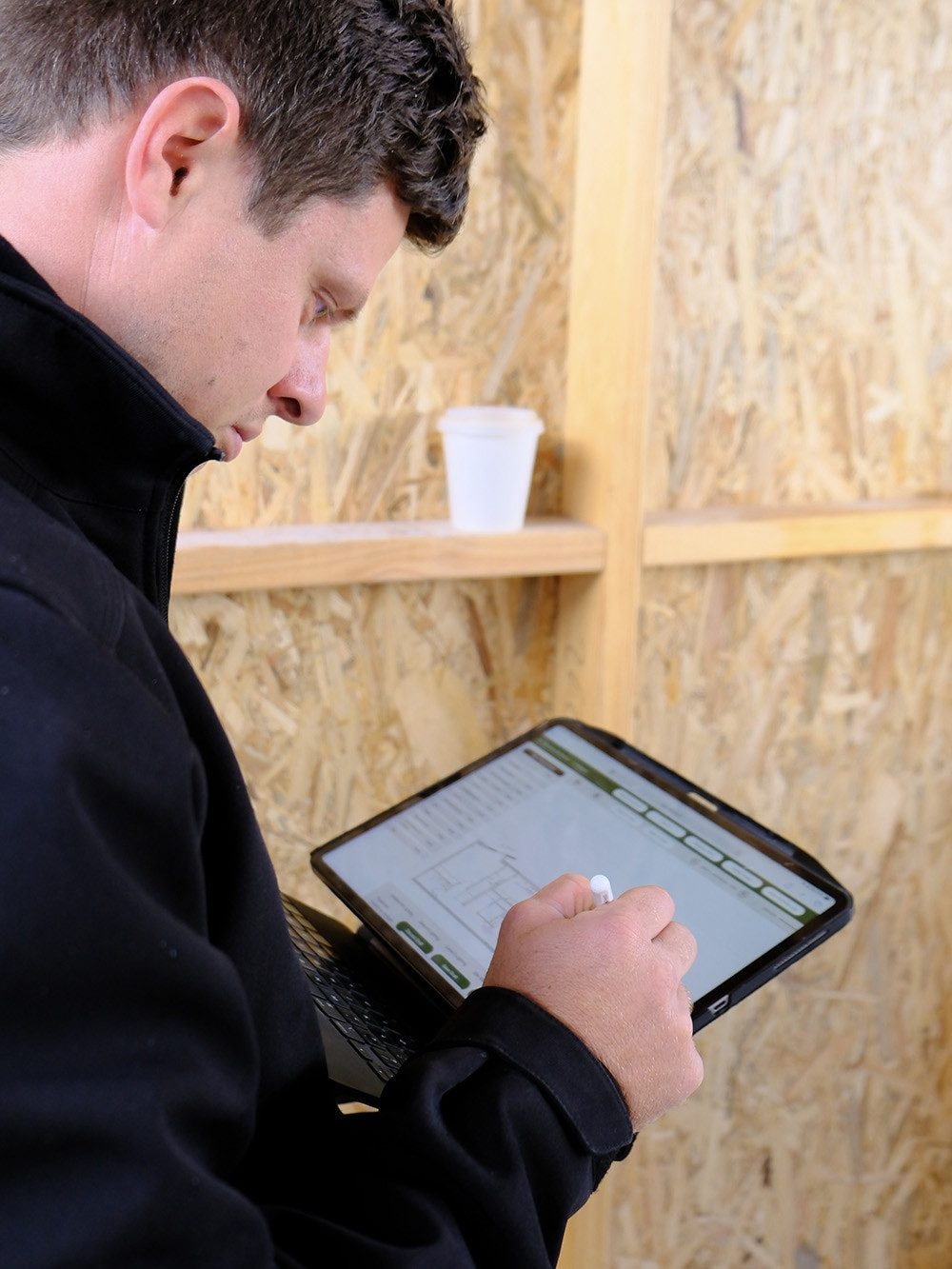
Trade businesses run on plans, and plans are usually the least connected thing they own - printed, marked up, out of date the moment something changes on site. Taly replaces that with a digital plan designer inside a project management platform, so the office and the job site are looking at the same current information. PixelForce built it as a web application.
Platform Web application
Built in-house Plan designer
Commercial model Per-seat subscription
The Problem
The Solution
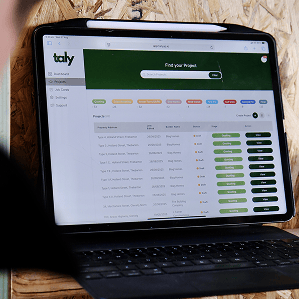
PixelForce built Taly as a web application so that a single live version of each project is reachable from any browser, in the office or on site, without an installation to maintain. Its distinguishing piece is a purpose-built plan designer: a drag-and-drop plan canvas with defined icons and precise measurements, so the plan becomes a live document inside the project rather than an attachment beside it. Project stages, job cards, file storage, team communication and a revenue dashboard all sit against the same project record.
The Outcome
Taly is in market as a subscription platform for trade businesses, used by plumbing and electrical contractors among others. Because plans, stages, files and job status all live on one record, a change made in the office is the version the site sees, which is the entire point of moving off paper. The platform is sold on a per-user subscription with a first-user rate and a lower rate for each additional seat, so a small operator can start and scale into it.
Why trade businesses are hard to build software for
Taly is a South Australian software business building for the trades - plumbing, electrical and construction contractors whose work is split between an office and a set of active job sites. The premise is that these businesses are not short of software so much as short of software that fits: the market offers general project management tools that know nothing about plans, and legacy trade packages that were built before real-time collaboration was an expectation. Taly set out to be the all-in-one platform for a trade business rather than another app in the stack.
The hard part is the plan. For most industries a project management tool can treat a drawing as a file to attach. For a trade business the plan is the work: it is where measurements come from, where fixtures and fittings are located, and what the person on site is actually reading. Building a platform that treats plans as first-class, editable, live objects - not attachments - was the requirement that shaped the product, and it is what made a purpose-built plan designer necessary rather than an integration with something existing.
The plan is the work
For a trade business a drawing is not an attachment. It is where measurements and fixture locations come from, so it had to be a live, editable object inside the platform.
Two places, one truth
An office running scheduling and invoicing and a site working from a printed plan rarely share a current version. The gap is where rework comes from.
Existing tools do not fit
General project management software knows nothing about plans, and older trade packages predate real-time collaboration. Neither covers the whole job.
All-in-one is a scope risk
A platform meant to replace several tools can expand forever. The first release had to be defined tightly enough to actually ship.
Taly is South Australian, as is PixelForce, and the engagement ran as a direct product partnership rather than a fixed brief handed over once. Because the product is opinionated about a specific trade workflow, the scoping stage leaned on the client's domain knowledge of how plumbing and electrical businesses actually sequence a job, and PixelForce owned the architecture, the plan designer and the delivery. Scope decisions were made against a defined first release rather than deferred into an open backlog.
Hinney Lo Founder & CEO, PixelForce
An all-in-one platform is the easiest kind of product to never finish. The discipline is deciding what the core record is, shipping that properly, and sequencing everything else against it - rather than building six half-modules that each nearly work.
Swipe to explore
How the platform was built
The engagement began with scoping and design, which on a product this broad is where the risk actually sits. An all-in-one platform can expand indefinitely, so the work was to define the project record everything else hangs from, decide what belongs in a first release, and sequence the rest. PixelForce does not issue a development estimate before that blueprint exists, and on a multi-module product it is the difference between a platform and a permanently unfinished one.
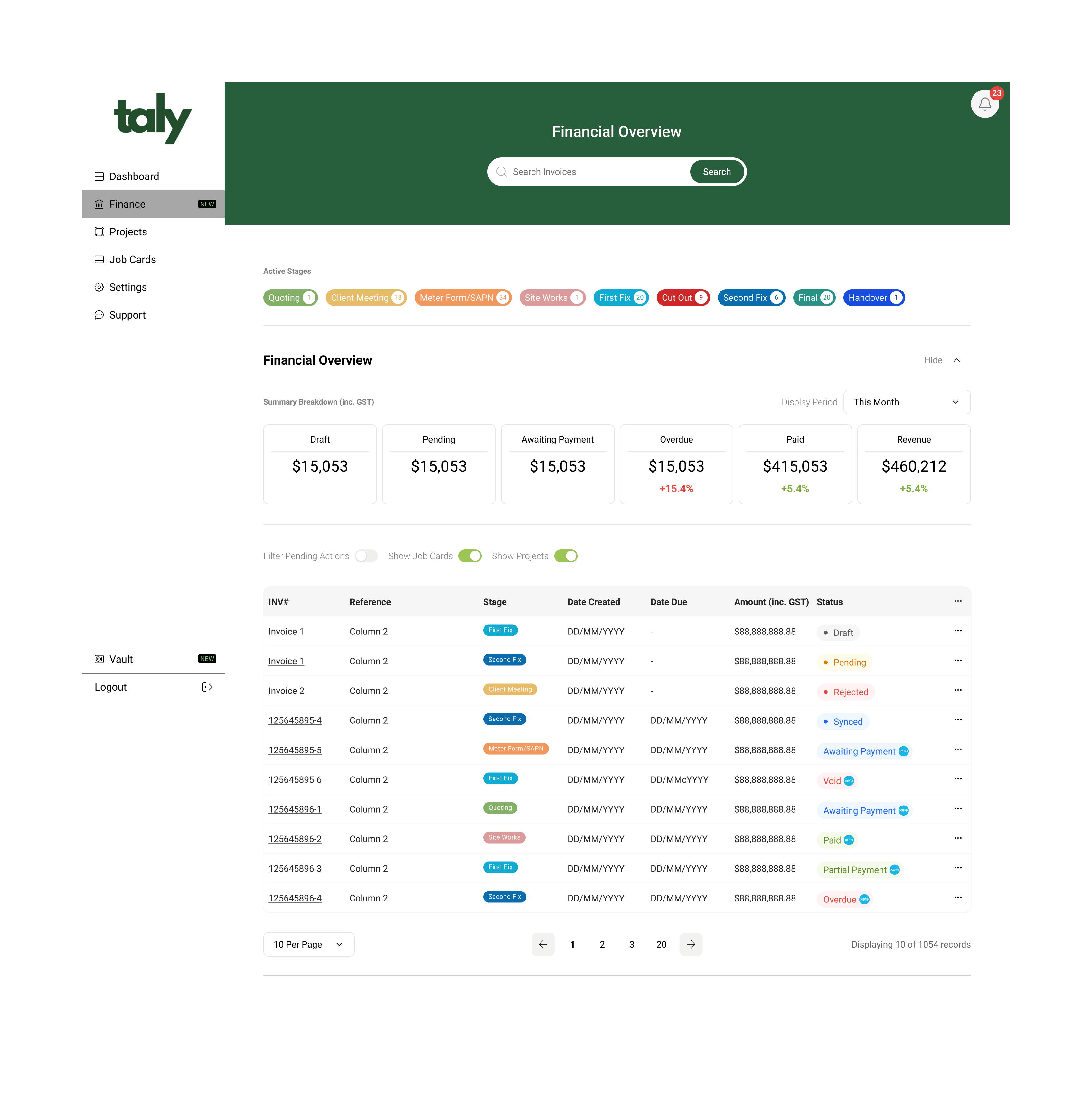
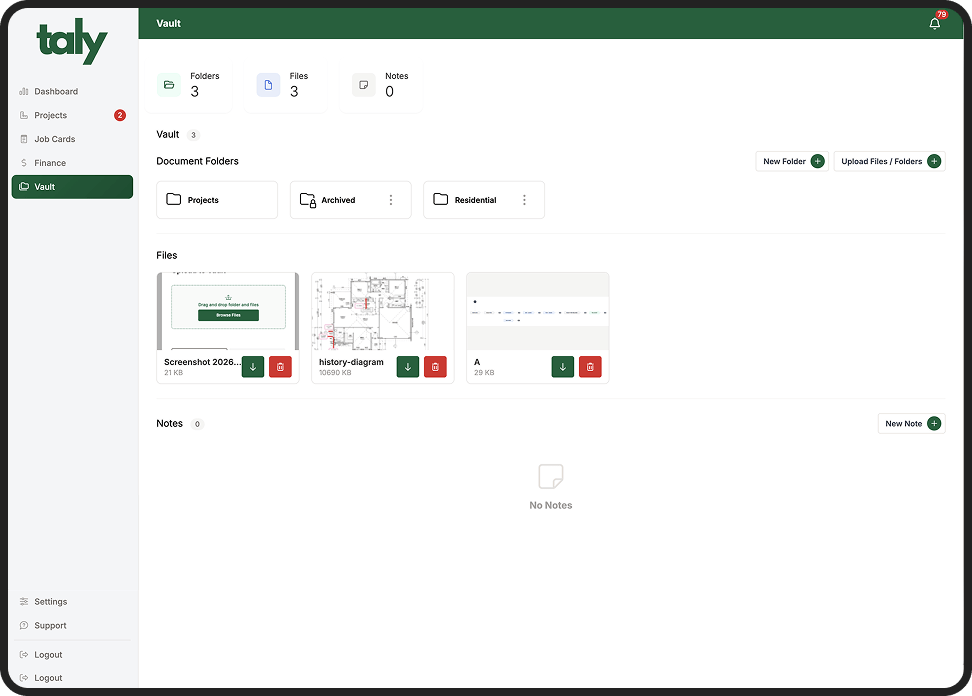
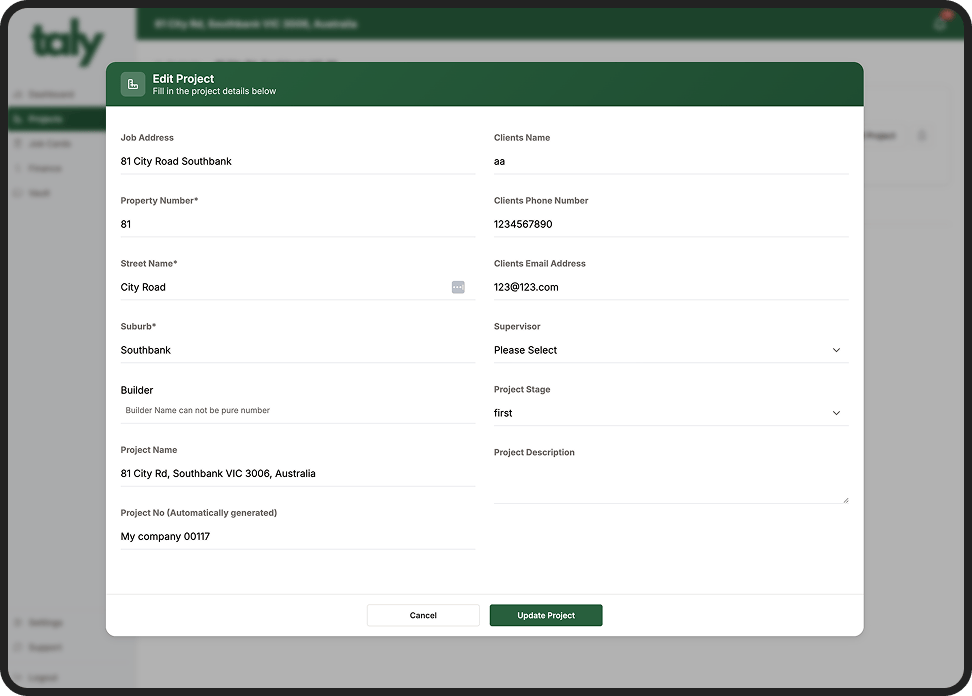
Taly was built as a web application rather than a native mobile app, which was the right call for the way the product is used: a supervisor on site and an administrator at a desk need the same current view, and a browser-based platform removes app store release cycles and version fragmentation from a product that changes often. Around the central project record sit custom project stages that each business can shape to its own workflow, job cards carrying status through pending, submitted and complete, public and private file storage scoped per project, and a revenue and analytics dashboard giving the owner visibility without exporting anything.
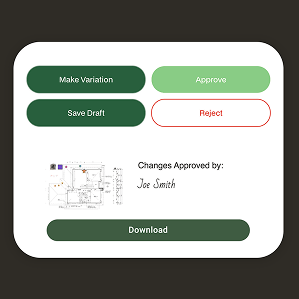
The plan designer is the piece that could not be bought. It is a purpose-built canvas with drag-and-drop icons and precise measurement support, built so a plan can be produced and revised inside Taly and then read by whoever needs it. Keeping the office and the site in agreement then becomes a matter of real-time synchronisation across the platform, so an update made in one place is what everyone else sees. The commercial model is a per-seat subscription, with a first-user rate and a reduced rate for each additional user on monthly or annual terms.
Plans as live documents
Drag-and-drop icons and precise measurements.
A purpose-built plan designer, not a drawing attached to a project.
- Digital live plans
- Custom project stages
- Job cards and tracking
- File storage
- Real-time sync
- Revenue and analytics
01 06
Digital live plans
A purpose-built plan designer inside the platform, with drag-and-drop icons and precise measurement support. Plans are produced and revised in Taly and read from Taly, so the version on site is the current one rather than whatever was last printed.
02 06
Custom project stages
Every trade business sequences a job slightly differently, so stages are configurable per business rather than fixed by the software. The platform adapts to the workflow instead of asking the business to adopt somebody else's.
03 06
Job cards and tracking
Work is tracked as job cards moving through states such as pending, submitted and complete, giving both the office and the site a shared and current picture of where a project actually stands.
04 06
File storage
Documents are stored against the project they belong to, with a public and private distinction so client-facing material and internal records can live in the same place without being confused.
05 06
Real-time sync
Updates propagate across the platform so office and job site stay in agreement. Real-time synchronisation is what makes a single source of truth an actual guarantee rather than a policy nobody follows.
06 06
Revenue and analytics
A dashboard giving the owner visibility of business performance against live project data, so the numbers are available continuously rather than assembled at the end of a period.
Services in the Taly platform build
Frequently Asked Questions
Taly as a web application: a project management platform for trade businesses combining a purpose-built digital plan designer, configurable project stages, job cards with status tracking, public and private per-project file storage, real-time team synchronisation, and a revenue and analytics dashboard.
Because the product is used simultaneously by someone at a desk and someone on site, and both need the same current view. A web application delivers that from any browser with no installation to maintain, and it removes app store release cycles and version fragmentation from a platform that changes frequently.
An attachment is a snapshot that goes out of date the moment something changes. The plan designer is part of the project record: plans are created and revised inside Taly with drag-and-drop icons and precise measurements, so the plan the site reads is the plan the office last updated.
Trade businesses - plumbing, electrical and construction among them - from small operators through to scaling contractors. It is sold as a per-user subscription with a first-user rate and a reduced rate for each additional seat, so a business can start small and add people as it grows.
By defining the central record first and sequencing modules against it. Scoping and design precedes development, and the first release is bounded deliberately. A platform replacing several tools will expand indefinitely if the boundary is left to be decided during the build.
Yes. The pattern behind Taly - a central record, configurable workflow, real-time synchronisation and an owner-facing dashboard - recurs across SaaS platforms and operational software. What changes per industry is the domain object at the centre, which is why the scoping stage is where the domain knowledge has to land.
Up next
More products we have designed, built and launched end to end.
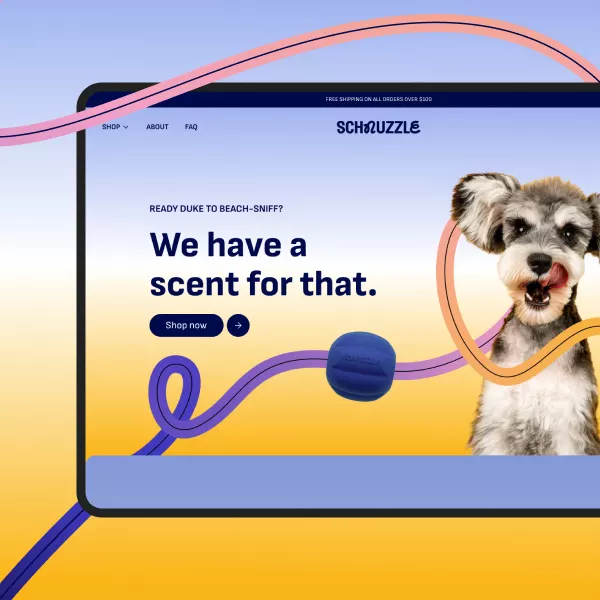
Schnuzzle Selling a sense you cannot photograph
A store built to sell a product nobody can smell through a screen, with a 200 percent return on investment within the launch period.
Fitstop From a Queensland garage to a four-country franchise
One member app and one franchisee operations portal, running across 100+ gyms and 50,000+ active members.