Revie Jane is an Australian coach and content creator who has spent over a decade making fitness fun, approachable and effective, and who had built a large and unusually engaged following on the strength of that. The gap she wanted to close was hybrid training - running, functional conditioning and resistance work in one program - which delivers well for the women who stick with it and reads as complicated and intimidating to almost everybody else. The apps already in the category made that worse rather than better, because each one specialises in a single training style, so a woman who wants all three ends up assembling her own program out of three products and a spreadsheet.

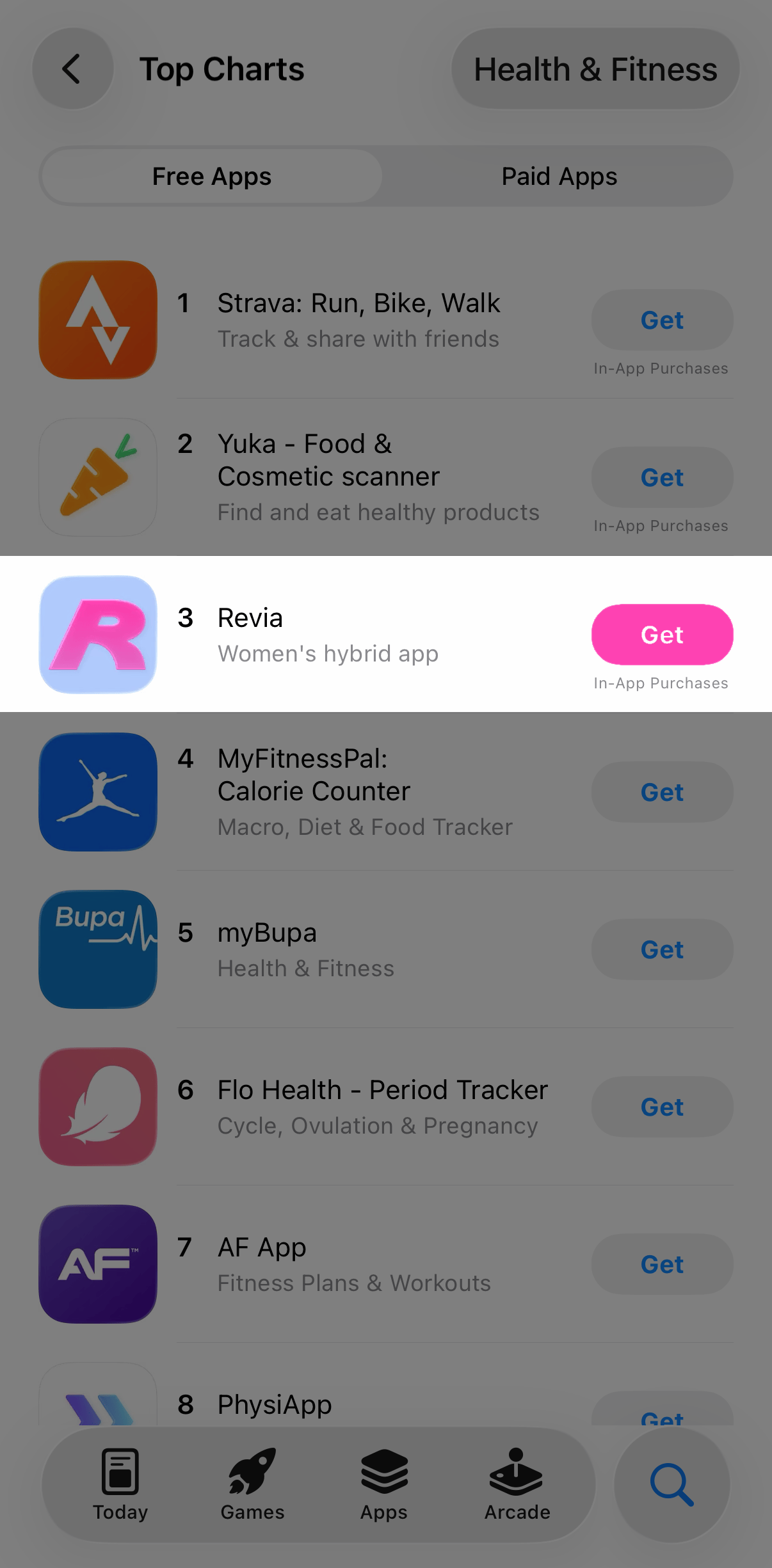
How we built Revia and put it at number 3 in Apple's Health and Fitness category within 48 hours of launch.
Hybrid training, without the intimidation
PixelForce designed and built Revia, the hybrid training app from Australian coach Revie Jane. It launched in November 2025 on iOS and Android with three structured programs and more than eighty on-demand workouts, and reached number 3 in Apple's Health and Fitness category within 48 hours of launch, after a 4-month build.
Health and Fitness ranking #3
Concept to launch 4 months
On-demand workouts 80+
The Problem
The Solution
PixelForce designed and built Revia as a single cross-platform product for iOS and Android, built in Flutter so both stores shipped from one codebase inside a four-month window. The product carries three structured programs alongside more than eighty on-demand workouts, so a member can either follow a plan or train to what she has time for that day. Behind it sits an admin portal that lets Revie Jane's own team publish new programs and workouts to iOS, Android and web at once, without a developer in the loop.
The Outcome
Revia reached number 3 in Apple's Health and Fitness category within 48 hours of launch, after a 4-month build. It launched in November 2025 and runs on iOS and Android, with three structured programs, more than eighty on-demand workouts, weight and rep tracking, progress trophies and Race Replay.
A gap in hybrid training
Revie Jane came to PixelForce with a method rather than a wireframe. Over more than a decade of coaching she had worked out how to make hybrid training approachable for women who would never describe themselves as athletes, and the three programs she wanted in the app were each aimed at a different starting point: a hybrid program blending running, conditioning and resistance work, a five-week progression for new and returning runners, and a home program for anybody training in a living room or a garage with almost no equipment. Each carries different equipment assumptions and a different progression, and each attracts a different member.
What made this a fitness app project rather than a content project is what happens on day one. A creator with a genuinely engaged audience does not get a gentle launch curve: the entire audience arrives inside the first forty-eight hours, subscribes inside the first forty-eight hours, and forms its opinion of the product inside the first forty-eight hours. The app had to be finished when it launched, not finished shortly afterwards, and it had to hold up under a spike that most products never see and this one was guaranteed.
Hybrid training felt complicated
Running, conditioning and resistance work in one plan is the thing that works and the thing that intimidates. The product had to make the combination feel like one program rather than three disciplines stacked on top of each other.
Three programs, three different setups
A gym-based hybrid plan, a five-week running progression and a minimal-equipment home program each have their own equipment assumptions and progression rules, and all three had to be first-class rather than variations of a default.
A launch spike, not a launch curve
An engaged creator audience arrives all at once. Sign-up, subscription and video delivery had to hold under the whole audience landing inside two days, because there is no second first impression.
New content without a developer
Revie Jane publishes continuously. If adding a workout required an engineer or an app release, the product would have gone stale within a month of launching.




Revie Jane is the product owner, the coach and the brand, which makes the engagement faster and less forgiving at the same time. Faster, because a question about how a program should progress is answered by the person who wrote it, in one conversation, without going through a committee. Less forgiving, because the app carries her name and her reputation with an audience that has trusted her for a decade, so anything that felt generic or off-voice was not a preference to be negotiated, it was a defect. The scope was fixed in writing early and held, which is how a four-month timeline survives contact with a real launch date.
Hinney Lo Founder & CEO, PixelForce
Book a consultationA creator launch is the easiest load event in software to prepare for, because you know the date and you know the audience is coming. Almost nobody prepares for it. They spend the last month adding features instead of proving the sign-up path holds, and then the one day that decides the product goes badly. Revia reached number three in its category inside two days because the last month was spent on the boring things.
Swipe to explore
How we built it
Four months from concept to a top-three category placement is only possible when the product is decided before it is built. The engagement ran the standard sequence: a consultation, then Phase 1 Scoping and Design producing a Business Requirements Document, the full UX/UI design, a Product Requirements Document and a fixed-cost Statement of Work, then Phase 2 Development, QA and Release. No blueprint, no build. On a timeline this tight the blueprint is not overhead, it is the thing that removes the mid-build argument that would have cost the launch date.
The app is a single Flutter codebase serving iOS and Android, which is what made both stores reachable at once inside four months rather than sequentially across eight. The member-facing product is built around doing the session: video explanation and demonstration for every movement, weights and reps recorded as you go, a history you can look back through, progress trophies for consistency rather than for outcomes, and Race Replay for documenting a run. Access is handled by subscription, sold through the App Store and Google Play as in-app purchases and through the web for members who arrive from a link rather than a store, so nobody is pushed through a channel that does not suit how they found her.
Behind the app is the part members never see and the reason the product has not gone stale. A web admin portal lets Revie Jane's team upload programs and workouts and publish them across iOS, Android and web simultaneously, which turns content into an editorial task rather than a release. The platform runs on AWS with monitoring and logging and automated testing through the build, all of which existed specifically for the first forty-eight hours: a launch spike is the one load event you can predict exactly, so there is no excuse for being surprised by it. Every release moved through structured quality assurance before it reached the stores.
Run · Condition · Lift
#3 in Health and Fitness in 48 hours
Hybrid training, made approachable enough to start on a Monday.

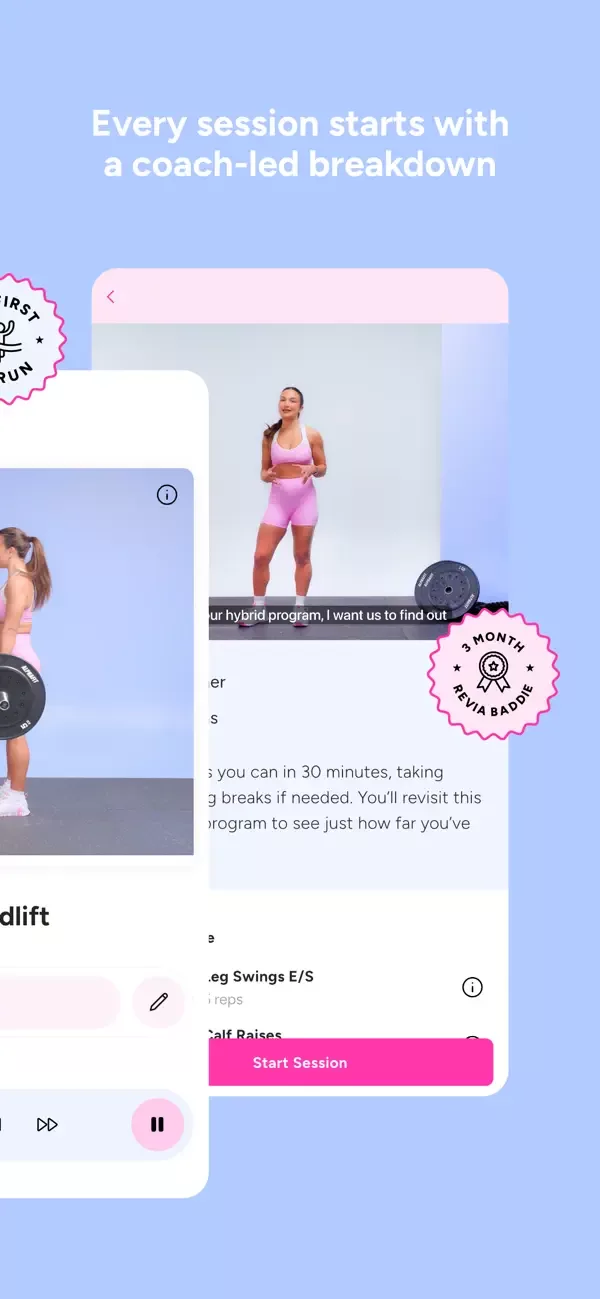

Inside the app
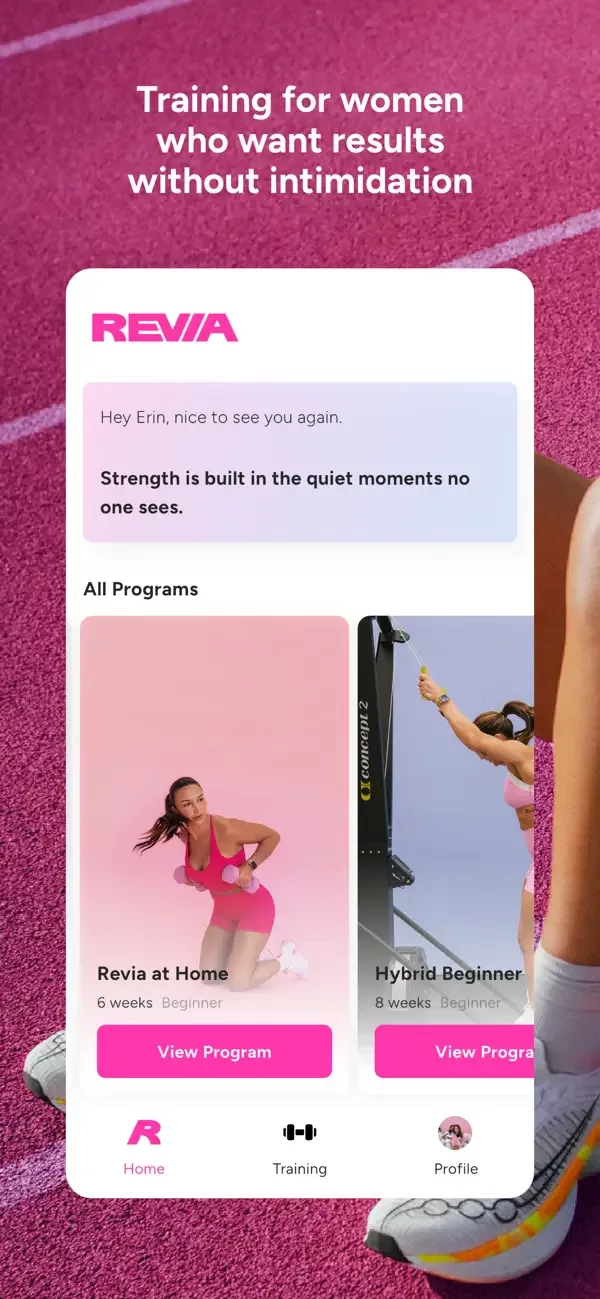
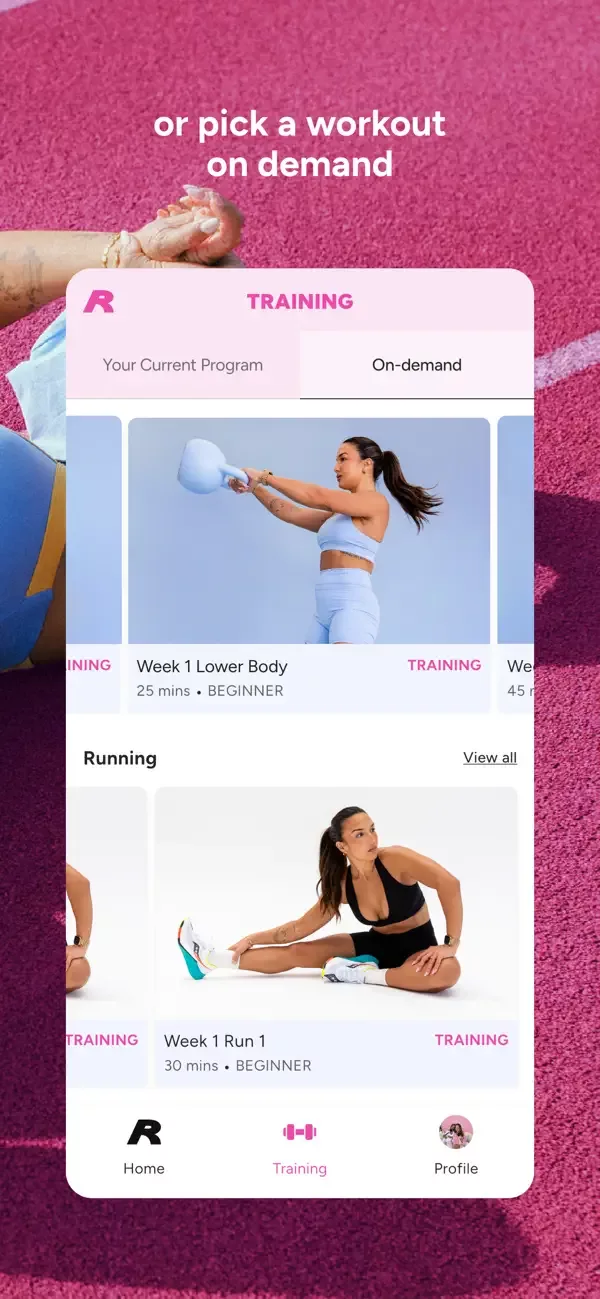
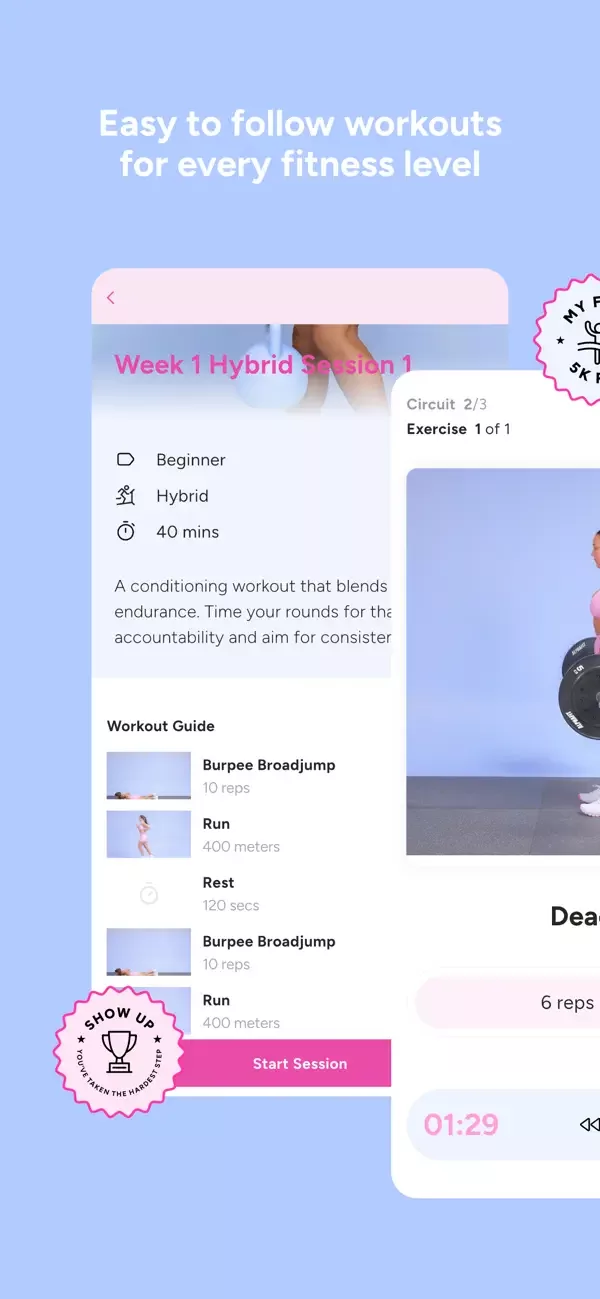
Three structured programs to follow, more than eighty on-demand workouts for the days that do not fit a plan, video explanation and demonstration on every movement, weights and reps recorded as you train, a history to look back through, progress trophies for turning up, and Race Replay for documenting a run.
- Three structured programs
- 80+ on-demand workouts
- Video on every movement
- Weights, reps and history
- Progress trophies and Race Replay
- An admin portal for the team
01 06
Three structured programs
A hybrid program blending running, functional conditioning and resistance work; a five-week progression for new and returning runners; and a home program built for minimal equipment. Each has its own equipment assumptions and progression, and each was built as a first-class program rather than a variant of a default plan.
02 06
80+ on-demand workouts
Alongside the programs sits a library of more than eighty on-demand sessions. Following a plan is the ideal, and having somewhere to go on the days the plan does not fit is what stops a missed session from becoming a missed fortnight.
03 06
Video on every movement
Every exercise carries a video explanation and demonstration. In hybrid training that matters more than in a single-discipline app, because a member following the plan is being asked to perform movements from three different disciplines, some of which she will be seeing for the first time.
04 06
Weights, reps and history
Members record weights and reps as they train and can look back through their history. It is the difference between an app that plays workouts and an app that knows what you did, and it is what lets progressive overload be a fact rather than an intention.
05 06
Progress trophies and Race Replay
Trophies reward consistency rather than outcomes, which matches how Revie Jane coaches: turning up is the behaviour worth reinforcing. Race Replay lets a member document a run and revisit it, giving the running side of the program the same sense of a record that the lifting side gets from weights and reps.
06 06
An admin portal for the team
A web portal lets Revie Jane's team upload new programs and workouts and publish them to iOS, Android and web at once. Content becomes an editorial task rather than an engineering one, which is what allows a creator-led app to keep releasing new training without booking developer time.
Services on the Revia build
Frequently Asked Questions
Revia is a hybrid training app for women, created by Australian coach Revie Jane and designed and built by PixelForce. Hybrid training combines running, functional conditioning and resistance work in one program. The app launched in November 2025 on iOS and Android with three structured programs and more than eighty on-demand workouts, and reached number 3 in Apple's Health and Fitness category within 48 hours of launch.
Hybrid training combines running, functional conditioning and resistance work inside a single program rather than treating them as separate pursuits. It suits people who want general capability instead of specialising in one discipline. The usual barrier is that it looks complicated to plan, which is the problem Revia was built to solve: the programming decisions are made for the member rather than assembled by her.
PixelForce, an Australian digital product agency, designed and built Revia for Revie Jane. It was delivered as a single Flutter codebase serving iOS and Android, with a web admin portal for her team, running on AWS. The build took four months from concept to launch, and the app reached number 3 in Apple's Health and Fitness category within 48 hours of release.
Revia went from concept to launch in four months. That is achievable when the product is fully defined before development starts. PixelForce runs every engagement the same way: a free consultation, then Phase 1 Scoping and Design producing a Business Requirements Document, UX/UI design, a Product Requirements Document and a fixed-cost Statement of Work, then Phase 2 Development, QA and Release. The timeline is fixed at the end of Phase 1 rather than estimated beforehand.
Scoping and development are quoted separately. At PixelForce, Phase 1 Scoping and Design comes first and produces the requirements, the design and a fixed-cost Statement of Work. Phase 2 Development, QA and Release is quoted against that Statement of Work. A creator app with structured programs, an on-demand library, subscription billing and an admin portal is a full product build rather than a single feature, and the exact cost is fixed before development starts.
You treat the first forty-eight hours as the load event it is. A creator audience arrives at once, so the sign-up path, subscription flow and video delivery are the things that get proven before launch, not the last few features. For Revia that meant AWS infrastructure with monitoring and logging in place, automated testing through the build, and structured quality assurance on every release before it reached the stores.
Phase 3 Post Launch Support covers it, either as a warranty, monitoring and support arrangement on a flat monthly fee, or as a product retainer priced per four-week cycle against a committed story-point capacity, in tiers named Steady, Growth, Scale, Velocity and Momentum, with Enterprise on application. For a creator app the ongoing content pipeline matters as much as the support: Revia's admin portal lets the client's own team publish new programs and workouts across iOS, Android and web without a developer.
Up next
More products we have designed, built and launched end to end.
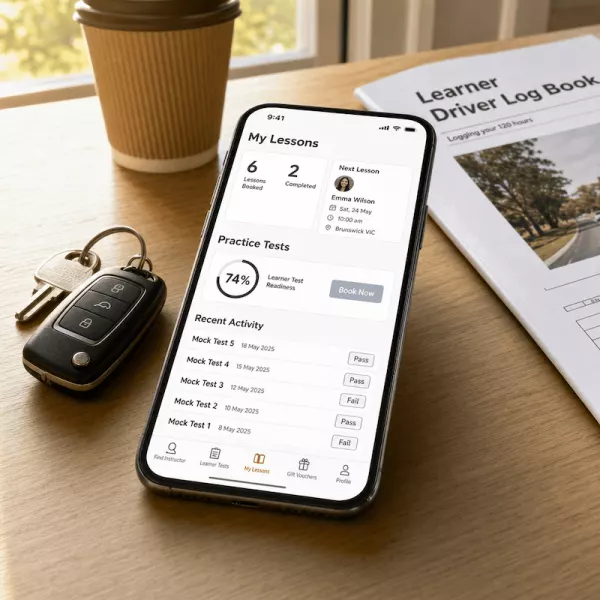
EzLicence UK From Australia to the United Kingdom
Taking a proven driving-lesson marketplace from Australia to the UK, localised for a new market from day one.
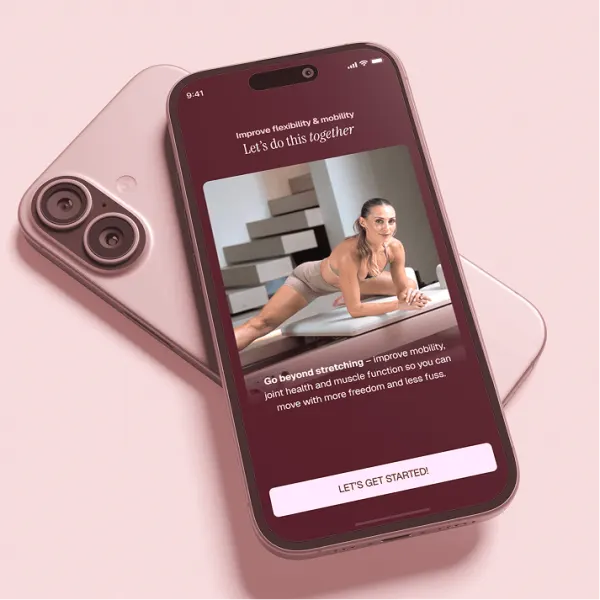
Pilates Obsession From Studio to Global Platform
How we turned Sara Colquhoun's studio expertise into a global Pilates platform in three months