Traininpink is a subscription app whose entire proposition is personalisation: a workout plan built on Pilates Linfodrenante®, the method its founder Carlotta Gagna created by combining Pilates with lymphatic drainage, paired with a nutrition plan drawn from a library of over 4,000 meals written by certified dietitians. Producing that personalisation requires knowing things about the new user, which is why the app opens with an intake questionnaire. That created the structural tension in the product. The information that makes Traininpink worth subscribing to has to be collected before the user has experienced anything, and a measurable share of downloads were being lost inside setup, before the person had seen a single session.

Rebuilding the first five minutes of a Pilates app, using the funnel data rather than an opinion.
The first five minutes
Traininpink is an Italian Pilates, workout and nutrition app built around Pilates Linfodrenante®, the proprietary method created by its founder Carlotta Gagna. PixelForce instrumented the acquisition funnel, found where new users were abandoning setup, and rebuilt onboarding so that a personalised workout and nutrition plan arrives before the app asks for anything it does not need yet.
Onboarding output 1 personalised plan
Program variants to route into 7
Nutrition library behind the plan 4,000+ meals
The Problem
The Solution
PixelForce approached it as a measurement problem before a design problem. The acquisition and activation journey was instrumented end to end so that funnel analysis could show exactly which step lost people, rather than which step the team suspected. The rebuilt onboarding then applied progressive disclosure: ask only what the first plan genuinely requires, deliver that plan, and gather the rest later once the user has a reason to give it. Program selection was replaced with guided routing, and the changes were validated through A/B testing rather than shipped on judgement alone.
The Outcome
Traininpink now routes a new user from install to a personalised workout and nutrition plan through a sequence that asks for information in the order the product actually needs it. The instrumentation put in place during the engagement remains, so the team continues to see where the funnel loses people and can test a change against evidence instead of debating it. No client conversion figure is published for this engagement.
The cost of asking first
Traininpink was created by Carlotta Gagna, a certified Pilates instructor, and is published by Traininpink RR FZCO. The product is built on Pilates Linfodrenante®, her proprietary method combining Pilates with lymphatic drainage, and it ships in seven editions covering beginners, express sessions, hot Pilates, reformer, pregnancy and the postpartum period. Alongside the training it carries a nutrition side that is unusually substantial for a fitness app - personalised meal plans drawn from more than 4,000 meals written by certified dietitians, with meal tracking, shopping lists and intermittent fasting guidance. The app is available in Italian and English, and new users start on a free trial.
PixelForce had already built the platform. This engagement was about the gap between downloading the app and using it. Because the plan is personalised, the app has to ask questions before it can deliver anything, and a questionnaire is the least persuasive thing a product can put in front of someone who has not yet decided they want it. Users were installing and then leaving during setup, which is the most expensive kind of loss: the acquisition has already been paid for and none of the value has been delivered. The brief was to find out precisely where and why, and to fix it without weakening the personalisation the product depends on.
Personalisation has to be earned
The plan cannot be built until the user answers questions, and the user has no reason to answer questions until they have seen the plan. Resolving that order is the whole design problem.
Nobody knew which step lost people
The drop-off was visible in aggregate and invisible in detail. Without instrumentation across the funnel, any change would have been a guess dressed up as a decision.
Choice was being presented as a wall
Seven program editions is a strength of the product and a burden at minute one. Showing every option to someone who does not yet know the method turns a good catalogue into a decision they postpone.
Two products in one intake
Traininpink personalises training and nutrition. One onboarding flow had to gather enough for both without feeling like two forms stitched together.


Traininpink operates between Italy and Dubai and PixelForce works from Adelaide and Sydney, so the engagement ran across time zones from the start. That suited the work: instrumentation and funnel analysis produce artefacts - event maps, drop-off charts, test results - that travel well and settle arguments without a meeting. The one thing that did require close collaboration was the boundary question, which information the product could reasonably defer and which was genuinely required before a plan could be produced at all. That is a product decision, not an analytics one, and it was made with the client.
Hinney Lo Founder & CEO, PixelForce
Book a consultationEvery team believes it knows which onboarding step is losing users, and the data disagrees with most of them. Instrument the funnel first. Once you can see where people actually stop, the redesign is comparatively easy, and you stop spending redesign budget on the screen that merely felt annoying in a workshop.
Swipe to explore
Measure, then redesign
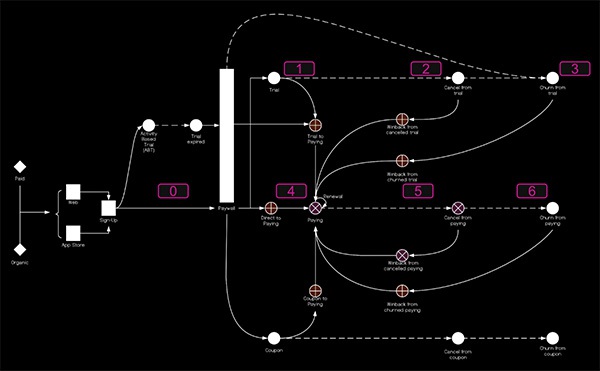
The engagement started with instrumentation rather than design. Events were placed across the acquisition and activation journey so that user behaviour could be examined step by step, and the resulting analysis replaced a general sense that onboarding was too long with a specific list of the screens where people left. That distinction is the entire value of the approach: an onboarding flow always has a candidate villain, and it is usually not the step that is actually costing the most.
Three findings drove the redesign. Account creation was asking for information that felt disproportionate to what the user had received so far, which is a reasonable objection at that point in a relationship. Program selection presented the full set of editions at once, and a first-time user who does not yet understand the method has no basis on which to choose between seven of them, so many chose none. And the users who reached a first session quickly were noticeably more likely to still be there later, which made speed to first value the metric worth optimising rather than form completion.
The rebuilt flow applies progressive disclosure. It asks only what the first plan genuinely requires, produces that plan, and defers everything else - detailed preferences, finer nutrition configuration, profile completeness - until the user has experienced the product and has a reason to invest in refining it. Program selection became guided routing: a short set of focused questions about experience level, goals and available time, ending in one recommended edition rather than a menu. Each change was validated through A/B testing against the instrumented funnel, so conversion work was decided by measurement rather than preference. The instrumentation was left in place deliberately, because onboarding is not a project that finishes.
Instrument · Analyse · Test
Progressive disclosure, guided routing, and every change A/B tested.
Ask for less, deliver the plan sooner, and let the user decide what else to tell you.
- Funnel instrumentation
- Progressive disclosure
- Guided program routing
- Speed to first session
- One intake, two plans
- A/B testing the decisions
01 06
Funnel instrumentation
Events were placed across the acquisition and activation journey so that each step of onboarding could be measured independently rather than assessed as one block.
This is the step teams skip, and skipping it is why so much onboarding work fails to move anything. The step that feels worst in a review is rarely the step that costs the most.
02 06
Progressive disclosure
The rebuilt flow asks only for what the first personalised plan genuinely requires, then delivers it. Detailed preferences and finer configuration are gathered afterwards, when the user has seen what the app produces and has a reason to improve it. Willingness to answer questions rises sharply once the product has demonstrated what the answers are for.
03 06
Guided program routing
Traininpink ships seven Pilates Linfodrenante editions, from beginner and express through to reformer, pregnancy and postpartum. Presenting all of them at once asks a first-time user to choose between options they cannot yet distinguish. The revised flow asks about experience, goals and available time, then recommends one.
04 06
Speed to first session
The analysis showed that users who reached a first workout quickly were more likely to still be active later. That reframed the objective: the metric worth optimising was not questionnaire completion but time to first session, and the sequence was reordered around it.
05 06
One intake, two plans
Traininpink personalises training and nutrition together, with meal plans drawn from over 4,000 meals written by certified dietitians. The intake had to gather enough for both without reading as two separate forms, which meant interleaving the questions by purpose rather than grouping them by system.
06 06
A/B testing the decisions
Changes were released as tests against the instrumented funnel rather than shipped on judgement. The point is not that every hypothesis was correct - several were not - but that the ones that were not could be identified and reversed quickly instead of quietly becoming the product.
Carlotta & Matteo Founders, Traininpink
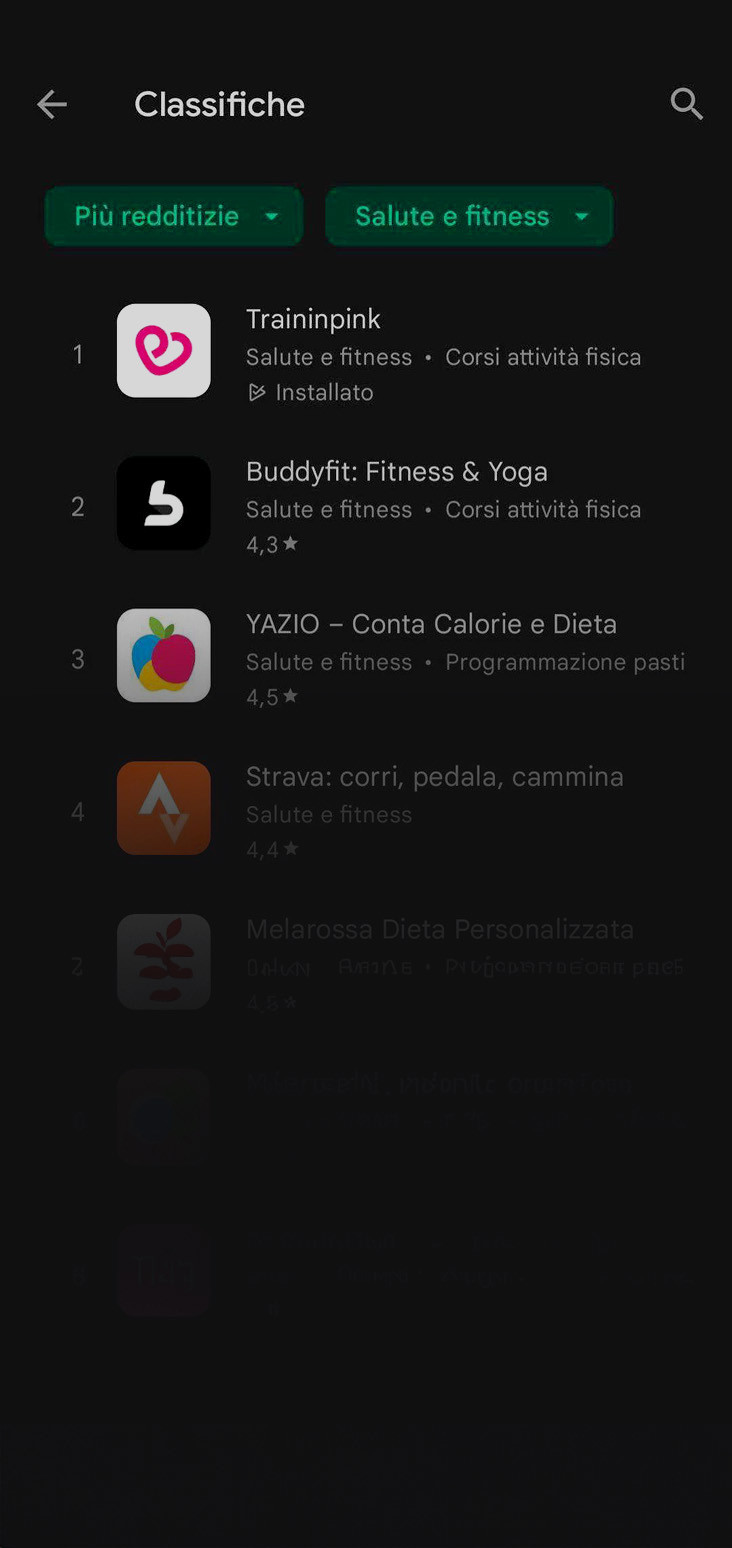
PixelForce acts as true partners, not just vendors. Since 2021, their expertise has helped us acquire over 40,000 paying subscribers and consistently top the App Store charts. They are always willing to help - invaluable to our success.Traininpink

Services in the Traininpink onboarding work
Frequently Asked Questions
Traininpink is an Italian Pilates, workout and nutrition app for women, created by certified Pilates instructor Carlotta Gagna and published by Traininpink RR FZCO. It is built around Pilates Linfodrenante®, her proprietary method combining Pilates with lymphatic drainage, and ships seven editions covering beginner, express, hot, reformer, pregnancy and postpartum. Alongside training it provides personalised nutrition plans drawn from more than 4,000 meals written by certified dietitians. PixelForce built the platform.
PixelForce instrumented the acquisition and activation funnel, analysed where new users were abandoning setup, and rebuilt the onboarding sequence around the findings. The redesign applies progressive disclosure, asking only what the first personalised plan requires before delivering it, and replaces an open list of program editions with guided routing to one recommendation. Each change was validated through A/B testing against the instrumented funnel.
Usually because the app asks for more than it has yet earned. A new user has installed something on the strength of a promise and has received nothing, so every additional question is a cost against an unproven benefit. The other common cause is choice presented too early: showing someone a full catalogue before they understand the product asks them to make a decision they are not equipped to make, and postponing it is easier than making it badly.
By instrumenting the journey before changing it. Events are placed at each step of the acquisition and activation flow so drop-off can be attributed to a specific screen rather than to onboarding as a whole. Aggregate install-to-active numbers tell you there is a problem and nothing about where it is. Once the funnel is instrumented, the analysis usually contradicts at least one thing the team was certain of, which is the point of doing it.
Progressive disclosure means asking for information at the point where its purpose is obvious, rather than gathering everything up front. In a personalised fitness app it means collecting only what the first plan genuinely needs, producing that plan, and deferring finer preferences until the user has seen the result. It resolves the core tension in any personalised product: the app needs data to demonstrate value, and the user needs value demonstrated before they will hand over data.
Less than a build, and the shape is different. The first phase is instrumentation and analysis, which has to run long enough to gather meaningful funnel data before any redesign is justified. The redesign itself is comparatively fast once the drop-off points are known. Testing then continues after release, because A/B results arrive on their own schedule. PixelForce scopes this work in Phase 1 Scoping and Design and fixes the timeline in a Statement of Work before delivery begins.
Scoping and delivery are priced separately at PixelForce. Phase 1 Scoping and Design comes first and produces the blueprint, and Phase 2 Development, QA and Release is quoted against the fixed-cost Statement of Work that comes out of it. Onboarding optimisation on an existing product costs considerably less than a full platform build, because the work is concentrated in instrumentation, analysis and a small number of high-traffic screens rather than in new functionality.
Up next
More products we have designed, built and launched end to end.
Wave Ki Land training for better surfing
How we turned Brad Gerlach's surf training method into a subscription platform that releases it in the order he teaches it.
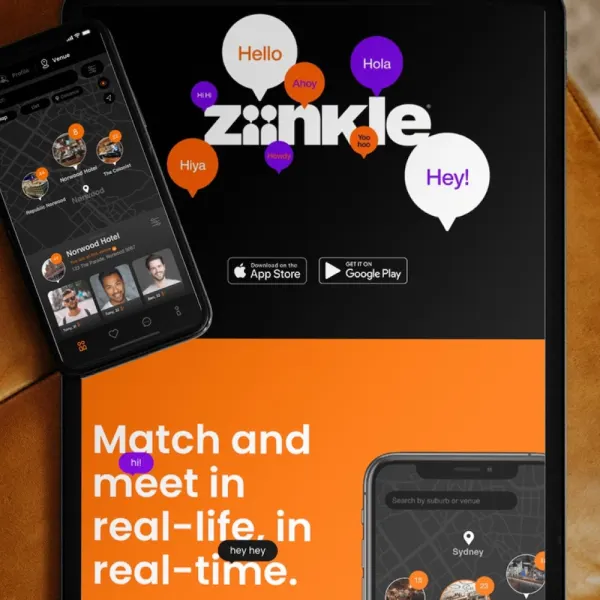
Ziinkle Built around the room you are in
How we built a dating app around the venue someone was standing in, with anonymity as the default setting.